How to Size a Solar Submersible Pump for a Borehole in Nigeria
Sizing a solar submersible pump for a borehole in Nigeria is not complicated when you follow the right steps. The problem is that most installers skip the calculations entirely and use guesswork. That guesswork leads to pumps that cannot deliver enough water, panels that cannot run the motor, or motors that burn out within the first dry season.
This guide gives you the exact four-step sizing method used by professional solar engineers. By the end, you will know your Total Dynamic Head, your required flow rate, how to read a pump performance curve, and exactly how many panels you need. Every number in this guide is based on real Nigerian borehole conditions.
The most expensive solar pump in the world will fail if it is wrongly sized for your borehole. Correct sizing determines three things:
Whether your pump can physically lift water from your borehole depth to your storage tank
Whether your solar panels can generate enough power to run the motor every day, including harmattan season
Whether your pump will survive for 8 to 15 years or burn out within 18 months
A pump that is undersized for your Total Dynamic Head will run constantly, never fully filling the tank, and eventually burn out the motor. A pump that is oversized for your solar array will fail to start on mornings with low solar irradiance. Both scenarios are entirely preventable with the right calculations.
Professional solar pump sizing follows four steps in this exact order. Do not skip any of them.
Calculate your Total Dynamic Head (TDH)
Calculate your required flow rate
Select the pump using a performance curve
Size the solar array to match the pump
Each step feeds into the next. Getting step one wrong will make every other calculation useless.
Step 1: Calculate Your Total Dynamic Head (TDH)
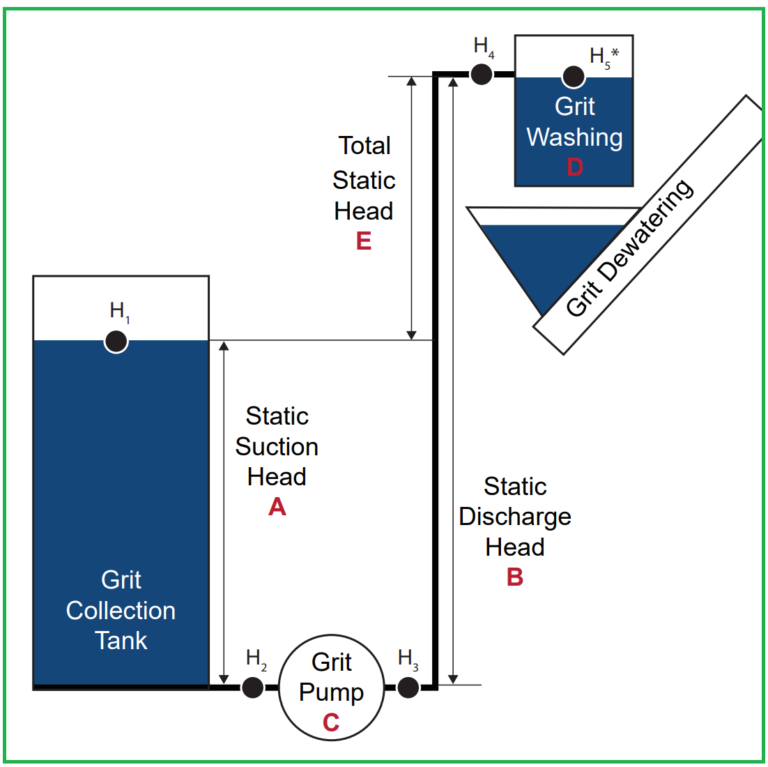
Total Dynamic Head is the single most important number in solar pump sizing. It represents the total resistance your pump must overcome to move water from the bottom of the borehole to the top of your storage tank.
TDH is measured in metres and it includes three components:
Static water level: how deep the water sits below the surface in your borehole
Vertical lift: the height from ground level to the outlet of your overhead storage tank
Friction losses: pressure lost to pipe length, diameter, bends, and fittings
TDH Formula: TDH = Pump Setting Depth + Vertical Lift to Tank + Friction Losses
How to Determine Your Pump Setting Depth
The pump setting depth is NOT the same as your static water level. It is the depth at which you physically hang the pump inside the borehole casing.
The pump must always sit below the static water level to ensure it is submerged. But the static water level is a moving target. During dry season in Nigeria, especially in North-Central and North-West states, water tables can drop by 5 to 15 metres below their wet-season level.
The correct formula for pump setting depth is:
Pump Setting Depth = Static Water Level + 15 metre safety margin (minimum)
That 15 metre margin accounts for dry season water table drop and ensures the pump stays submerged all year. In northern states like Kano, Sokoto, and Borno where dry season drops are more severe, use a 20 metre margin.
Dry-run protection is the most critical safety feature in any Nigerian borehole installation. Read more about why in the main solar water pump system guide which covers the five most common pump failure modes in Nigeria.
Worked Example: TDH Calculation for an Abuja Borehole
Parameter
Value
Notes
Static water level
50 m below surface
From driller’s report
Pump setting depth
65 m (50 + 15 margin)
Accounts for dry season drop
Overhead tank height
4 m above ground
Elevated tank for gravity supply
Pipe friction losses
4 m (estimated)
80 m of 1.25-inch HDPE pipe
TOTAL DYNAMIC HEAD
73 m
65 + 4 + 4
This means you need a pump rated for at least 73 metres of head. Always buy a pump with a head rating 10 to 15 per cent above your TDH, never exactly at it.
How to Estimate Pipe Friction Losses
Friction losses increase with longer pipe runs, smaller pipe diameter, and more bends. For most Nigerian residential borehole installations, friction losses fall between 3 and 8 metres. Use these rules of thumb:
Pipe Diameter (HDPE)
Pipe Run Length
Approx. Friction Loss
1 inch (25 mm)
Up to 50 m
5 to 8 m
1.25 inch (32 mm)
Up to 80 m
3 to 5 m
1.5 inch (40 mm)
Up to 120 m
2 to 4 m
2 inch (50 mm)
Up to 150 m
1 to 3 m
The same resistance principles that apply to pipe friction apply to drop cable voltage drop. See the Eneronix guide on DC Cable Sizing for Off-Grid Solar Systems for the calculation framework.
Step 2: Calculate Your Required Flow Rate
Flow rate tells you how many litres of water the pump must deliver per hour to meet your daily demand within the available sunlight window.
Flow Rate Formula: Required Flow Rate (L/hr) = Daily Demand (litres) divided by Peak Sun Hours
Peak sun hours are the number of hours per day during which solar irradiance averages 1,000 W/m2. This is what determines how long your pump runs at full rated output. It is not the same as daylight hours.
Worked Example: Flow Rate for a Family of 8 in Abuja
Parameter
Value
Daily demand
8 people x 50 L = 400 litres
Peak sun hours (Abuja, conservative)
5.5 hours
Minimum flow rate needed
400 / 5.5 = 73 L/hr
Recommended pump selection
At least 90 L/hr at your TDH (25% buffer)
Always build a 20 to 25 per cent buffer into your flow rate selection. This accounts for cloudy mornings, system inefficiency losses, and future demand growth.
Step 3: Select the Right Pump Using the Performance Curve
This is the step that most buyers completely skip. It is also the step that causes the most pump failures in Nigeria.
Every pump has a performance curve published by the manufacturer. The curve shows how the pump’s flow rate changes as head increases. A pump rated for 200 L/hr might only deliver 85 L/hr at 70 metres of head. If you only looked at the maximum flow rate on the label, you would install a pump that cannot fill your tank.
The performance curve, not the label, is what tells you if a pump is right for your borehole. Always cross-reference the curve at your specific TDH.
How to Read a Pump Performance Curve
On a pump performance curve, the X-axis shows flow rate in litres per hour (or m3/hr). The Y-axis shows head in metres. The curve itself shows the relationship between the two for that specific pump.
To use it for your sizing:
Find your TDH on the Y-axis
Draw a horizontal line across to the curve
Drop a vertical line down to the X-axis
That intersection is your pump’s actual flow rate at your borehole depth
If that flow rate is equal to or greater than your required flow rate from Step 2, the pump is correctly sized. If it is lower, you need a pump with a higher-head curve.
Grundfos publishes free, detailed performance curve data for the SP and SQFlex series at: product.grundfos.com. This is the professional tool for pump selection in Nigeria.
Pump Selection Criteria for Nigerian Boreholes
Specification
What to Look For
Why It Matters in Nigeria
Motor type
Brushless DC or AC induction only
Brushed DC motors wear rapidly in sandy Nigerian groundwater
IP rating
IP68 minimum
Full submersion rating required for permanent borehole use
Body material
HDPE or stainless steel
Corrosion-resistant in acidic southern Nigerian groundwater
Impellers
Stainless steel for sandy boreholes
Plastic impellers fail rapidly in abrasive sandy water
Motor cooling
Water-cooled (all submersibles)
Confirms motor needs water flow to stay cool – dry-run kills it
Head rating
At least 10-15% above your TDH
Leaves performance margin and allows for future depth changes
Pump Brands Available in Nigeria (2026)
Brand
Series
Best Use Case
Support in Nigeria
Grundfos
SP / SQFlex
Deep boreholes 40-120 m
Lagos, Abuja, PH dealers
Lorentz
PS2 / PS+
Solar-direct DC pump systems
Authorised Lagos/Abuja dealers
DAB / Pedrollo
Multi-range
AC pump with VFD setup
Alaba Market and city dealers
Leo Pumps
Multi-range
Budget household boreholes
Widely available nationwide
Generic OEM (CN)
Various
Short-term budget use only
Very limited warranty/parts
Step 4: Size the Solar Array to Power the Pump
Once you know your pump’s motor wattage, sizing the solar array follows two fixed rules. Both rules must be applied. Using only one of them is a common installer mistake.
Rule 1: Size the Array at 1.5 Times the Motor Wattage
Pumps draw significantly more current at startup than during steady running. This is called the Locked Rotor Current (LRC). If the solar array is only sized for running power, the pump will fail to start on low-sun mornings when the array is not producing peak output.
Array Minimum (before harmattan) = Motor Rated Wattage x 1.5
Rule 2: Add a 30 Per Cent Harmattan Buffer
Between December and February, harmattan dust from the Sahara coats solar panels across northern and central Nigeria. Panel output can drop by 25 to 40 per cent. If you sized the array for clean-panel performance, your pump will be severely underpowered for three months every year.
Final Array Size = (Motor Wattage x 1.5) x 1.30
Worked Examples: Array Sizing by Pump Size
Pump Motor
Base Array (x1.5)
With Harmattan Buffer (x1.30)
Practical Panel Configuration
0.5 HP (375W)
563W
732W
2 x 400W panels = 800W
0.75 HP (560W)
840W
1,092W
3 x 400W panels = 1,200W
1 HP (750W)
1,125W
1,462W
4 x 400W panels = 1,600W
1.5 HP (1,100W)
1,650W
2,145W
6 x 400W panels = 2,400W
2 HP (1,500W)
2,250W
2,925W
8 x 400W panels = 3,200W
3 HP (2,200W)
3,300W
4,290W
11 x 400W panels = 4,400W
For the complete technical framework on solar array sizing, including tilt angle optimisation for Nigerian states, read: Solar Array Sizing for Off-Grid Lithium Battery Systems. The same engineering principles apply to pump arrays.
Series vs Parallel Panel Wiring for Pump Systems
How you wire the panels affects the voltage and current delivered to the pump controller. The controller’s input voltage window determines the correct wiring configuration.
Series wiring: voltage adds up, current stays the same. Used when the controller needs higher input voltage.
Parallel wiring: current adds up, voltage stays the same. Used when the controller needs higher current at lower voltage.
Series-parallel: the most common configuration for arrays of 4 or more panels.
Here is a full sizing walkthrough for a home in Kano, representing a North-West Nigeria borehole scenario with a deep water table.
Given Information
Household size: 6 people
Static water level: 80 m below surface
Overhead tank height: 5 m above ground
Pipe run from pump to tank: 100 m of 1.25-inch HDPE
Peak sun hours (Kano, conservative with harmattan): 4.5 hours
Step 1: TDH Calculation
Component
Value
Static water level
80 m
Safety margin for dry season
+20 m (North-West: larger margin)
Pump setting depth
100 m
Overhead tank lift
+5 m
Friction losses (100 m of 1.25″ pipe)
+5 m
TOTAL DYNAMIC HEAD
110 m
Step 2: Flow Rate Calculation
Parameter
Value
Daily demand
6 x 50 = 300 litres
Peak sun hours (with buffer)
4.5 hours
Minimum flow rate
300 / 4.5 = 67 L/hr
Recommended selection (25% buffer)
At least 85 L/hr at 110 m TDH
Step 3: Pump Selection
For 110 m TDH and 85 L/hr minimum flow, the correct choice is a pump rated for 120 to 150 m maximum head. From the Grundfos SP or Lorentz PS2 range, check the performance curve at 110 m. Motor size will typically fall in the 1 to 1.5 HP range for this application.
For this example, assume a 1 HP (750W) AC motor via VFD is selected, confirmed from the pump curve to deliver 95 L/hr at 110 m TDH.
Step 4: Solar Array Sizing
Calculation
Result
Motor rated power
750W
Array minimum (x1.5 for startup)
750 x 1.5 = 1,125W
With harmattan buffer (x1.30)
1,125 x 1.30 = 1,462W
Panel configuration selected
4 x 400W monocrystalline = 1,600W
Controller type needed
AC VFD rated for 1,600W input, 750W AC motor output
Final system for this Kano installation: 4 x 400W panels, AC VFD controller, 1HP AC submersible pump at 100m depth, 1.25-inch HDPE drop pipe, float switch, dry-run protection enabled.
Drop Cable Sizing: The Component Most Installers Get Wrong
The drop cable carries electricity from the surface controller down to the submerged motor. If the cable is undersized, voltage drop occurs. The motor receives less voltage than it is rated for, draws higher current to compensate, overheats, and burns out.
This is the second most common cause of early pump failure in Nigeria, after dry-run damage.
Pump Depth
Cable Cross-Section
Voltage Drop Limit
Notes
Up to 30 m
2.5 mm2 copper
Under 3%
Minimum acceptable for any installation
30 m to 50 m
4 mm2 copper
Under 3%
Standard for most Lagos/SW installations
50 m to 80 m
6 mm2 copper
Under 3%
Required for most North-Central installations
80 m to 120 m
10 mm2 copper
Under 3%
Required for deep northern Nigeria boreholes
Over 120 m
16 mm2 copper
Under 3%
Specialist installation, verify with engineer
The voltage drop calculation methodology for pump cables is identical to the two-constraint framework described in: DC Cable Sizing for Off-Grid Solar Systems. Apply the same maximum 3% voltage drop limit to your drop cable.
Storage Tank Sizing: Often Overlooked, Always Critical
The storage tank is what allows a solar pump to provide 24-hour water supply. The pump fills it during the day; the tank supplies water at night and on cloudy mornings.
Size your tank for at least 2 full days of demand. This provides a buffer for cloudy days and low-sun periods without leaving your household without water.
Tank Sizing Rule: Tank Capacity = Daily Demand x 2.5 (minimum)
Application
Daily Demand
Minimum Tank Size
Recommended Tank
Family of 4
200 litres
500 litres
1,000 litres (overhead)
Family of 8
400 litres
1,000 litres
2,000 litres (overhead)
Family of 12
600 litres
1,500 litres
2,500 to 3,000 litres
Small school (100 pupils)
1,000 litres
2,500 litres
5,000 litres
Small farm (drip irrigation)
3,000 litres
7,500 litres
10,000 litres
Always install a float switch at the tank. When the tank is full, the float switch signals the controller to stop the pump. Without this, the pump runs dry when the tank overflows, or runs continuously wasting energy and wearing the motor.
Borehole Depth by Nigerian Region: Reference Table
Your borehole depth is the starting point for every calculation in this guide. If you do not have a driller’s report, use this regional reference table to estimate. Then verify with the actual driller before purchasing your pump.
Zone
States
Static Water Level
Typical Pump Setting Depth
Min Array
SS
Rivers, Delta, Bayelsa, Akwa Ibom, Edo, Cross River
A Lagos borehole at 40 m TDH needs roughly half the panel wattage and a much smaller pump motor than a Kano borehole at 100 m TDH. This is why installers who quote without knowing your borehole depth are not sizing your system. They are guessing.
Summary: The Solar Submersible Pump Sizing Checklist
Before you buy any pump for a Nigerian borehole, confirm you have completed each of these:
Get your borehole driller’s report with the static water level
Add a 15 to 20 m safety margin below static level to get pump setting depth
Calculate vertical lift to tank and pipe friction to get your TDH
Calculate daily water demand and divide by peak sun hours to get required flow rate
Check the pump performance curve at your TDH, not just the label flow rating
Confirm motor wattage and multiply by 1.5, then by 1.30, to get your array size
Size your drop cable for under 3% voltage drop at your pump depth
Size your storage tank for at least 2.5 days of demand
Install a float switch at the tank and dry-run protection at the controller
For help selecting the right controller for your pump, including VFD selection for AC pump systems, see the Eneronix guide: How to Select an Off-Grid Inverter. The controller sizing principles are directly applicable.
Frequently Asked Questions
Q1: What is a good TDH for a solar pump in Nigeria?
A good TDH depends entirely on your borehole depth and tank height. In South-South Nigeria, TDH values of 30 to 50 m are common. In North-West Nigeria, values of 90 to 130 m are typical. There is no single right answer. Always calculate TDH for your specific borehole before selecting a pump.
Q2: Can I size a solar pump without the driller’s report?
You can estimate using the regional depth table in this guide, but you should not buy a pump based on estimates alone. Static water levels vary significantly even within the same city. A wrong assumption can lead to a pump that is either too weak for your depth or set too shallow to survive dry season. Get the driller’s report first.
Q3: What happens if I undersize the solar array for my pump?
An undersized array will cause the pump to fail to start on mornings with low solar irradiance. When the pump tries to start with insufficient power, it draws the full Locked Rotor Current but the motor cannot overcome the static head. The motor stalls, draws excessive current, overheats, and burns out. This is why the 1.5x multiplier for array sizing is non-negotiable.
Q4: How do I know if a pump I am buying has the right performance curve for my borehole?
Ask the supplier for the pump performance curve document, or download it from the manufacturer’s website. For Grundfos, curves are available at product.grundfos.com. For Lorentz, at lorentz.de. Find your TDH on the Y-axis, trace across to the curve, and read the corresponding flow rate on the X-axis. If that flow rate meets your Step 2 requirement, the pump is correctly matched.
Q5: Do I need a VFD or a DC pump controller?
If you are using a standard AC submersible pump (recommended in Nigeria for spare parts availability), you need a VFD. If you are using a brushless DC pump from Grundfos SQFlex or Lorentz PS2 range, you need a solar pump MPPT controller specific to that pump. Never use a standard battery MPPT charge controller for a pump. They are designed for different loads and will not protect or regulate the pump motor correctly.
Q6: How deep can a solar pump lift water in Nigeria?
Most quality solar submersible pumps available in Nigeria handle Total Dynamic Head values of 30 to 120 m. For very deep boreholes in Kano, Sokoto, or Borno where depths exceed 100 m, you need a high-head pump with a solar array of at least 2,000W. Confirm with the pump’s performance curve that your required flow rate is achievable at your specific TDH.
Q7: What size tank do I need for a solar pump system?
Size your storage tank for at least 2.5 times your daily demand. This provides water supply through a full cloudy day and a full night without pumping. For a family of 8 consuming 400 litres per day, a minimum 1,000-litre tank is needed, and a 2,000-litre tank is strongly recommended for reliability.
Q8: How often should I maintain a solar submersible pump in Nigeria?
The pump itself requires very little maintenance if it is correctly sized and protected. Focus on the accessible parts: clean solar panels at least once a week during harmattan season, check cable connections quarterly, inspect the float switch and controller settings every six months, and test dry-run protection annually. Do not pull the pump from the borehole for inspection unless you have a documented fault. Every pull is a risk of pipe damage or contamination.
I am Engr. Ubokobong Ekpenyong, a solar specialist and lithium battery systems engineer with over five years of hands-on experience designing, assembling, and commissioning off-grid solar and energy storage systems. My work focuses on lithium battery pack architecture, BMS configuration, and system reliability in off-grid and high-demand environments.
Contains information related to marketing campaigns of the user. These are shared with Google AdWords / Google Ads when the Google Ads and Google Analytics accounts are linked together.
90 days
__utma
ID used to identify users and sessions
2 years after last activity
__utmt
Used to monitor number of Google Analytics server requests
10 minutes
__utmb
Used to distinguish new sessions and visits. This cookie is set when the GA.js javascript library is loaded and there is no existing __utmb cookie. The cookie is updated every time data is sent to the Google Analytics server.
30 minutes after last activity
__utmc
Used only with old Urchin versions of Google Analytics and not with GA.js. Was used to distinguish between new sessions and visits at the end of a session.
End of session (browser)
__utmz
Contains information about the traffic source or campaign that directed user to the website. The cookie is set when the GA.js javascript is loaded and updated when data is sent to the Google Anaytics server
6 months after last activity
__utmv
Contains custom information set by the web developer via the _setCustomVar method in Google Analytics. This cookie is updated every time new data is sent to the Google Analytics server.
2 years after last activity
__utmx
Used to determine whether a user is included in an A / B or Multivariate test.
18 months
_ga
ID used to identify users
2 years
_gali
Used by Google Analytics to determine which links on a page are being clicked
30 seconds
_ga_
ID used to identify users
2 years
_gid
ID used to identify users for 24 hours after last activity
24 hours
_gat
Used to monitor number of Google Analytics server requests when using Google Tag Manager
1 minute
You can find more information in our Cookie Policy and .