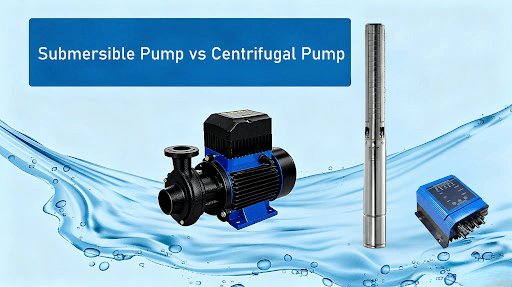
Solar Surface Pump vs Submersible Pump in Nigeria: Which Should You Choose?
Learn the difference between solar surface pump vs submersible pump in Nigeria. Compare depth limits, borehole suitability, irrigation use, cost, efficiency.
If you are choosing a solar water pump in Nigeria, the first decision you will face is this one: surface pump or submersible pump?
Most buyers pick based on price. That is a mistake. The right choice depends on your water source, the depth of that source, your daily demand, and the physical layout of your site. Get this decision wrong and no amount of oversizing the solar array will fix the problem.
This guide explains both pump types in plain terms, shows you exactly where each one works and where it fails, and gives you a clear decision framework for Nigerian conditions.
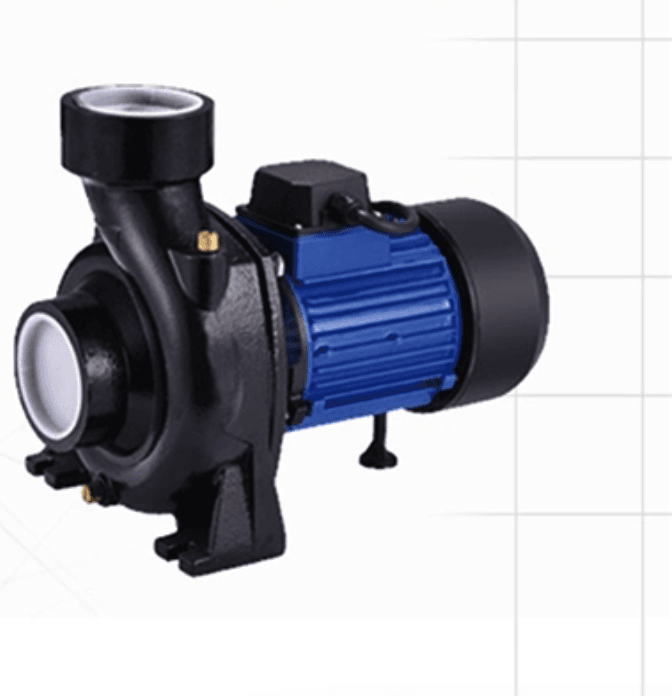
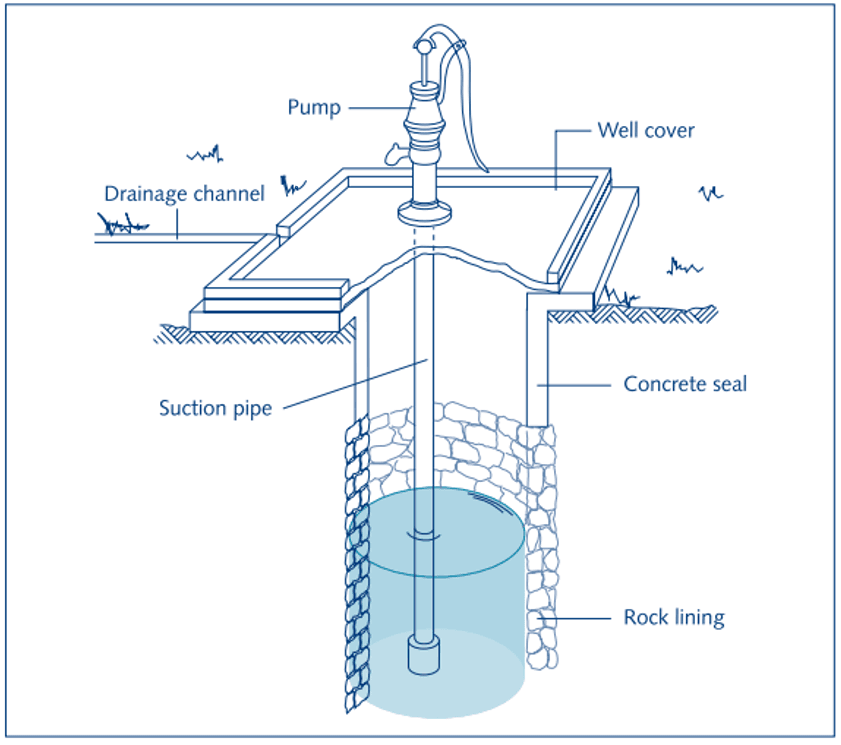
A surface pump is a pump motor that sits above ground, at or near the water source. It uses suction to draw water up from below and then pushes it forward to its destination.
The motor is completely dry. It is mounted on a base plate, connected to a suction pipe going down into the water and a discharge pipe going out to your tank or field. Because the motor is above ground, it is easy to access for maintenance, inspection, and replacement.
How a Solar Surface Pump Works
The solar panels power a DC or AC motor. The motor spins an impeller inside the pump housing. The spinning impeller creates a pressure difference that draws water up the suction pipe. Once the water enters the pump, it is pushed out through the discharge pipe at higher pressure.
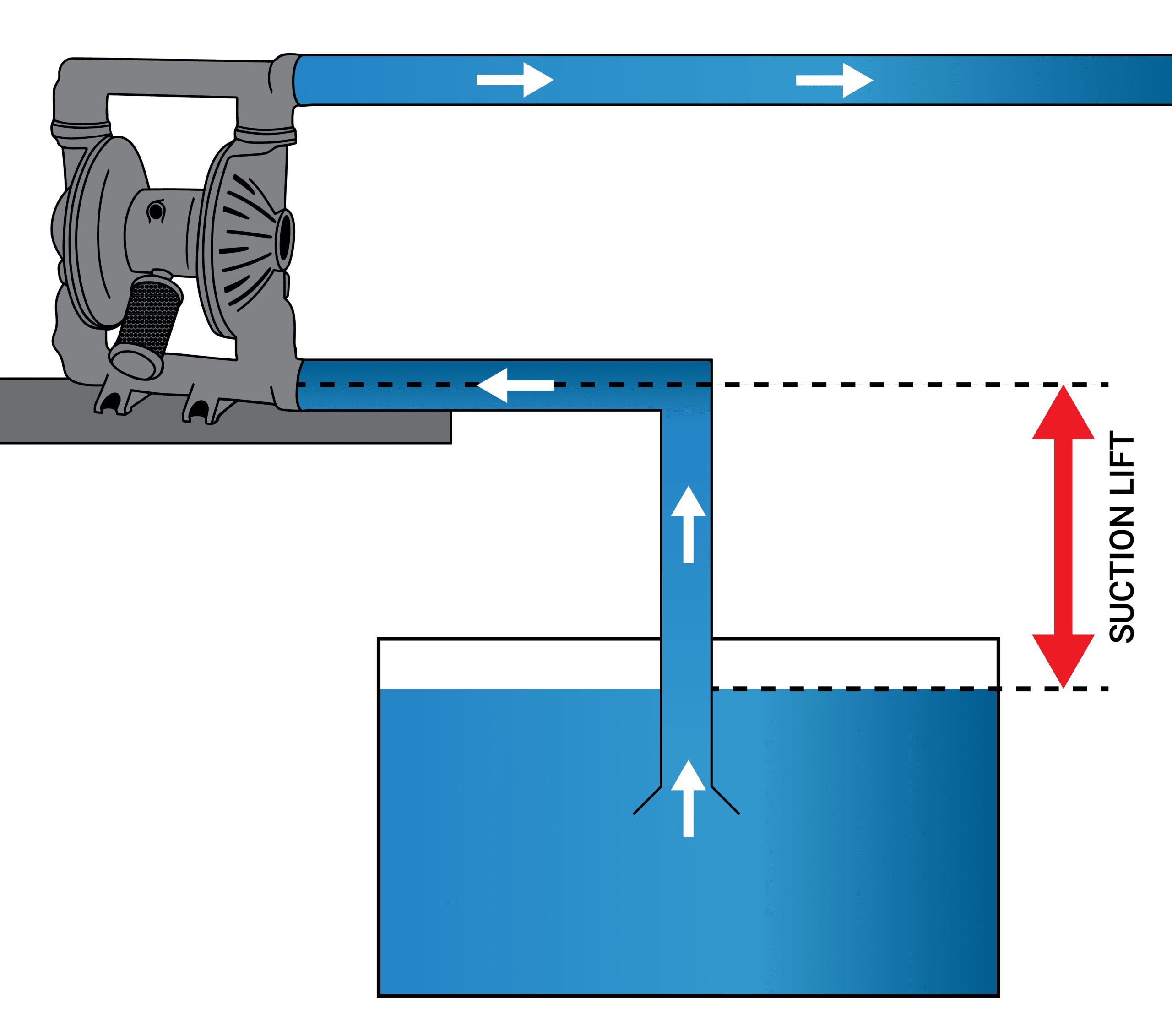
This process has a hard physical limit: suction lift. A surface pump can only draw water from a maximum of about 7 to 8 metres below the pump. Beyond that depth, atmospheric pressure is not sufficient to lift the water column into the pump, no matter how powerful the motor is.
Key Limit: A surface pump cannot pull water from more than 7 to 8 metres below its own position. This is a physics constraint, not a product limitation.
Where Surface Pumps Work Well
Open wells with water level within 6 metres of the pump
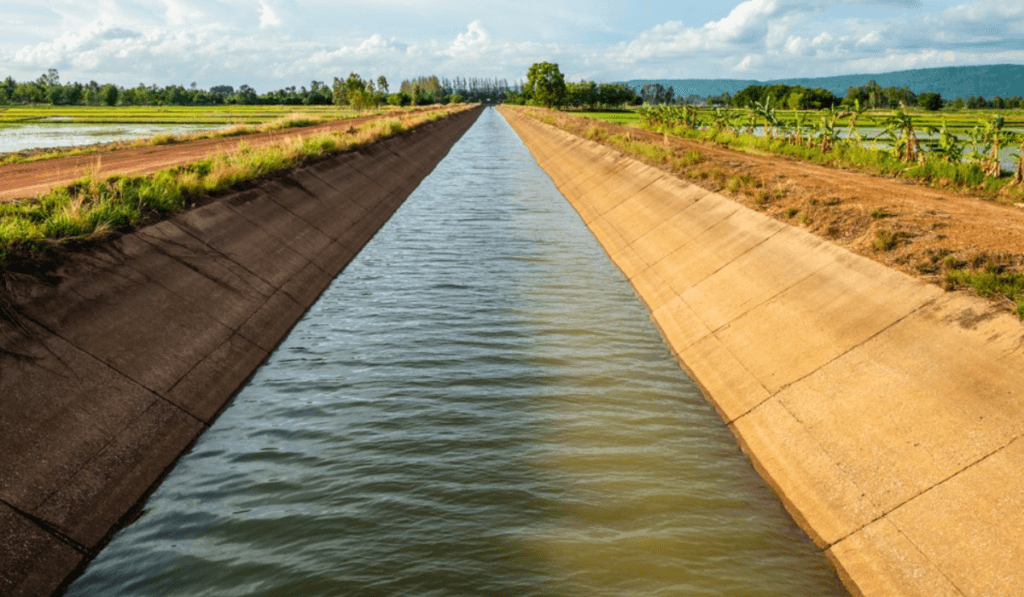
Rivers, streams, ponds, and irrigation canals
Shallow hand-dug wells
Water transfer from one storage tank to another
Booster applications where you are pumping from a low-level tank to an overhead tank
What Is a Solar Submersible Pump?
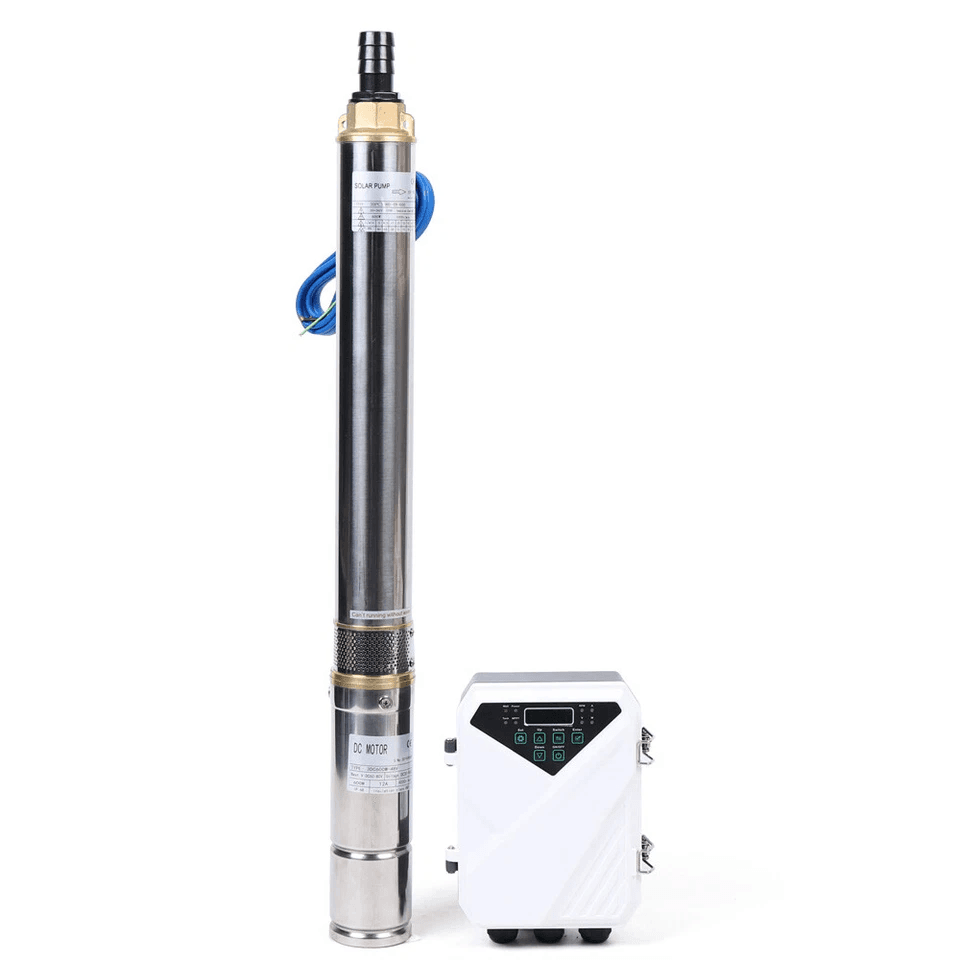
A submersible pump is a sealed unit that sits entirely underwater. The motor and pump impellers are contained in a single waterproof housing that is lowered into the borehole or well on a drop pipe and drop cable.
Because the pump is submerged, it does not rely on suction to move water. It pushes water upward from below, which is far more efficient than pulling it from above. This is why submersible pumps can handle depths of 10 to 150 metres or more.
Key Advantage: A submersible pump pushes water up rather than pulling it. This means depth is not a suction constraint. The only limit is the motor power and the pump head rating.
Where Submersible Pumps Work Well
Deep boreholes (anything deeper than 7 metres of water below the pump)
Any installation where the water source cannot be exposed to direct sunlight (boreholes are naturally sealed)
Residential and community water supply from boreholes
Irrigation systems drawing from deep aquifer boreholes
Locations where contamination risk must be eliminated (submerged pump in sealed casing prevents surface contamination)
Solar Surface Pump vs Submersible Pump: Head-to-Head Comparison
Factor
Surface Pump
Submersible Pump
Maximum suction depth
7 to 8 metres (hard physics limit)
No suction limit. Pushes from below.
Practical depth range
0 to 6 metres below pump position
10 to 150 metres below surface
Motor location
Above ground, dry
Submerged underwater at depth
Motor cooling
Air-cooled by ambient air
Water-cooled by flowing groundwater
Priming requirement
Must be primed before first start and after every dry run
Self-priming. No priming required.
Dry-run risk
Very high. Motor overheats rapidly without water in casing.
High if water table drops below pump. Dry-run protection required.
Maintenance access
Easy. Motor is visible and accessible.
Difficult. Pump must be pulled from borehole.
Installation complexity
Simple. Set on flat surface, connect pipes.
Complex. Requires careful pipe jointing, cable management, and lowering into casing.
Contamination risk
Higher. Open water source can receive surface runoff.
Higher. Sealed submersible construction costs more.
Lifespan (correct use)
8 to 12 years
10 to 15 years
Solar compatibility
Good. Works with DC solar pump controllers or VFD.
Excellent. Designed specifically for solar-direct DC or AC VFD operation.
Sand tolerance
Moderate. Impellers can wear with sandy water.
Varies by model. Stainless steel impellers handle sand better.
Best Nigerian application
Open wells, rivers, irrigation canals, surface transfer
Boreholes, deep wells, sealed aquifer extraction
The Suction Lift Problem:
This is the most common mistake made by buyers and installers in Nigeria. A customer sees a surface pump rated for 100 metres of head and assumes it can draw water from a 30-metre borehole. It cannot.
Head rating and suction lift are two completely different things.
What Head Rating Actually Means for a Surface Pump
The head rating on a surface pump describes how high or how far it can push water AFTER it has already entered the pump. It does not describe how deep the pump can draw water from.
A surface pump rated for 80 metres of head can push water 80 metres upward once it has entered the pump housing. But it can only draw that water from a maximum of 7 to 8 metres below the pump intake.
If your water level is more than 8 metres below your pump position, a surface pump will never work at that location, regardless of its head or power rating.
The Practical Borehole Depth Cutoff in Nigeria
Based on typical Nigerian borehole depths by region, here is where surface pumps work and where they fail:
Region
Typical Static Water Level
Surface Pump Viable?
Correct Pump Type
Lagos coastal areas
2 to 8 m below surface
Marginal. Check exact depth.
Surface pump if under 6m. Submersible if deeper.
Lagos inland/Ogun
10 to 25 m below surface
No
Submersible only
South-South (shallow)
3 to 12 m below surface
Only for very shallow wells
Submersible recommended
South-East
20 to 45 m below surface
No
Submersible only
Abuja/North-Central
30 to 60 m below surface
No
Submersible only
Kano/North-West
40 to 90 m below surface
No
Submersible only
Open well (all regions)
Within 6 m of surface
Yes
Surface pump viable
River/canal/pond
At surface level
Yes
Surface pump ideal
The conclusion for most Nigerian borehole installations is clear: if your water source is a drilled borehole, you need a submersible pump. The physics of suction lift make surface pumps unsuitable for anything beyond very shallow hand-dug wells or surface water sources.
Surface pumps are not the wrong choice. They are simply the wrong choice for boreholes. For agricultural irrigation from surface water, they are often the right choice.
Irrigation from Rivers and Canals
Nigeria has significant surface water resources, particularly in the Middle Belt and the Niger Delta. For farmers drawing from the Benue River, the Niger River tributaries, or seasonal irrigation canals, a solar surface pump is practical, lower cost, and easier to maintain.
The pump sits on the riverbank on a stable mounting structure. Panels are positioned nearby. A suction pipe draws water from the river. A discharge pipe runs to the field distribution system.
Because the motor is accessible, farmers can handle basic maintenance themselves without calling a technician. This matters in rural areas where service support is hours away.
Transfer Pumping Between Tanks
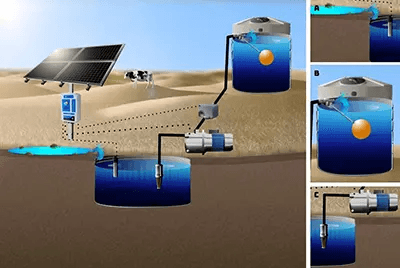
A common rural and peri-urban scenario: a submersible pump fills a large ground-level storage tank (10,000 to 20,000 litre polyethylene tank). A second surface booster pump then transfers water from the ground tank to an overhead tank for gravity supply.
Using a second submersible pump for the booster function is overkill and expensive. A small surface pump rated for the required head and flow handles this perfectly at lower cost.
For sizing the tank that sits between your submersible pump and your surface booster pump, see the tank sizing section of: Solar Water Pump System in Nigeria.
Shallow Hand-Dug Wells
Hand-dug wells in Nigeria are typically 5 to 15 metres deep with the water table sitting 2 to 8 metres below surface. When the water level is within the suction lift range, a solar surface pump is a cost-effective solution.
The risk is dry season. If the water table in the well drops by 2 metres during harmattan, a pump that was working in wet season may lose prime in dry season. Always measure well depth at the end of dry season before selecting a surface pump. If dry-season water level is more than 6 metres below the pump, install a submersible in the well instead.
Solar Compatibility:
Solar Surface Pumps
Surface pumps are available in both AC and DC variants. DC solar surface pumps connect directly to the solar array through a solar pump controller, which provides MPPT tracking to maximise power extraction from the panels at all irradiance levels.
AC surface pumps require a VFD (variable frequency drive) between the solar array and the motor. The VFD converts DC from the panels to variable-frequency AC, which controls motor speed. At low irradiance, the VFD slows the motor rather than stopping it, which maintains some pumping output even on cloudy mornings.
For a detailed explanation of how MPPT controllers work and how to size one correctly, see: MPPT Charge Controller Selection Guide. Note that pump MPPT controllers are different from battery MPPT controllers.
Solar Submersible Pumps
The solar submersible pump market in Nigeria is dominated by two configurations:
DC brushless submersible pumps (Grundfos SQFlex, Lorentz PS2): connect directly to panels via dedicated solar pump controller. No battery required for daytime operation.
AC submersible pumps with VFD (standard AC motors from Grundfos SP, Leo, DAB, Pedrollo): the VFD sits at the surface and drives the submerged AC motor. Most common in Nigeria due to parts availability.
The AC-plus-VFD configuration has a major practical advantage in Nigeria: if the pump motor fails, you can replace the motor with any compatible AC submersible from the local market. If a proprietary DC brushless pump fails, you often need the original brand motor, which may require waiting weeks for importation.
For inverter and VFD selection guidance, see: How to Select an Off-Grid Inverter. The selection principles apply equally to VFDs for pump applications.
Priming:
This is a practical difference that matters enormously in rural Nigeria.
A surface pump must be primed before it will operate. Priming means filling the pump housing and suction pipe completely with water before starting the motor. Without priming, the impeller spins in air, cannot create suction, and the motor overheats.
After any dry run, power cut, or maintenance operation, the pump must be re-primed. On a farm or remote installation where the operator is not a trained technician, improper priming is one of the most common causes of pump failure.
A submersible pump is self-priming by nature. Because it is already submerged in water, the impellers are always surrounded by water when powered. No priming procedure is required.
In remote Nigerian agricultural installations with non-technical operators, the self-priming nature of submersible pumps is a significant reliability advantage.
Surface Pump vs Submersible Pump for Solar Applications Cost Comparison
Cost Element
Surface Pump System
Submersible Pump System
Pump unit cost
Lower. N80,000 to N250,000 for quality units.
Higher. N150,000 to N600,000 for quality units.
Controller/VFD
Solar pump controller or VFD. Similar cost.
Solar pump controller or VFD. Similar cost.
Installation
Simple. 1 to 2 hours by competent installer.
Moderate. 3 to 5 hours including pipe jointing and lowering.
Pipe/cable costs
Shorter runs typical. Lower pipe cost.
Drop pipe and drop cable add N15,000 to N80,000 depending on depth.
Maintenance cost
Low. Motor is accessible above ground.
Higher when needed. Pulling pump from borehole costs N20,000 to N50,000 per service.
Failure rate (incorrect use)
High when used beyond suction limit.
Low when dry-run protected and correctly sized.
Total 5-year cost (correct application)
Lower in correct surface water applications.
Higher upfront but lower total cost for borehole use where surface pump is unsuitable.
The correct framing is not which pump is cheaper. It is which pump is right for your water source. Using a cheap surface pump where a submersible is required will result in a failed installation within weeks. The cost of that failure, including re-installation, will exceed the price difference.
Which Pump Should You Choose? A Decision Framework for Nigeria
Answer these four questions in order. Your answer to question one will determine everything else.
Question 1: What is your water source?
River, canal, pond, or surface water: go to Question 2.
Open hand-dug well: go to Question 2.
Drilled borehole: go directly to submersible pump. Stop here.
Question 2: How deep is the water level below your pump position?
Less than 6 metres: surface pump is viable. Continue to Question 3.
6 to 8 metres: marginal. Use submersible for reliability.
More than 8 metres: surface pump will not work. Use submersible.
Question 3: Does the water level drop significantly in dry season?
Yes, by more than 2 metres: measure dry-season depth before deciding. If dry-season level exceeds 6 metres, use submersible.
No, stable year-round: surface pump is reliable for this source.
Question 4: Is ease of maintenance a priority?
Yes, remote location or non-technical operators: surface pump is easier to maintain when applicable.
No, trained support available: either type is manageable.
Summary: If your water source is a drilled borehole at any depth, use a submersible pump. If your source is surface water or a shallow hand-dug well with water within 6 metres of the pump, a surface pump is appropriate.
Special Case: The Jet Pump
Some Nigerian installers propose jet pumps as a middle option. A jet pump is a surface pump that uses a venturi injector to extend its suction lift to 20 to 30 metres.
In theory, this sounds like a solution for medium-depth wells. In practice, jet pumps have significant drawbacks for solar applications in Nigeria:
They are less energy-efficient than submersible pumps at equivalent depths, requiring more solar panels for the same flow rate.
They require precise pressure control that does not pair well with the variable output of a solar array without a battery buffer.
Quality jet pumps are not widely stocked in Nigeria, making spare parts difficult to source outside Lagos and Abuja.
At depths below 20 metres, a properly sized submersible pump will always outperform a jet pump at lower running cost.
Jet pumps are a viable option only for medium-depth open wells (15 to 25 metres) where submersible pump installation is impractical. For drilled boreholes and deep hand-dug wells, they are not recommended.
Installation Requirements at a Glance
Requirement
Surface Pump
Submersible Pump
Mounting
Flat stable platform near water source. Concrete pad recommended.
No surface mounting. Suspended in borehole on drop pipe.
Suction pipe
Required. Foot valve at bottom end essential.
Not applicable. Pump sits below water level.
Discharge pipe
Standard pressure pipe to destination.
Drop pipe (rising main) from pump to surface, then discharge pipe.
Drop cable
Not applicable.
Required. Sized for depth and motor current draw.
Waterproofing
Motor protection from rain only (IP44 to IP55).
Full submersion rating required (IP68 minimum).
Float switch
Install at storage tank outlet.
Install at storage tank. Also consider borehole low-water switch.
Dry-run protection
Install flow sensor or pressure switch on discharge.
Controller must have under-current dry-run detection enabled.
The choice between a solar surface pump and a solar submersible pump is determined primarily by your water source and the depth of your water table.
For the vast majority of Nigerian borehole installations, submersible pumps are the only viable option. The 7 to 8 metre suction lift limit of surface pumps makes them physically incapable of drawing water from drilled boreholes, regardless of their power rating.
Surface pumps are the correct choice for surface water irrigation, shallow hand-dug wells with water within 6 metres of the pump, and transfer applications between tanks.
When in doubt about your specific installation, measure the water level at the end of dry season, check your borehole driller’s report, and follow the four-question decision framework in this guide.
Q1: Can I use a surface pump for my borehole in Nigeria?
Only if the static water level in your borehole is within 6 metres of the pump position. For any Nigerian drilled borehole where the water table is deeper than 8 metres below surface, a surface pump will not work. The suction lift limit is a physical constraint that no motor power can overcome. Use a submersible pump for any standard Nigerian drilled borehole.
Q2: Why is my surface pump not drawing water even though the motor is running?
There are three likely causes. First, the pump has lost prime: the housing and suction pipe need to be refilled with water before the pump can create suction. Second, the water level has dropped below the pump’s suction lift range during dry season. Third, the foot valve at the bottom of the suction pipe is stuck open or has failed, allowing water to drain back down between runs. Check the foot valve first. Then reprime and test.
Q3: Is a submersible pump more expensive to run than a surface pump?
Not in a correctly designed solar system. Submersible pumps are generally more efficient than surface pumps at equivalent depths because they push water up rather than pulling it. Pushing is mechanically more efficient. For comparable flow rates and head values, a submersible pump typically requires the same or fewer solar panels than a surface pump.
Q4: Can a submersible pump be used in an open well?
Yes. A submersible pump can be installed in any open well, hand-dug well, borehole, or any other water body deep enough to submerge it. The pump simply needs to be submerged below the water level and the water level must remain above the pump during operation. Submersible pumps are not restricted to boreholes.
Q5: How do I protect a surface pump from theft in a rural Nigerian installation?
This is a real concern for agricultural and remote installations. Options include a lockable steel cage bolted over the pump and controller, locating the pump inside a locked equipment room or borehole shed, and using a remote solar array location with cable runs that make the pump non-obvious from the road. Security is one reason some rural installers prefer submersible pumps: the motor is underground and significantly harder to remove quickly.
Q6: What is the difference between a solar pump controller and a VFD?
A solar pump controller is designed specifically for DC brushless pump motors. It tracks maximum power point from the solar array and controls motor speed accordingly. A VFD (variable frequency drive) converts DC power from the panels into variable-frequency AC power to drive a standard AC induction motor. Both achieve similar results but for different motor types. Do not use a standard battery MPPT charge controller for either pump type.
Q7: Can I run a submersible pump from a battery bank instead of direct solar?
Yes, but this is generally not recommended for pumping applications. Running a submersible pump from a battery bank means the battery takes the full startup current surge, which significantly reduces battery lifespan. Most solar pump systems are designed for direct solar operation with a storage tank acting as the energy buffer instead of a battery. If backup pumping during night hours is essential, a battery-backed system is possible but requires careful sizing of both the battery bank and the inverter.
The motor overheats rapidly because it relies on groundwater flow for cooling. Without water flowing past the motor, heat builds up within seconds to minutes depending on motor size. Most motors will sustain permanent winding damage within 3 to 10 minutes of dry running. A controller with under-current dry-run protection detects that the pump is running without load, stops the motor immediately, and waits before retrying. This feature is non-negotiable for any Nigerian installation.
I am Engr. Ubokobong Ekpenyong, a solar specialist and lithium battery systems engineer with over five years of hands-on experience designing, assembling, and commissioning off-grid solar and energy storage systems. My work focuses on lithium battery pack architecture, BMS configuration, and system reliability in off-grid and high-demand environments.
Contains information related to marketing campaigns of the user. These are shared with Google AdWords / Google Ads when the Google Ads and Google Analytics accounts are linked together.
90 days
__utma
ID used to identify users and sessions
2 years after last activity
__utmt
Used to monitor number of Google Analytics server requests
10 minutes
__utmb
Used to distinguish new sessions and visits. This cookie is set when the GA.js javascript library is loaded and there is no existing __utmb cookie. The cookie is updated every time data is sent to the Google Analytics server.
30 minutes after last activity
__utmc
Used only with old Urchin versions of Google Analytics and not with GA.js. Was used to distinguish between new sessions and visits at the end of a session.
End of session (browser)
__utmz
Contains information about the traffic source or campaign that directed user to the website. The cookie is set when the GA.js javascript is loaded and updated when data is sent to the Google Anaytics server
6 months after last activity
__utmv
Contains custom information set by the web developer via the _setCustomVar method in Google Analytics. This cookie is updated every time new data is sent to the Google Analytics server.
2 years after last activity
__utmx
Used to determine whether a user is included in an A / B or Multivariate test.
18 months
_ga
ID used to identify users
2 years
_gali
Used by Google Analytics to determine which links on a page are being clicked
30 seconds
_ga_
ID used to identify users
2 years
_gid
ID used to identify users for 24 hours after last activity
24 hours
_gat
Used to monitor number of Google Analytics server requests when using Google Tag Manager
1 minute
You can find more information in our Cookie Policy and .