
Most Nigerians who buy a hybrid solar system for home in Nigeria end up with the wrong size.
Not because they chose bad components. Because they started with the inverter instead of the load. They asked “which inverter should I buy?” before they understood what they actually needed to power. So they bought what the installer recommended, which is usually what the installer had in stock.
The result: a system that trips every afternoon, a battery that fails within 18 months, and a generator that still runs every night.
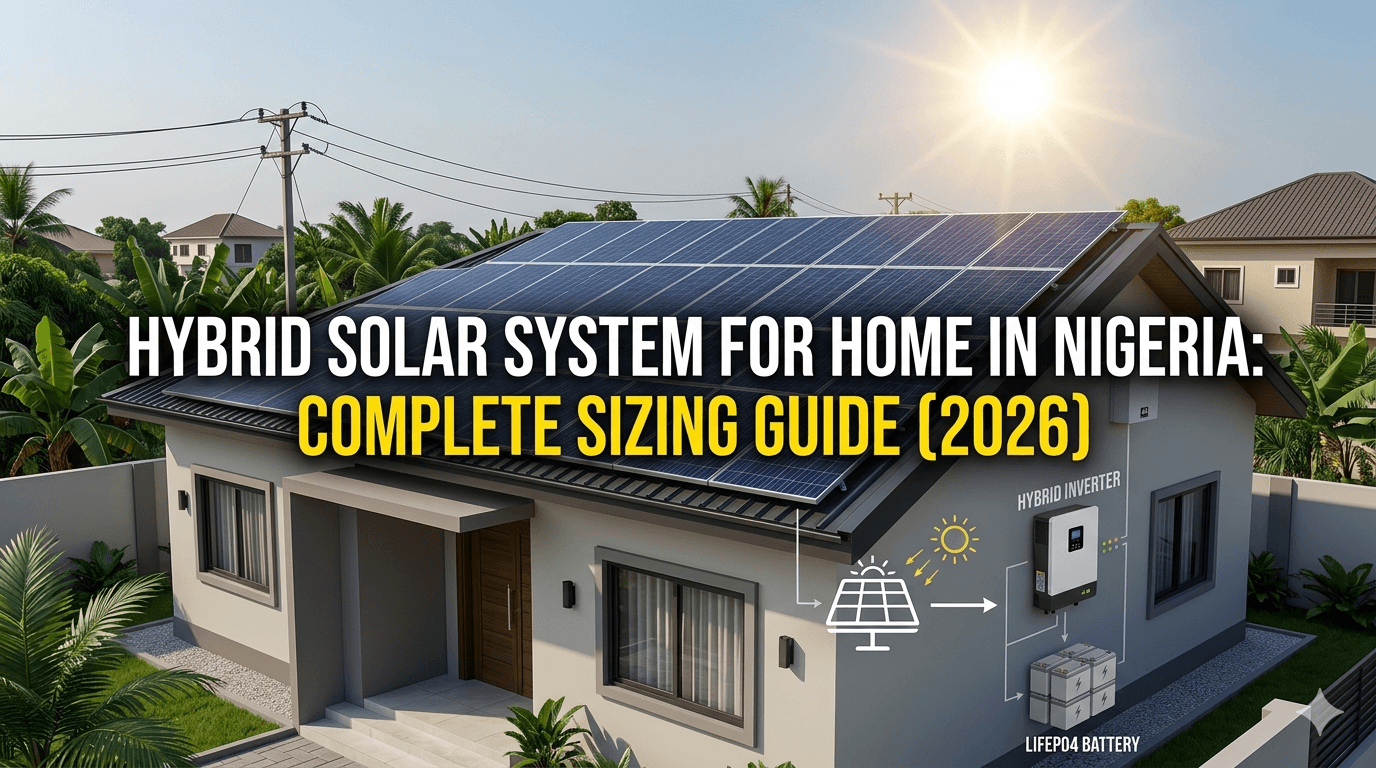
This article fixes that. We are going to properly size a hybrid solar system for home in Nigeria, step by step, using a real 3-bedroom case study with actual numbers. By the end, you will have an exact component list, correct system sizes, and a realistic cost range you can use when speaking to any installer.
The home we are sizing for: a 3-bedroom house in Lagos, occupied by a family of four, with no air conditioner on the essential load circuit. The design target is 12 hours of overnight backup with zero generator dependency under normal DISCO supply conditions.
If your home is different, the methodology remains the same. Change the load numbers and run the same calculations.
What Size Hybrid Solar System for Home in Nigeria? (Quick Answer)
A typical 3-bedroom house in Nigeria needs:
- 5kVA hybrid inverter
- 10kWh lithium battery (LiFePO₄)
- 4kWp solar array (8 × 500W panels)
- Estimated cost: ₦3.6M – ₦5.7M
This setup delivers 12 hours overnight backup, powers essential loads, and eliminates daily generator use under normal grid conditions.
Why Most People Get It Wrong
Most Nigerians who install a hybrid solar system for home in Nigeria size it incorrectly.
They start with the inverter instead of the load. Instead of calculating daily energy demand and peak power, they ask, “which inverter should I buy?” and rely on installer recommendations.
The result is predictable:
- Systems that trip under load
- Batteries that degrade within 12–18 months
- Continued generator dependence
What This Guide Will Do
This guide shows you how to correctly size a hybrid solar system for home in Nigeria using a real 3-bedroom Lagos case study.
You will learn:
- How to calculate your load (kWh and peak watts)
- How to size your battery for overnight backup
- How to size your solar panels for Nigerian conditions
- How to select the correct inverter
- The exact cost and component breakdown
Design Case
We size a 3-bedroom home in Lagos (family of four), targeting:
- 12 hours overnight autonomy
- No generator use under normal NEPA supply
- Essential loads only (no air conditioning)
If your home is different, the same method applies—only the numbers change.
The Nigerian 3-Bedroom Home Load Profile
Before you size any component in a solar system, you need two numbers: your daily energy demand in kWh, and your peak simultaneous load in watts. Every component size flows from these two numbers.
Do not estimate. Do not use rule-of-thumb figures. Build the actual load table for your home.
Here is the load profile for our Lagos 3-bedroom:
Always-on loads (24 hours):
| Appliance | Wattage | Duty Cycle | Avg Draw | Daily Wh |
| Chest freezer | 200W | 40% | 80W | 1,920Wh |
| Refrigerator | 150W | 35% | 52W | 1,260Wh |
| Router + decoder | 30W | 100% | 30W | 540Wh |
Evening and night loads (6pm to 7am, 13 hours):
| Appliance | Wattage | Hours | Daily Wh |
| 6 x LED bulbs (10W each) | 60W | 13h | 780Wh |
| 3 x ceiling fans (75W each) | 225W | 13h | 2,925Wh |
| 43-inch LED TV | 80W | 5h | 400Wh |
Daytime loads (7am to 6pm, 11 hours):
| Appliance | Wattage | Hours | Daily Wh |
| 2 x ceiling fans | 150W | 8h | 1,200Wh |
| Phone + laptop charging | 100W | 3h | 300Wh |
| Miscellaneous (pump, others) | — | — | 500Wh |
Total daily energy demand: 9,825Wh. We design for 10kWh/day.
Now the peak simultaneous load. This is the maximum wattage that could be running at the same time, used to size the inverter.
Morning peak scenario: both compressors starting, three fans running, lighting on:
- Freezer startup surge: 600W
- Fridge startup surge: 450W
- 3 fans running: 225W
- 6 LED lights: 60W
- TV: 80W
Peak running load: approximately 1,415W Peak surge load (compressor startup): approximately 3,200 to 4,000W for 3 to 5 seconds
We will use these numbers in the inverter sizing calculation.
Before you run your own numbers, use our load audit guide to make sure you capture every appliance correctly. Our off-grid solar system sizing calculator structures the audit and calculates the daily Wh automatically.
Step 1: Battery Sizing for Hybrid Solar System for Home in Nigeria

The battery size is determined by two things: how many hours of backup you need overnight, and what load that backup must cover.
Autonomy target for this home: 12 hours (6pm to 6am)
Night load over 12 hours:
| Load | Average Draw | Hours | Wh |
| Freezer (40% duty cycle) | 80W | 12h | 960Wh |
| Refrigerator (35% duty cycle) | 52W | 12h | 630Wh |
| Router + decoder | 30W | 12h | 360Wh |
| 6 LED bulbs | 60W | 8h | 480Wh |
| 3 ceiling fans | 225W | 10h | 2,250Wh |
| TV | 80W | 4h | 320Wh |
Total night energy requirement: 5,000Wh. Round to 5.5kWh to include inverter losses at 94% efficiency: 5.5 / 0.94 = 5.85kWh from the battery.
Using LiFePO4 at 80% DoD:
Required battery capacity = 5.85 / 0.8 = 7.3kWh
We round up to 10kWh for three reasons. First, the 2.7kWh margin covers morning loads before solar kicks in at 7am. Second, it provides a buffer for NEPA blackouts that extend past 7am before solar production ramps up. Third, the wet season reduces solar production, meaning the battery may not fully recharge every day. The larger bank absorbs the variation.
Battery selection: 48V 200Ah LiFePO4 (10kWh nominal, 8kWh usable at 80% DoD)
Brands available in Nigeria: Felicity LPBF 10kWh, Blue Carbon 48V 200Ah, Pylontech US3000, BYD LVL
At this battery size, your daily cycle utilisation is approximately 5.85kWh used / 8kWh usable = 0.73 cycles per day. This is within the optimal range for LiFePO4 longevity.
Use our LiFePO4 battery bank calculator to verify the configuration for your specific battery model and system voltage.
Read our battery bank sizing guide for the full sizing methodology including temperature derating and BMS current verification.
One point that must be stated clearly: a hybrid solar system for home use in Nigeria must include a battery. A hybrid inverter without a battery is just a grid-tied inverter. It shuts down completely when NEPA fails. The battery is not an optional upgrade. It is what makes the system work at night and during blackouts. For more on this, read our article on what a hybrid solar system actually is
Step 2: Solar Array Sizing
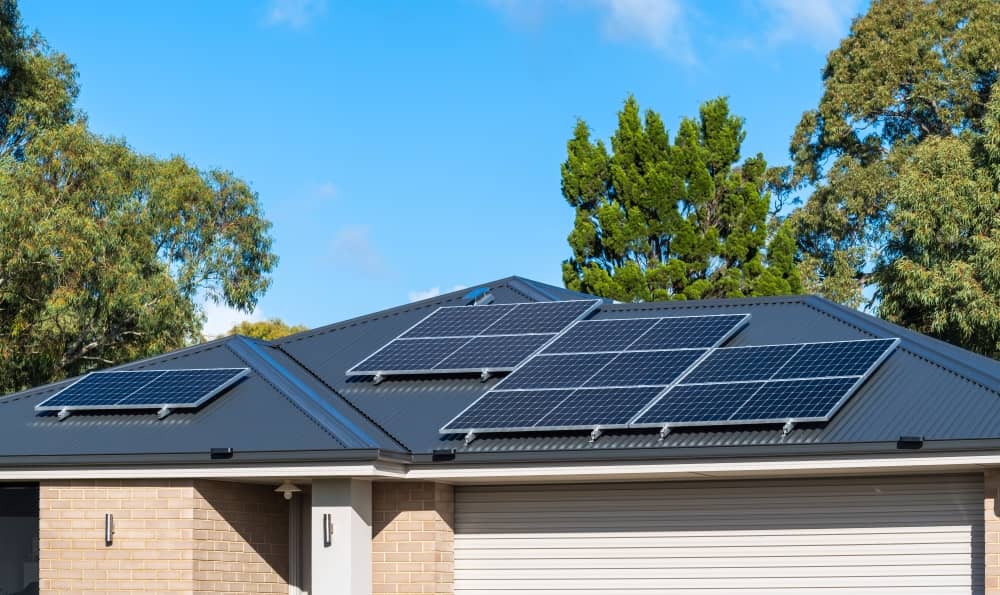
The solar array must do two things simultaneously in a hybrid system: power your daytime loads and recharge the battery. Sizing for loads only leaves the battery chronically undercharged, especially during the wet season.
Total daily solar energy required:
- Daytime loads: 3.5kWh (fans + laptop + miscellaneous during daylight)
- Battery recharge energy: 5.85kWh / 0.97 (DC-coupled round-trip efficiency) = 6.03kWh
- Total: 3.5 + 6.03 = 9.53kWh/day from solar
Array sizing formula:
Array size (kWp) = Total daily requirement / PSH / Derating factor

Lagos wet season PSH: 3.5h System derating factor (temperature, soiling, cable losses, MPPT efficiency): 0.78

Array size = 9.53 / 3.5 / 0.78 = 3.49kWp

Round up to 4kWp: 8 x 500Wp monocrystalline panels
This is the wet season-sized array. During dry season in Lagos (PSH 5.0 to 5.5h), this array will produce approximately 15.6 to 17.2kWh/day. After daytime loads and battery recharge, the MPPT will clip the array once the battery is full. This is normal. The system is protecting the battery. It is not wasted energy in any damaging sense.
If you want to size for dry season production and tolerate some wet season shortfall (covered by NEPA), you can use 5.0h PSH as the design figure. That reduces the array to approximately 2.4kWp. We do not recommend this for Southern Nigeria where wet season supply is unreliable simultaneously.
Always design to wet season PSH for Southern Nigeria. July in Lagos is your worst month. Size for that month and the rest of the year looks after itself.
For the full array sizing methodology including string voltage calculations and MPPT matching, read our solar array sizing guide and use our solar and MPPT calculator to verify string configuration against your inverter’s MPPT window.
For panel options and current prices in Nigeria, read our solar panels in Nigeria 2026 guide.
Step 3: Hybrid Inverter Selection
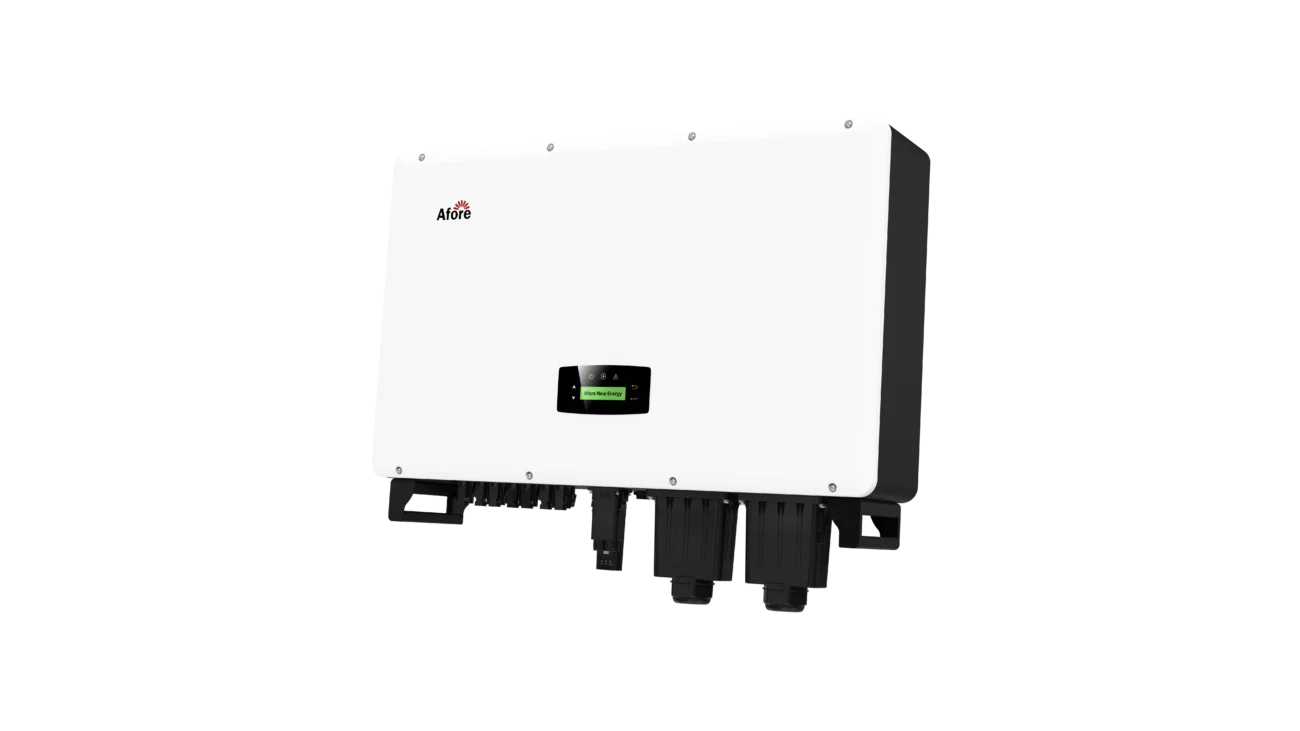
Now, and only now, we size the inverter. The inverter selection is driven by three numbers from the load audit: peak running load, surge load, and temperature-derated output.
Peak running load: 1,415W
Add a 20% design margin: 1,415 x 1.2 = 1,698W minimum continuous
This seems small, but recall this is the essential load profile only. The inverter must also handle:
- Full battery charging from grid during NEPA supply hours (typically 3 to 5A charging current)
- Any occasional non-essential loads switched on temporarily
A realistic peak continuous draw including charging: approximately 2,500 to 3,500W.
Temperature derating:
Nigerian plant rooms reach 35 to 45°C ambient. At 40°C:
Derated output = 5,000W x [1 − (40 − 25) x 0.01] = 5,000 x 0.85 = 4,250W
At 40°C ambient, a 5kVA inverter delivers 4,250W continuous. Our load is approximately 3,500W at peak. That gives us 750W of headroom. Acceptable.
Surge requirement:
Freezer and fridge compressors start at 3 to 6x their running wattage. Combined startup surge: approximately 3,200 to 4,000W for 3 to 5 seconds.
A 5kVA hybrid inverter typically handles 10kVA (10,000W) surge for 10 seconds. This comfortably covers the compressor startup.
Selected inverter: 5kVA 48V hybrid inverter
Tier 1 (budget): Growatt SPH 5000TL3-BH (N380,000 to N500,000) Tier 2 (mid-range): Deye SUN-5K-SG04LP1 (N450,000 to N650,000) Tier 3 (premium): Victron Multiplus-II 48/5000 (N1,100,000 to N1,500,000)
For the Growatt or Deye, BMS communication is via RS485. Ensure your battery BMS supports RS485 and that you have the correct communication cable at commissioning.
For Victron, BMS communication is via CAN bus (VE.Can). Pylontech and BYD batteries are plug-and-play with Victron. Third-party batteries require a CANbus adapter.
For a complete inverter selection methodology including continuous rating, surge verification, and MPPT window matching, read our inverter sizing guide and use our inverter sizing calculator.
Complete System Component List and Cost
Here is the full system for this Lagos 3-bedroom home:
| Component | Specification | Cost Range |
| Hybrid inverter (Deye 5kVA) | 5kVA 48V, MPPT 100A | N450,000 to N650,000 |
| LiFePO4 battery | 48V 200Ah (10kWh) | N1,650,000 to N2,650,000 |
| Solar panels | 8 x 500Wp monocrystalline | N920,000 to N1,440,000 |
| Roof mounting structure | Aluminium rail + clamps | N180,000 to N300,000 |
| DC battery cables | 70mm2 tinned copper, lugs | N80,000 to N130,000 |
| AC output cables + conduit | 6mm2 per circuit | N60,000 to N100,000 |
| DC surge protection device | Class II, 1,000V | N20,000 to N35,000 |
| AC surge protection device | Class II, 230V | N15,000 to N25,000 |
| DC isolator (array) | 1,000V DC rated | N15,000 to N25,000 |
| DC fuse (battery to inverter) | 200A ANL fuse + holder | N20,000 to N35,000 |
| AC distribution board | 4-way DB, RCBOs | N55,000 to N90,000 |
| Busbars, lugs, cable ties | Miscellaneous BOS | N25,000 to N45,000 |
| Installation labour | Residential Lagos | N120,000 to N200,000 |
| Total | N3,610,000 to N5,725,000 |
What this system delivers:
- Essential loads powered 24 hours, 7 days a week
- 12 hours overnight backup from battery alone
- Solar recharges battery fully in a normal Lagos day (3.5h+ PSH)
- No generator required for normal operations
- Generator needed only if NEPA is absent AND solar is insufficient for more than 14 hours consecutively
- Monthly fuel savings: N280,000 to N420,000 versus running a 3.5kVA generator 10 hours per day at current petrol prices
- Payback period: 9 to 20 months depending on actual generator replacement hours
For the protection device sizing methodology, use our cable and electrical calculator. For DC cable sizing specifically, read our DC cable sizing guide. For the AC output distribution, read our AC wiring guide.
What NOT to Put on a 5kVA Home Hybrid System
This section is as important as the sizing above. Getting the load boundary wrong is what causes daily overload trips and premature inverter failure.
Electric cooker (2,000 to 2,500W continuous):
A single electric cooker plate runs at 2,000 to 2,500W. Add this to a 3,500W peak load and you are at 6,000W. A 5kVA inverter at 40°C delivers 4,250W. The system will trip immediately. Keep the electric cooker on NEPA supply only.
Non-inverter air conditioner (1,500 to 2,500W running, 5,000 to 7,500W startup surge):
A 1.5HP non-inverter AC draws 1,500W running and surges to 5,000 to 7,500W at startup. This startup surge exceeds the 10kVA surge rating of most 5kVA hybrid inverters. The inverter will trip every time the AC compressor kicks in. Never put a non-inverter AC on a 5kVA hybrid system.
Electric water heater / immersion heater (2,000 to 3,000W):
Pure resistive load, no surge, but 2,000 to 3,000W continuous. Add this to the existing load and you are at 5,500 to 6,500W. Beyond the derated inverter capacity. Run the heater from grid only.
Electric iron (1,000 to 2,500W):
Another purely resistive high-draw appliance. Run from grid only when NEPA is available. Your battery bank will drain in under 4 hours if the iron runs overnight.
What you CAN add
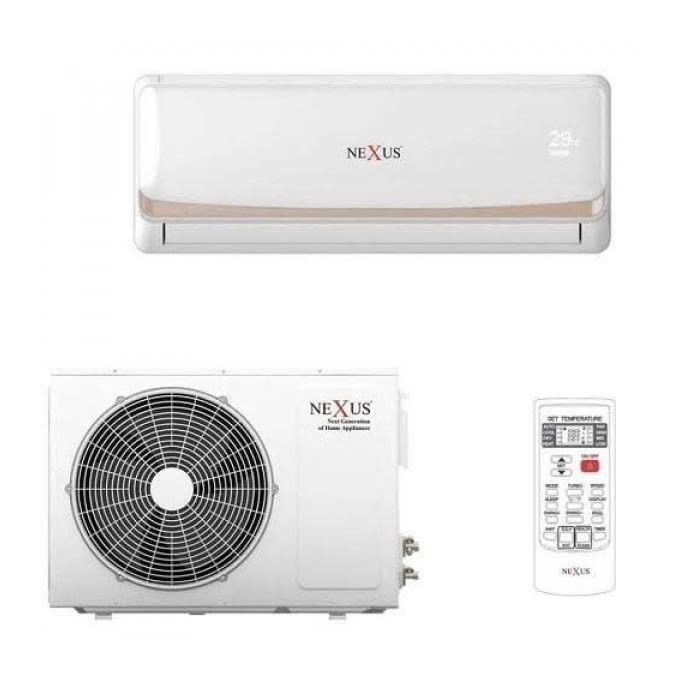
A 1HP inverter AC draws 700 to 900W running and surges to approximately 2,200 to 2,800W at startup. This is manageable on a 5kVA system if no other large loads are running simultaneously.
Adding a 1HP inverter AC changes the load profile:
- Additional daily energy: approximately 900W x 8h x 0.7 part-load factor = 5,040Wh
- New total daily demand: 10kWh + 5kWh = 15kWh/day
- New array requirement: 15 / 3.5 / 0.78 = 5.5kWp: 11 x 500Wp panels
- Battery remains sufficient at 10kWh if AC runs daytime only
- For overnight AC, battery must increase to 15kWh (48V 300Ah)
An inverter AC is worth the extra investment in array and battery capacity. It transforms the system from “essential loads only” to genuine home comfort. The additional cost is approximately N1 million to N1.8 million in extra panels and battery.
Scaling Up: 4 and 5 Bedroom Homes
The methodology above applies exactly to larger homes. The numbers change. The process does not.
4-bedroom home with one 1HP inverter AC:
Typical daily load: 15 to 18kWh Peak load: 4,000 to 5,500W Inverter: 8kVA hybrid Battery: 15kWh LiFePO4 (48V 300Ah) Array: 8 to 10kWp (16 to 20 x 500Wp) Total cost: N7 million to N11 million
5-bedroom home with two 1HP inverter ACs:
Typical daily load: 20 to 25kWh Peak load: 6,000 to 8,000W Inverter: 10kVA hybrid Battery: 20kWh LiFePO4 (two 10kWh banks) Array: 12 to 14kWp (24 to 28 x 500Wp) Total cost: N11 million to N18 million
At these scales, the Victron Multiplus-II 48/10000 or Deye 10kVA become the appropriate inverter choices. BMS communication is critical at larger battery bank sizes because the DCL limit from the BMS is what prevents a 20kWh battery bank from discharging at dangerous currents during startup surges.
Read our guide on CVL, CCL, and DCL dynamic battery limits to understand why this communication link matters more as battery bank size increases.
The Payback Calculation for This Home
This is the number most installers never show you clearly.
Current generator running cost for this home:
A 3.5kVA generator running 10 hours per day at current Lagos petrol prices (N950 to N1,050 per litre as of April 2026):
- Fuel consumption: 2.0 to 2.5 litres per hour
- Daily fuel cost: N19,000 to N26,250
- Monthly fuel cost: N570,000 to N787,500
- Annual fuel cost: N6,840,000 to N9,450,000
This does not include:
- Generator oil change every 3 months: N15,000 to N25,000 per service
- Generator service (annual): N50,000 to N100,000
- Generator overhaul or replacement every 3 to 5 years: N300,000 to N700,000
Total annual generator cost: N7.2 million to N10 million
Hybrid system total investment: N3.6 million to N5.7 million
Payback period: 4 to 10 months
This is not a typo. The generator is that expensive at current fuel prices. After payback, every month the system runs costs you only the negligible maintenance cost of cleaning panels every 3 months.
Our article on off-grid solar vs generator in Nigeria documents the full cost-of-ownership comparison with detailed working figures over a 10-year period.
Over 10 years, the generator option costs N72 million to N100 million in fuel and maintenance. The hybrid system costs N3.6 million to N5.7 million upfront plus one battery replacement at year 8 to 12 (N1.65 million to N2.65 million). Total 10-year cost: N5.25 million to N8.35 million.
The hybrid system is 10 to 20 times cheaper over 10 years than running a generator.
Protecting Your Investment After Installation
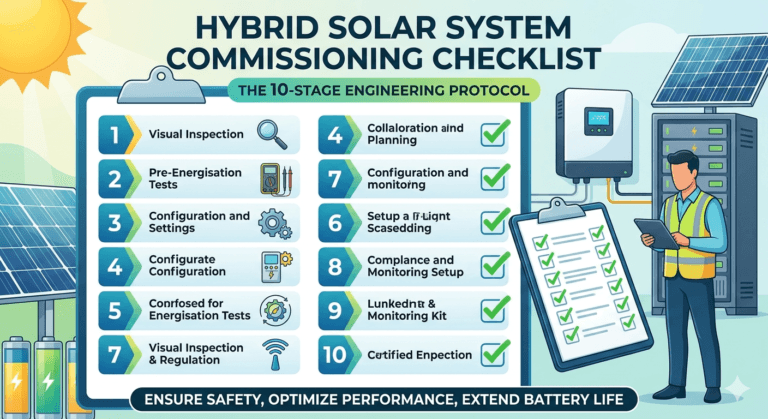
A correctly sized and correctly installed system can fail within 18 months if the configuration is wrong at commissioning. These are the settings that must be correct on day one:
Battery type: Set to LiFePO4, not AGM, not lead-acid.
Discharge cut-off:
Set to 20% SOC minimum (approximately 48V for a 48V system). Never set to 0%. Running a LiFePO4 to 0% SOC repeatedly destroys it within months. Read our guide on the 80/20 rule for lithium batteries to understand why this single setting is worth protecting.
Float charging:
Disabled for LiFePO4. Float charging accelerates calendar aging in lithium batteries by holding cells at high voltage continuously. Read our article on why float charging lithium batteries is harmful.
BMS communication:
Verified active at commissioning. The inverter display should show the battery SOC from the BMS, not a voltage-estimated SOC. If it shows voltage-estimated SOC, the BMS communication is not working.
AC input current limit:
Set correctly for your NEPA meter rating and generator capacity if applicable.
Read our article on why most solar battery systems fail before year 2 to understand exactly which configuration errors cause early failure and how to verify your system at commissioning.
Frequently Asked Questions
What size hybrid solar system do I need for a 3-bedroom house in Nigeria?
For a typical Nigerian 3-bedroom home on essential loads (no AC), a 5kVA hybrid inverter with a 10kWh LiFePO4 battery and a 4kWp solar array is the right starting point. If you want to add a 1HP inverter AC, the array needs to increase to 6kWp and you may need a 15kWh battery for overnight AC use. Do the load audit first. The size flows from your actual daily energy demand.
How many solar panels do I need for a 3-bedroom house?
For the home in this worked example, 8 x 500Wp panels (4kWp total) are sufficient for essential loads in Lagos. If you are in Port Harcourt, use 9 to 10 panels because wet season PSH is 3.0h instead of 3.5h. If you are in Kano or Abuja, 6 to 7 panels may be sufficient because PSH is higher. Always size to your location’s wet season PSH.
Can a 5kVA hybrid system run an air conditioner?
A 1HP inverter-type AC: yes, if it is the only large load running. A non-inverter AC: no. Startup surge of a non-inverter AC exceeds the surge rating of most 5kVA hybrid inverters. For reliable AC operation, consider an 8kVA system if AC is a primary load.
How long will a 10kWh battery last at night?
For the load profile in this article (5.85kWh overnight draw), a 10kWh battery (8kWh usable at 80% DoD) lasts approximately 12 to 13 hours before the grid needs to take over. If your night load is higher, the runtime reduces proportionally.
What is the total cost of a hybrid solar system for a home in Nigeria?
For the 3-bedroom essential load system in this article: N3.6 million to N5.7 million depending on inverter tier and battery brand. Add a 1HP inverter AC to the design and the cost increases to N5 million to N8 million. Costs are driven primarily by battery capacity. Always compare quotes at the same battery kWh, not just the same inverter kVA.
Do I still need a generator with a hybrid system?
For most urban Nigerian homes, no. The grid handles extended low-solar periods. A generator is only needed if NEPA is absent AND solar is insufficient simultaneously for more than 12 to 14 hours. This scenario is uncommon but not impossible during severe wet season conditions. Keep the existing generator as a tertiary backup but budget to run it perhaps 5 to 15 days per year, not 300 days per year.
How long before a home hybrid system pays for itself?
At current Lagos petrol prices, 4 to 10 months if you are replacing full generator running hours. The range depends on how many hours per day the generator was previously running and the current petrol price. At N1,000 per litre with a generator running 10 hours per day, a N4 million system pays for itself in under 7 months in fuel savings alone.
Conclusion
A hybrid solar system for a Nigerian home is not a luxury. At current fuel prices, it is the financially rational choice for any household that runs a generator more than 5 hours per day.
The sizing is not complicated when you follow the correct sequence. Load audit first. Battery from autonomy target. Array from battery recharge plus daytime load. Inverter from peak load plus surge plus temperature derating. Protection and cabling from component current ratings.
For this Lagos 3-bedroom home, the answer is: 5kVA Deye or Growatt hybrid inverter, 10kWh LiFePO4 battery, 8 x 500Wp panels, and a full BOS and installation package. Total investment: N3.6 million to N5.7 million. Payback: 4 to 10 months.
The full engineering framework behind this sizing is in our complete hybrid solar system design guide. Every formula used in this article is explained in depth there.
Start your own sizing with our off-grid solar system sizing calculator and load audit guide before speaking to any installer. A buyer who knows their own numbers cannot be oversold.

I am Engr. Ubokobong Ekpenyong, a solar specialist and lithium battery systems engineer with over five years of hands-on experience designing, assembling, and commissioning off-grid solar and energy storage systems. My work focuses on lithium battery pack architecture, BMS configuration, and system reliability in off-grid and high-demand environments.