Most articles on this topic Disadvantages of a Hybrid Solar Systems, give you three points: high upfront cost, battery replacement, and system complexity. You already suspected all three before you started searching.
This article goes deeper. The disadvantages that actually cause system failures, financial losses, and buyer regret in Nigeria are technical, not obvious, and most installers will not tell you about them upfront.
Here is a quick summary of all seven before we go into each one.
| S/N | Disadvantage | Severity | Manageable? |
| 1 | Single point of failure at the inverter | High | Partially |
| 2 | BMS communication failure runs silently | High | Yes, with monitoring |
| 3 | Configuration complexity most installers can’t handle | High | Yes, with the right installer |
| 4 | Higher upfront cost than a basic inverter-charger | Medium | Yes, if budget allows |
| 5 | Battery replacement is a real future capital cost | Medium | Yes, if planned for |
| 6 | Qualified technicians are rare outside Lagos and Abuja | Medium | Yes, with brand choice |
| 7 | Grid dependency remains for battery recharging | Low-Medium | Partially |
Disadvantages of a Hybrid Solar System
Now lets talk about them one after another;
1. Single Point of Failure at the Inverter Level
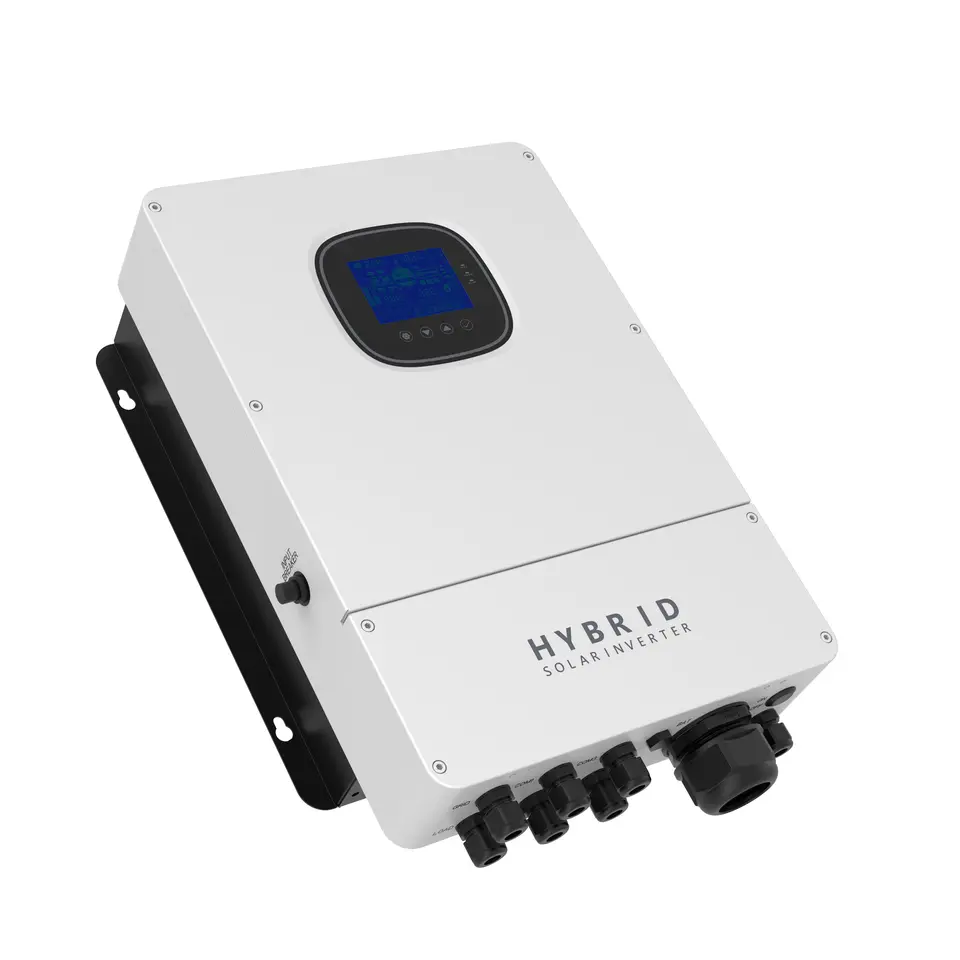
A hybrid inverter handles everything at once: MPPT, battery management, grid synchronisation, and transfer switching. All in one device.
If that inverter fails, your entire system fails. Not just the backup. Not just the solar. Everything stops, even though your panels and battery are still physically working.
Compare this to a basic inverter-charger setup with a separate MPPT controller. If the MPPT fails, the inverter-charger can still run loads from the battery. If the inverter fails, the MPPT can still hold battery charge. You have two independent failure points, so you rarely lose the whole system at once.
An AC-coupled grid-tied system with a battery inverter goes further, you have two separate inverters and one can continue operating if the other fails.
A DC-coupled hybrid system has one inverter. That is the trade-off for the efficiency advantage of DC coupling.
In Nigeria, this matters more than in other markets. Sourcing a replacement hybrid inverter and finding a qualified technician to install it can take one to three weeks. During that time, you have a completely dead system.
How to manage it:
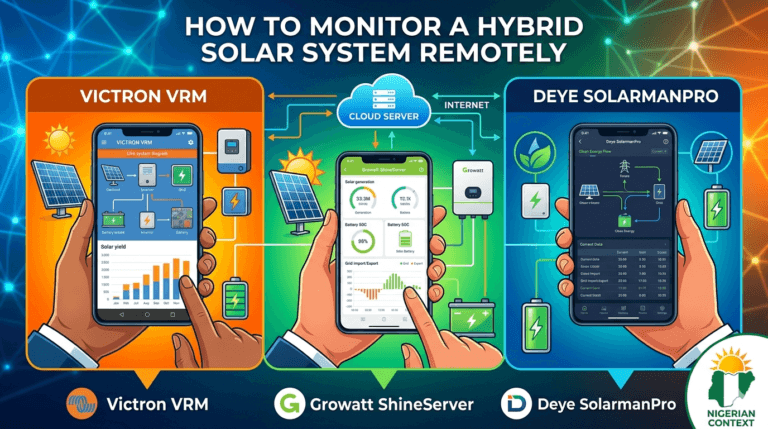
Invest in remote monitoring (Victron VRM, Growatt ShineServer, or Deye SolarmanPro). Get alerts the moment the inverter faults, before a small fault becomes a total shutdown. Also buy an extended warranty if the brand offers one.
2. BMS Communication Failure
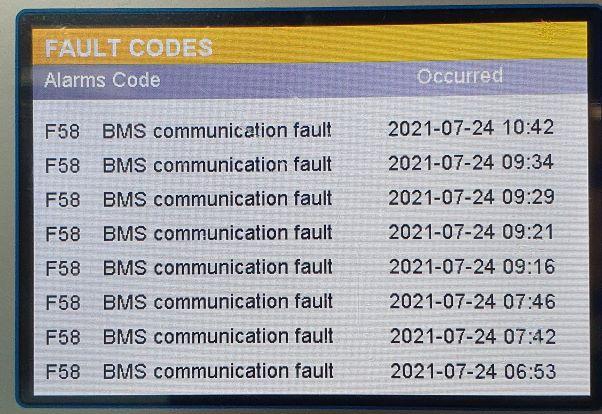
When BMS communication is working, the hybrid inverter and battery talk to each other continuously. The inverter knows the real state of charge, the cell temperatures, and the exact current limits the battery can handle at any moment.
When that communication link breaks, the inverter does not shut down. It keeps running. But now it manages the battery using voltage curves alone, the same way a basic inverter manages a lead-acid battery. It has no real-time temperature data. No accurate SOC data. It applies charge voltages based on a generic profile, not what the battery actually needs right now.
This is the insidious part: the system looks like it is working. Loads are powered. The battery charges. Nothing obvious is wrong.
But under the hood, the inverter may be applying a float voltage that is 0.3V too high, or charging past the temperature-safe current limit on a hot afternoon. The battery degrades slowly, week by week. The first sign most owners notice is that their autonomy has halved. By then, months of cycle damage has already happened.
This failure mode is invisible without a monitoring system. A shorted RS485 connector, a loose CANbus cable, or a firmware update that breaks the protocol, any of these can trigger it silently.
How to manage it:
Use a monitoring platform that shows BMS communication status separately from battery SOC. If your monitoring dashboard shows SOC but not cell-level data, the communication link may already be broken. When communication is intact, your inverter receives live CVL, CCL, and DCL values from the BMS every second and adjusts charge voltage, charge current, and discharge current accordingly. When it breaks, all three limits revert to static voltage curves. Read our full breakdown of how CVL, CCL, and DCL work in real time to understand exactly what your inverter loses when that communication link goes down. Also read more on why lithium battery problems are so often traced back to this exact failure mode.
3. Configuration Complexity That Most Installers Cannot Handle

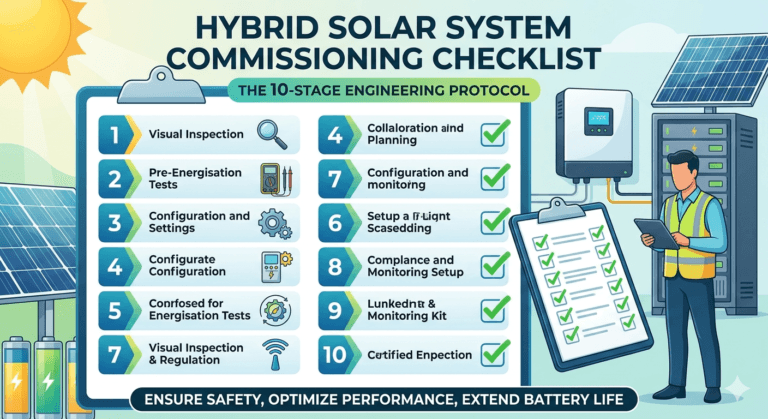
A hybrid inverter has between 40 and 80 configurable parameters depending on the brand. These include battery type, charge voltage limits, discharge cut-off voltage, grid charge windows, AC input current limit, grid frequency tolerance, transfer relay delay, MPPT voltage window, BMS protocol selection, and priority mode settings.
Getting these wrong does not cause an immediate visible failure. It causes slow, invisible damage.
Here are three examples of the kind of misconfiguration that happens regularly in Nigerian installations:
| Wrong Setting | What Should Be Set | What Actually Happens |
| Battery type set to AGM instead of LiFePO4 | LiFePO4 charge profile | Overcharging above 3.65V/cell. Accelerated degradation |
| Float voltage set 0.4V too high | No float needed for LiFePO4 | Continuous trickle stress on cells at full charge |
| Discharge cut-off set to 0% | Cut-off at 20% SOC (80% DoD) | Deep discharge events that cut cycle life by 40–60% |
The hardware cost is paid correctly. The configuration is not. The system runs fine for three months, then slowly underperforms, then fails well before the expected lifespan.
Nigeria has a serious shortage of installers who understand hybrid inverter parameters at depth. Most installations are done by people who wire correctly but configure incorrectly. Wiring is visible. Configuration is not.
How to manage it: Ask any installer you are considering to show you the full parameter sheet for your specific inverter and walk you through the LiFePO4 voltage settings. If they cannot, they are not qualified to commission a hybrid system. Also read our guide on why 100% maximum usable capacity is a lithium battery death sentence to understand what wrong discharge settings actually do to a battery bank.
4. Higher Upfront Cost vs a Basic Inverter-Charger

Every article mentions this. The correct framing is not just “it costs more.” It costs more because it does more. The question is whether the additional capability is worth the additional cost for your specific situation.
For a Nigerian home with 8 to 14 hours of DISCO supply, a hybrid inverter’s time-of-use scheduling, grid management, and export capability deliver clear financial value. You can set the system to charge from the grid at night during off-peak tariff windows and run on solar and battery during the day.
For a rural property with zero grid supply, you are paying for grid management and export capabilities you will never use. An off-grid inverter-charger is the correct choice there. See our off-grid vs hybrid vs grid-tied comparison if you are still deciding between system types.
The cost premium for a genuine hybrid inverter (Victron Quattro, Deye hybrid, Growatt SPH) over a good off-grid inverter-charger is typically 30 to 60% for the inverter alone at current Nigerian prices. Since the battery bank and panels cost the same either way, the total system premium is real but not prohibitive.
It is partly offset over time because a hybrid system can use a smaller battery bank. Grid availability for backup recharging means you do not need to size for 3 to 4 days of autonomy. 2 days is often sufficient. That battery bank size reduction partially closes the cost gap.
Use our off-grid solar sizing calculator to run both scenarios side-by-side with your actual load data.
5. Battery Replacement Cost

LiFePO4 batteries last 8 to 12 years at 80% depth of discharge with correct configuration. At year 8 to 12, the battery bank will need full replacement.
At current Nigerian LiFePO4 prices of N200,000 to N250,000 per usable kWh, a 10 kWh bank costs N2,000,000 to N2,500,000 to replace. Most buyers do not think about this at purchase time. It is a real capital expenditure that will arrive.
The inverter will likely outlast the first battery bank. The panels almost certainly will. So battery replacement is the primary long-term cost of hybrid system ownership, not the inverter and not the panels.
One important mitigating factor: global LiFePO4 cell prices have fallen by roughly 50% in the past five years. By year 8 to 12 of a Nigerian installation, replacement costs may be significantly lower than today’s prices. This is not guaranteed, but the trend has been consistent.
How to manage it: Budget for battery replacement from day one. Set aside a monthly amount that covers the replacement cost across the expected battery lifespan. Also protect your existing battery bank by keeping DoD within 80%, avoiding high-temperature charging, and using correct BMS settings. Read our guide on how to increase lithium battery lifespan for the practical steps. Use our LiFePO4 battery bank calculator to size your bank correctly from the start so you are not replacing an undersized bank earlier than needed.
6. Qualified Technicians Are Rare

Hybrid system troubleshooting requires knowledge of power electronics, BMS communication protocols, inverter parameter configuration, and grid interaction. This is a specialist skillset. It is not wiring knowledge. It is system engineering knowledge.
Nigeria’s solar training ecosystem has grown quickly, but it primarily produces installers who can wire correctly, not system engineers who can diagnose faults at the firmware and communication protocol level.
When a hybrid system develops a fault that is not a simple wiring or blown fuse problem, finding someone qualified to diagnose and resolve it outside Lagos and Abuja is genuinely difficult. This is not a reason to avoid hybrid systems. It is a reason to plan for it.
Three things reduce your exposure to this risk:
Brand choice matters. Victron Energy has authorised service partners in Nigeria with certified training. Growatt and Deye have growing local support networks. Choosing one of these brands significantly reduces your risk of being stranded with an unfixable system.
Document everything at installation. Get a printed copy of every configured parameter from your installer at commissioning. If a technician needs to reconfigure the inverter after a fault, having the original settings on hand saves hours and prevents fresh configuration errors.
Remote monitoring enables remote diagnostics. Victron VRM, Growatt ShineServer, and Deye SolarmanPro all allow a qualified technician to view system logs and fault codes remotely, without being on site. For rural locations especially, this is not optional.
7. Grid Dependency Is Still Real for Battery Recharging
A hybrid system reduces grid dependency. It does not eliminate it.
During extended periods of poor solar production (wet season heavy cloud cover, or consecutive overcast days), the battery depletes. When the SOC reaches the low threshold, the system switches to grid to recharge. If the grid is also unavailable during that same period, which happens in Nigeria during severe weather events, the system reaches its low SOC threshold with no grid available to take over. The result is a blackout.
An off-grid system with a generator eliminates this dependency entirely. The generator is always available regardless of grid status. A hybrid system without a generator remains vulnerable to the specific scenario of consecutive cloudy days combined with grid failure at the same time.
This is not a common scenario but it does happen. It is worth knowing before you make the decision.
How to manage it: If you are in an area with very unreliable grid supply and you experience extended wet season cloud cover, a hybrid system with a generator input is the most resilient architecture. This is what the inverter and generator calculator on the resources page is designed to help you size correctly.
Who Should Reconsider a Hybrid System
Based on the above, a hybrid system is a poor fit in these specific situations:
| Situation | Better Choice |
| Zero grid supply at the location | Off-grid inverter-charger + generator |
| Very tight budget where the hybrid premium is unaffordable | Well-configured basic inverter-charger |
| Location with no qualified hybrid technician within reach and no remote monitoring available | Off-grid system with simpler inverter |
| Daily load below 2 kWh | Off-grid system is sufficient |
For everyone else, especially Nigerian homes with partial DISCO supply and loads above 3 kWh per day, the disadvantages above are real but manageable. The key is knowing about them before installation, not after.
Summary
The seven disadvantages of a hybrid solar system that actually matter are:
- One inverter failure takes down the entire system
- BMS communication failure causes silent, invisible battery damage
- 40 to 80 configuration parameters that most installers get wrong
- A 30 to 60% inverter cost premium over a basic system
- A battery bank replacement cost of N2 to N2.5 million at year 8 to 12
- A severe shortage of qualified technicians outside major cities
- Vulnerability to the specific scenario of extended cloud cover plus grid failure simultaneously
Most of these are manageable with the right installer, the right brand, and the right monitoring setup. The one that is not negotiable is cost. If the hybrid premium is not affordable, a well-configured basic inverter-charger is a more appropriate choice.
If you are still in the decision phase, start with our complete hybrid solar system design guide and run your load through the off-grid solar sizing calculator to understand what size system your consumption actually requires.
Frequently Asked Questions
What is the biggest disadvantage of a hybrid solar system?
The single point of failure at the inverter level is the most consequential. A hybrid inverter handles MPPT, battery management, grid synchronisation, and transfer switching all in one device. If it fails, the entire system goes down, panels, battery, and all, until the inverter is repaired or replaced. In Nigeria, where sourcing and servicing can take weeks, this is more impactful than in markets with established service infrastructure.
Is a hybrid solar system worth it in Nigeria?
For homes with 8 to 14 hours of daily DISCO supply and loads above 3 kWh per day, yes. The time-of-use scheduling and grid management features deliver real financial value. For rural locations with zero grid supply, a hybrid system is not the right fit. An off-grid inverter-charger is more appropriate there because you would be paying for grid management capabilities you will never use.
How long do hybrid solar system batteries last?
LiFePO4 batteries last 8 to 12 years at 80% depth of discharge with correct configuration and BMS communication intact. The lifespan shortens significantly with wrong inverter settings, BMS communication failure, or consistent deep discharge below 20% SOC. Read our guide on how to increase lithium battery lifespan for what actually determines how long your battery bank lasts.
Why does a hybrid solar system fail early?
The three most common causes are wrong inverter configuration (battery type set incorrectly, discharge cut-off set too low), BMS communication failure that goes undetected for months, and consistent deep discharging. None of these cause an immediate visible failure. They all cause slow degradation that only becomes obvious when battery autonomy has already been cut by 30 to 50%. See our article on why most solar-battery systems fail before year 2 for a detailed breakdown.
Can a hybrid solar system work without the grid?
Yes. A hybrid system operates in island mode when the grid is unavailable. It runs loads from solar and battery only. The limitation is that when the battery depletes during extended cloudy periods and the grid is also down, there is no backup. An off-grid system with a generator handles this scenario better. A hybrid system with a generator input handles it best.
What is the difference between a hybrid inverter and a normal inverter-charger?
A hybrid inverter combines solar MPPT, battery management, grid connection, and transfer switching in one unit. It can export to the grid, schedule charging by time-of-use tariffs, and manage multiple power sources simultaneously. A basic inverter-charger handles battery charging and load management but has no built-in MPPT and no grid export capability. The hybrid system is more capable but more expensive and more complex to configure correctly.
How much does it cost to replace a hybrid solar battery in Nigeria?
At current LiFePO4 prices of N200,000 to N250,000 per usable kWh, a 10 kWh battery bank costs N2,000,000 to N2,500,000 to replace. Use our LiFePO4 battery bank calculator to calculate the exact bank size your load requires so you can estimate your future replacement cost accurately.

I am Engr. Ubokobong Ekpenyong, a solar specialist and lithium battery systems engineer with over five years of hands-on experience designing, assembling, and commissioning off-grid solar and energy storage systems. My work focuses on lithium battery pack architecture, BMS configuration, and system reliability in off-grid and high-demand environments.