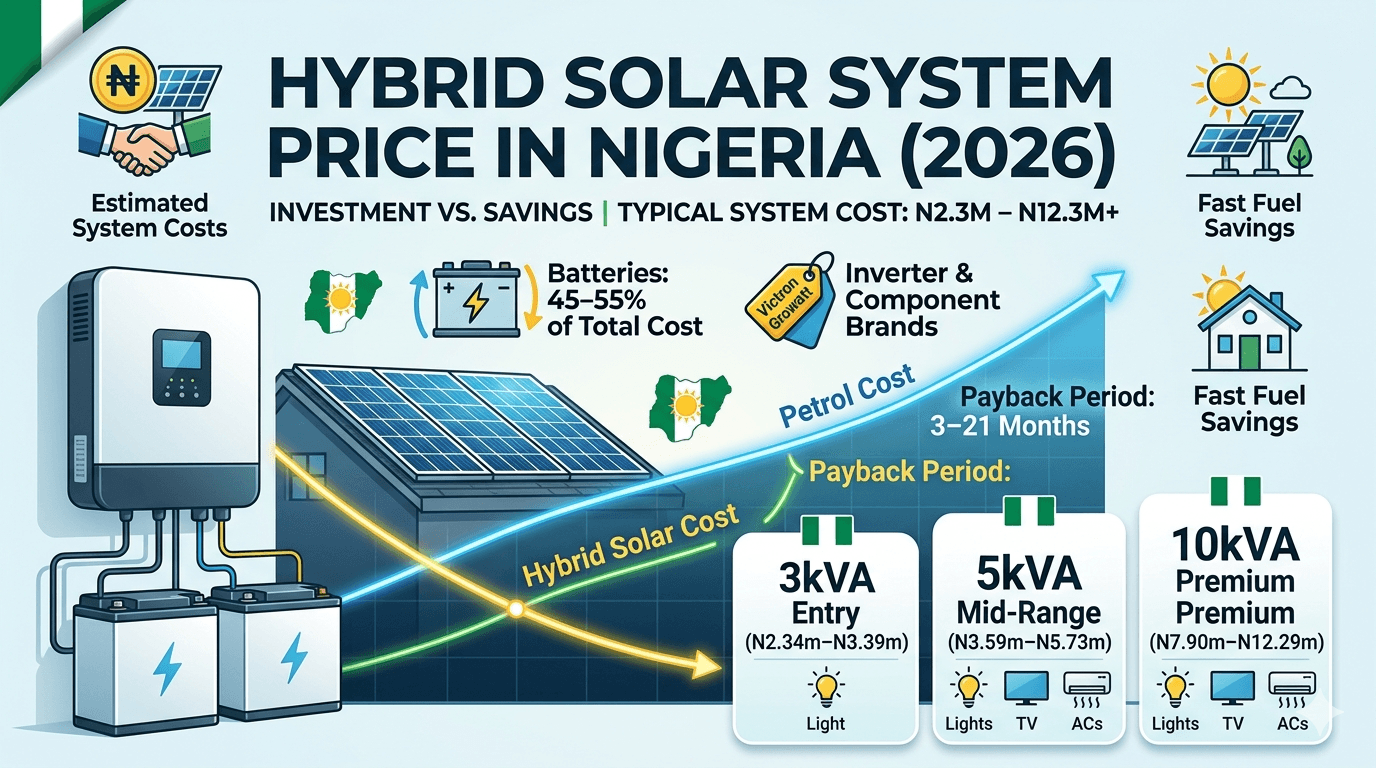

A hybrid solar system in Nigeria costs between ₦2.3 million and ₦12.3 million depending on system size, battery capacity, and inverter brand. A 3kVA system costs ₦2.3M–₦3.4M, a 5kVA system costs ₦3.6M–₦5.7M, and a 10kVA system costs ₦7.9M–₦12.3M.
You have received a quote for a hybrid solar system. It says N2.8 million. Another quote for the same stated system says N5.1 million. A third says N3.6 million.
All three quotes say “5kVA hybrid system.” All three are different companies. None of them shows a component breakdown.
This is the normal Nigerian solar market experience. And it is the reason most buyers either overpay, underbuy, or get a system that fails to deliver what was promised largely because they do not understand the real hybrid solar system price in Nigeria.
This article breaks the hybrid solar system price in Nigeria down by component at three system sizes. By the end, you will know what every line item should cost, why quotes vary so dramatically, and exactly what questions to ask before handing over any money.
The Four Variables That Drive Hybrid System Price
Before any number, understand what moves the price. Two quotes for identical stated capacity can differ by N2 million or more. Here is why.
Variable 1: Inverter brand tier

Growatt and entry-level brands sit at one price point. Deye mid-range and Solis sit higher. Victron Multiplus-II sits at the premium tier. At 5kVA, the gap between a Growatt and a Victron is N700,000 to N1,000,000 for the inverter alone. The Victron is not being marked up unfairly. It has deeper configuration, more robust transfer relay engineering, better surge handling, and a monitoring platform (VRM) that the Growatt cannot match. Whether that premium is worth it depends on your application and how critical your load is.
Variable 2: Battery capacity and brand
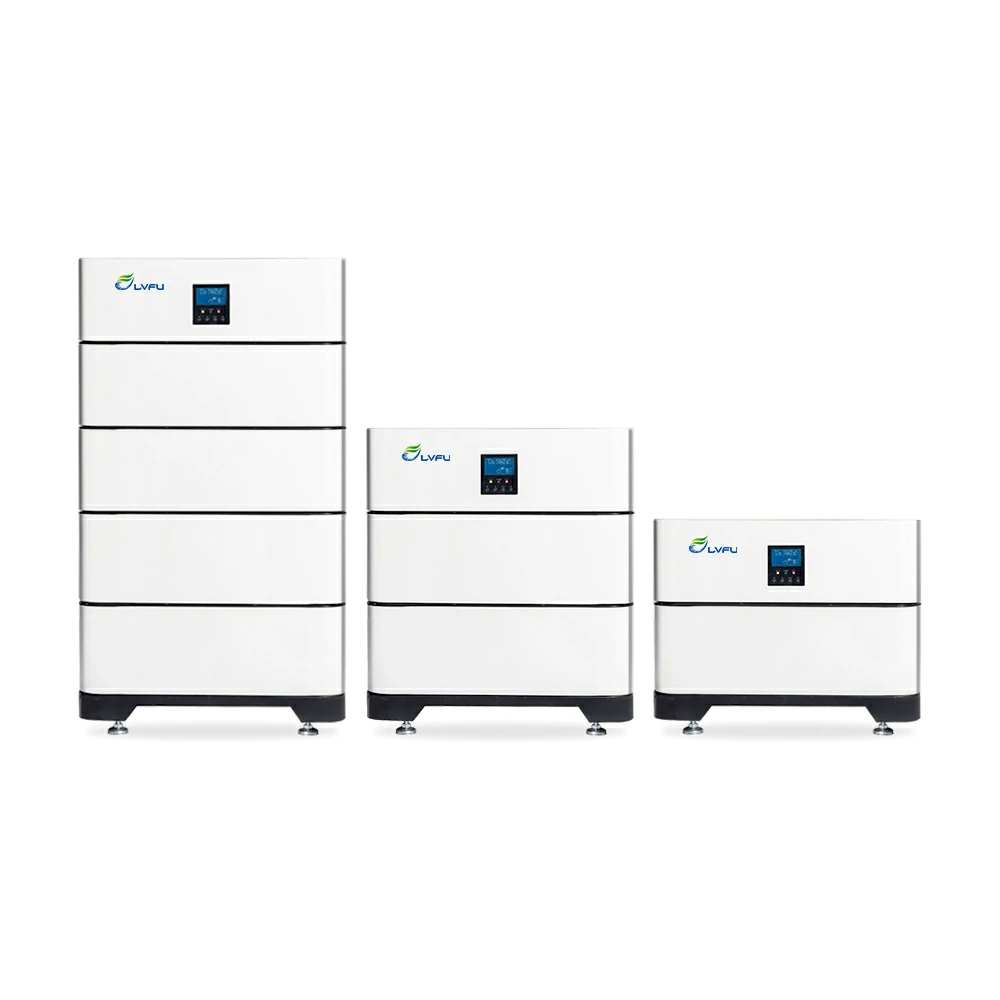
This is the single largest cost item in any hybrid system. Batteries account for 45 to 55% of total system cost. A quote with a 5kWh battery will always be cheaper than a quote with a 10kWh battery for the same inverter. If two quotes look similar on paper but one is N2 million cheaper, look at the battery. The difference is almost certainly there.
Variable 3: Solar panel count and wattage

Panel prices have come down significantly in Nigeria. But the number of panels drives a meaningful portion of total cost. A system with six panels is cheaper than one with ten panels. The question is whether the array is large enough to actually recharge the battery and cover daytime loads within available peak sun hours. An undersized array leaves the battery chronically undercharged, especially in the wet season.
Variable 4: Installation quality and BOS

Balance of system (BOS) covers DC cables, AC cables, mounting structure, surge protection devices, isolators, fuses, RCBOs, conduit, busbars, and labour. Some installers quote BOS properly. Many skip the DC surge protection device, use undersized cables, or omit individual RCBOs per output circuit. A complete BOS with proper protection adds N300,000 to N600,000 to the total. A stripped BOS saves money now and costs a new inverter in 3 years.
Component Prices of hybrid solar system price in Nigeria
Hybrid Inverters
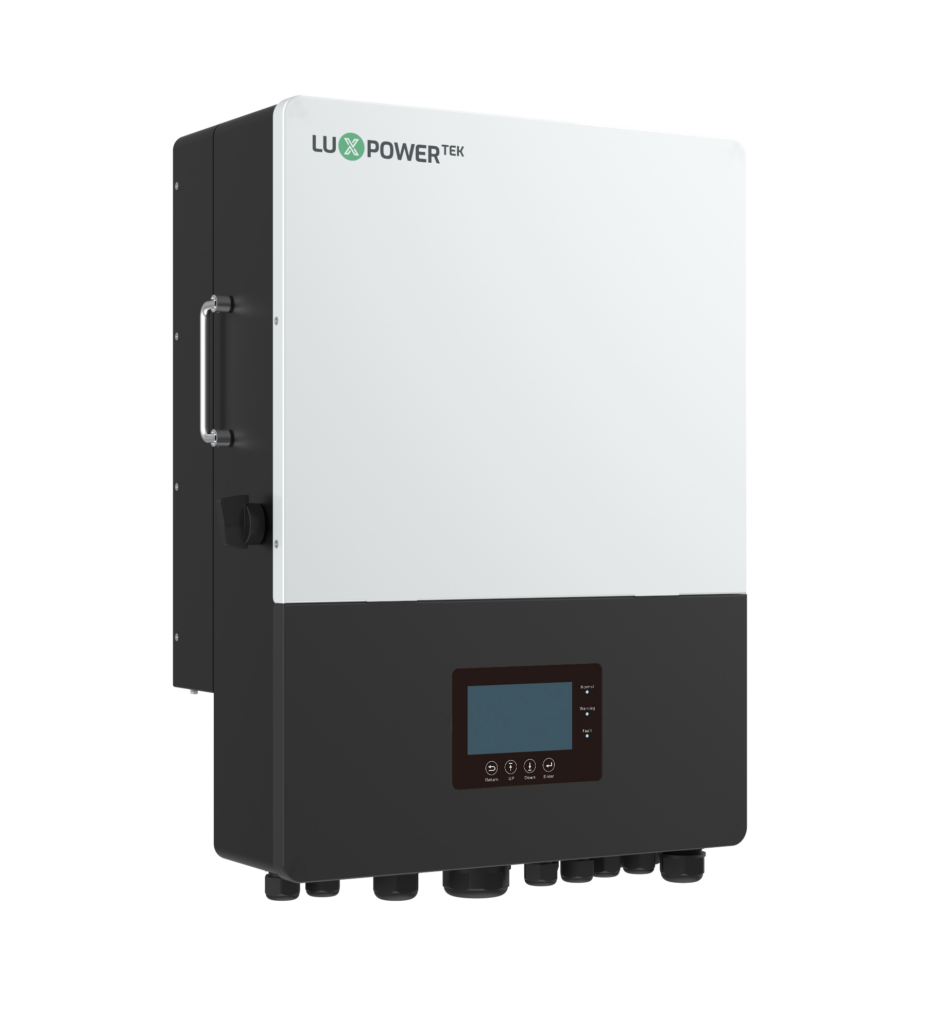
| Inverter | Capacity | Price Range |
| Growatt SPH 3kVA 48V | 3kVA | N280,000 to N400,000 |
| Growatt SPH 5kVA 48V | 5kVA | N380,000 to N546,000 |
| Growatt SPH 10kVA 48V | 10kVA | N650,000 to N900,000 |
| Deye SUN-3K 48V | 3kVA | N350,000 to N480,000 |
| Deye SUN-5K 48V | 5kVA | N450,000 to N680,000 |
| Deye SUN-10K 48V | 10kVA | N780,000 to N1,100,000 |
| Victron Multiplus-II 48/3000 | 3kVA | N750,000 to N1,050,000 |
| Victron Multiplus-II 48/5000 | 5kVA | N1,100,000 to N1,500,000 |
| Victron Multiplus-II 48/10000 | 10kVA | N1,800,000 to N2,500,000 |
Note: MPPT charge controllers are built into the Deye and Growatt hybrid inverters. For Victron Multiplus-II, a separate MPPT (Victron SmartSolar) must be purchased. This adds N200,000 to N450,000 to the Victron system cost depending on MPPT current rating.
Use our inverter sizing calculator to verify the right capacity for your specific load before buying.
LiFePO4 Batteries (48V systems)
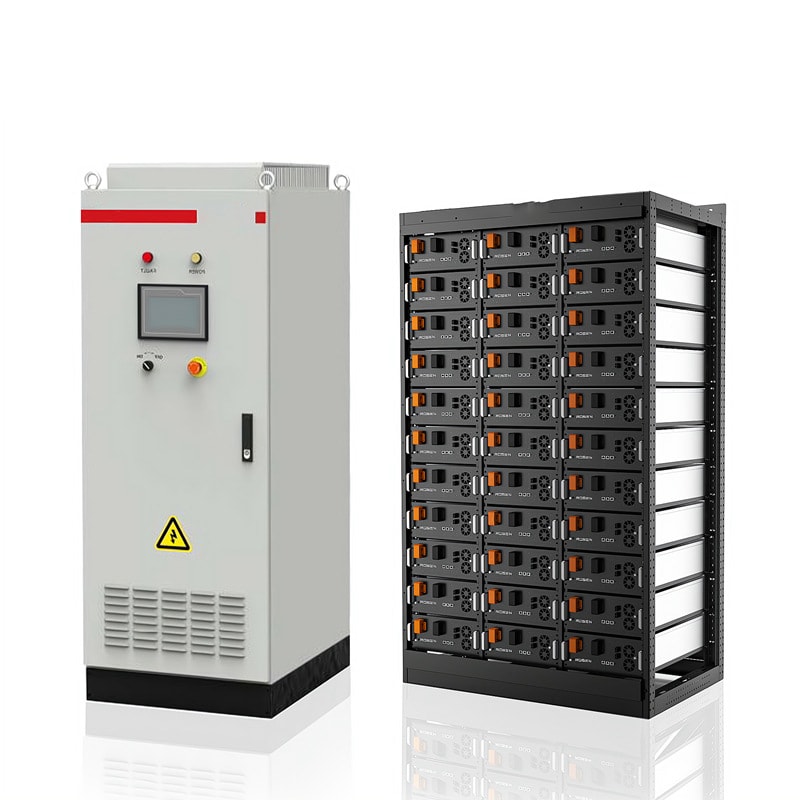
| Capacity | Configuration | Price Range |
| 5kWh | 48V 100Ah | N1,050,000 to N1,400,000 |
| 10kWh | 48V 200Ah | N1,650,000 to N2,650,000 |
| 15kWh | 48V 300Ah | N2,300,000 to N3,100,000 |
| 20kWh | 2 x 48V 200Ah | N3,300,000 to N5,300,000 |
Battery brands available in Nigeria: Felicity, Blue Carbon, Pylontech, BYD, PowMr, Elvees.
Felicity remains the most widely stocked and competitively priced brand for residential use. Pylontech offers excellent BMS communication compatibility with Victron systems. BYD is premium with superior cell grade but higher cost.
Always verify that the battery brand communicates with your chosen inverter brand via CAN or RS485. A mismatch means the inverter manages the battery blind, which destroys the battery slowly over 12 to 18 months.
Read our guide on inverter-battery communication protocols to understand this critical compatibility check.
Use our LiFePO4 battery bank calculator to calculate the correct battery capacity for your load and autonomy target before comparing quotes.
Solar Panels (Monocrystalline)

| Wattage | Price Range per Panel |
| 400Wp monocrystalline | N95,000 to N140,000 |
| 500Wp monocrystalline | N115,000 to N180,000 |
| 550Wp monocrystalline | N130,000 to N210,000 |
Brands: Jinko, JA Solar, Canadian Solar, Longi, Trina. These are all Tier 1 manufacturers. Do not accept unbranded panels regardless of stated wattage. An unbranded 500Wp panel that actually produces 380Wp will leave your battery chronically undercharged.
For a detailed guide to panel selection in Nigeria, read our solar panels in Nigeria 2026 guide.
Balance of System (BOS)
| Item | Price Range |
| DC surge protection device (SPD) | N20,000 to N40,000 |
| AC SPD on grid input | N15,000 to N30,000 |
| DC isolator (array disconnect) | N15,000 to N25,000 |
| ANL fuse 200A (battery to inverter) | N20,000 to N35,000 |
| 70mm2 DC battery cable (per metre) | N4,500 to N8,000 |
| 6mm2 AC output cable (per metre) | N1,200 to N2,000 |
| Aluminium roof mounting structure | N180,000 to N350,000 |
| 4-way DB with RCBOs | N55,000 to N95,000 |
| Busbars, conduit, lugs, terminals | N25,000 to N55,000 |
The DC surge protection device is the most frequently omitted item in cheap Nigerian solar quotes. During harmattan season, electrostatic discharge events regularly exceed the MPPT input voltage rating of hybrid inverters. One transient event above that limit destroys the MPPT permanently. A N25,000 DC SPD prevents a N500,000 to N1,500,000 inverter replacement. It is never optional.
Use our cable and electrical calculator to size all protection devices correctly for your specific system voltage and current ratings. For DC cable sizing methodology, read our DC cable sizing guide.
Installation Labour
| System Size | Lagos / Abuja | Other Locations |
| 3kVA residential | N80,000 to N150,000 | N120,000 to N220,000 |
| 5kVA residential | N120,000 to N200,000 | N180,000 to N300,000 |
| 10kVA residential or commercial | N200,000 to N400,000 | N280,000 to N500,000 |
Remote locations add transportation cost for the installer and components. Always confirm whether the quoted installation cost includes transportation, commissioning, and parameter configuration, or just physical wiring.
Three Complete System Price Breakdowns
System 1: 3kVA Entry System

Best for: Small apartment, mini-flat, or 2-bedroom home on essential loads only. Lights, fans, fridge, TV, router. No AC.
Design basis: 5kWh daily load, 8 hours backup, Lagos location.
| Component | Specification | Cost Range |
| Hybrid inverter | Growatt SPH 3kVA 48V | N280,000 to N400,000 |
| LiFePO4 battery | 48V 100Ah (5kWh) | N1,050,000 to N1,400,000 |
| Solar panels | 6 x 400Wp (2.4kWp) | N570,000 to N840,000 |
| Roof mounting structure | Aluminium rail + clamps | N130,000 to N220,000 |
| DC + AC cables | 50mm2 DC, 4mm2 AC | N80,000 to N130,000 |
| DC SPD + AC SPD | Class II, 1,000V + 230V | N35,000 to N65,000 |
| DC isolator + ANL fuse | 1,000V rated | N35,000 to N55,000 |
| Distribution board + RCBOs | 4-way DB | N55,000 to N90,000 |
| Miscellaneous BOS | Busbars, lugs, conduit | N25,000 to N45,000 |
| Installation labour | Residential Lagos | N80,000 to N150,000 |
| Total | N2,340,000 to N3,395,000 |
What this covers: 8 to 10 hours overnight backup. Solar recharges battery in a normal Lagos day. No generator required for daily operations.
What it does not cover: Air conditioner, electric cooker, water heater, or large pumping loads.
System 2: 5kVA Mid-Range System
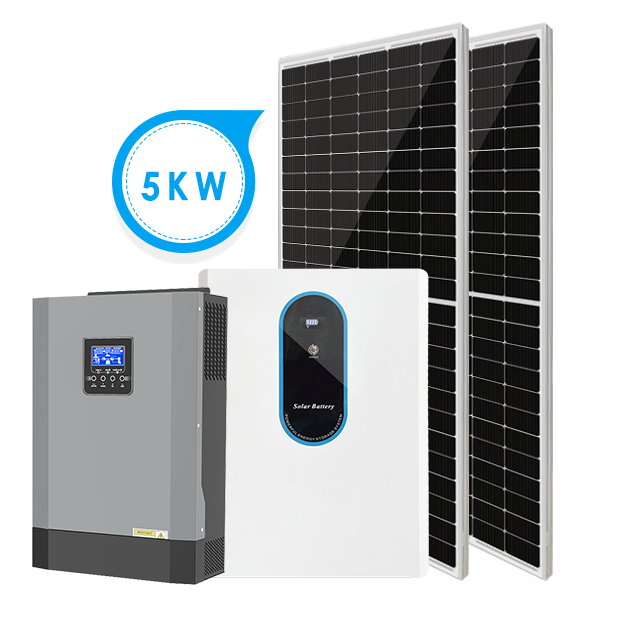
Best for: 3-bedroom home on essential loads including one 1HP inverter AC. Most popular configuration for Nigerian middle-income households.
Design basis: 10 to 12kWh daily load, 12 hours backup, Lagos location.
| Component | Specification | Cost Range |
| Hybrid inverter | Deye SUN-5K 48V | N450,000 to N680,000 |
| LiFePO4 battery | 48V 200Ah (10kWh) | N1,650,000 to N2,650,000 |
| Solar panels | 8 x 500Wp (4kWp) | N920,000 to N1,440,000 |
| Roof mounting structure | Aluminium rail + clamps | N180,000 to N300,000 |
| DC + AC cables | 70mm2 DC, 6mm2 AC | N100,000 to N165,000 |
| DC SPD + AC SPD | Class II, 1,000V + 230V | N40,000 to N70,000 |
| DC isolator + ANL fuse 200A | 1,000V rated | N40,000 to N65,000 |
| Distribution board + RCBOs | 6-way DB | N65,000 to N110,000 |
| Miscellaneous BOS | Busbars, lugs, conduit | N30,000 to N55,000 |
| Installation labour | Residential Lagos | N120,000 to N200,000 |
| Total | N3,595,000 to N5,735,000 |
What this covers: 12 hours overnight backup. Daytime operations including one 1HP inverter AC during daylight hours. Solar fully recharges battery in a normal Lagos day. Near-complete generator independence under normal DISCO supply conditions.
What this does not cover: Multiple air conditioners, electric cooker, immersion heater, or heavy industrial loads.
For the Victron alternative at this system size, replace the Deye inverter with Victron Multiplus-II 48/5000 and add a Victron SmartSolar 150/70 MPPT. Add N850,000 to N1,350,000 to the inverter line item. Total Victron-based system: N4,300,000 to N7,100,000.
System 3: 10kVA Premium System

Best for: 4 to 5 bedroom home, small business, or any application requiring air conditioning as a standard load or requiring high system reliability with remote monitoring.
Design basis: 18 to 22kWh daily load, 12 to 14 hours backup, Lagos location.
| Component | Specification | Cost Range |
| Hybrid inverter | Victron Multiplus-II 48/10000 | N1,800,000 to N2,500,000 |
| Victron SmartSolar MPPT 250/100 | Separate MPPT for Victron | N350,000 to N500,000 |
| Victron Cerbo GX | Remote monitoring | N180,000 to N280,000 |
| LiFePO4 battery | 2 x 48V 200Ah (20kWh) | N3,300,000 to N5,300,000 |
| Solar panels | 12 x 500Wp (6kWp) | N1,380,000 to N2,160,000 |
| Roof mounting structure | Heavy-duty aluminium | N280,000 to N480,000 |
| DC + AC cables | 95mm2 DC, 10mm2 AC | N160,000 to N260,000 |
| DC SPD + AC SPD | Class II, 1,000V + 230V | N55,000 to N90,000 |
| DC isolator + ANL fuse 400A | 1,000V rated | N55,000 to N90,000 |
| Distribution board + RCBOs | 8-way DB | N90,000 to N150,000 |
| Miscellaneous BOS | Busbars, lugs, conduit | N50,000 to N85,000 |
| Installation labour | Residential or commercial Lagos | N200,000 to N400,000 |
| Total | N7,900,000 to N12,295,000 |
What this covers: Multiple ACs, full home operation including washing machine and pumping loads. 12 to 14 hours backup on a fully loaded home. Remote monitoring via Victron VRM portal. Near-zero generator dependency.
For the Deye alternative at this system size, replace the Victron inverter and MPPT with Deye 10kVA 48V (built-in MPPT). Remove the Cerbo GX (Deye uses SolarmanPro cloud monitoring via WiFi, no additional hardware cost). Total saving: N1,500,000 to N2,200,000 on inverter and monitoring components. Total Deye-based 10kVA system: N6,400,000 to N10,100,000.
Why Some Quotes Are Much Cheaper and Why That Should Concern You
When a quote comes in N2 million below the ranges above for the same stated capacity, one or more of the following is happening.
The battery is undersized. A 5kVA system quoted with a 5kWh battery instead of 10kWh saves N600,000 to N1,250,000 immediately. The system will deliver 4 to 5 hours of overnight backup instead of 10 to 12. The buyer discovers this on the first night of a NEPA blackout.
The battery is unbranded or counterfeit. Nigeria’s solar market has a serious problem with batteries that are relabelled Chinese cells of unknown grade, BMS firmware, and cycle life. A battery labelled “200Ah” may actually deliver 130Ah after six months. Ask for the battery manufacturer name, model number, and BMS communication protocol. If the installer cannot answer, walk away.
The BOS is stripped. DC SPD missing. Undersized cables. Single MCB on the entire inverter output instead of individual RCBOs per circuit. No DC fuse within 300mm of the battery terminals. These are not cosmetic omissions. They are safety and reliability failures.
The inverter is a lower tier than quoted. Some installers quote Deye or Victron in the proposal and supply a lesser brand on installation day. Always confirm the exact model number before and after installation. Photograph every component label at commissioning.
Four questions to ask every installer before accepting a quote:
- What is the battery capacity in kWh, the brand, and the model number?
- Does the system include a DC surge protection device on the MPPT input?
- Does each output circuit have its own RCBO, or is there a single breaker for the whole output?
- What is the BMS communication protocol (CAN or RS485), and is it compatible with the inverter you are supplying?
A credible installer answers all four immediately. Hesitation on any of them is a red flag.
How to Size Your System Before Getting Quotes
The most powerful thing you can do before speaking to any installer is know your own numbers. A buyer who arrives with a completed load audit and a target battery capacity cannot be oversold.
The sizing sequence:
- Complete a full load audit. Every appliance, wattage, and daily hours. Our load audit guide walks through the exact process.
- Calculate daily energy demand (kWh/day) and peak load (watts). These are the two numbers that drive every other decision. using our Off-Grid Solar System Sizing Calculator
- Set your autonomy target (hours of backup without solar or NEPA). For urban Nigeria: 10 to 12 hours minimum.
- Calculate battery capacity using: Required battery (kWh) = Night load (kWh) / 0.8 (for 80% DoD). using our LiFePO4 Battery Bank Calculator
- Size the solar array using: Array (kWp) = (Daytime load + Battery recharge) / PSH / 0.78 (derating). use our Solar & MPPT Calculator
- Select inverter based on peak load with temperature derating applied.
Use our off-grid solar system sizing calculator to run these calculations. Use our LiFePO4 battery bank calculator for battery sizing and our solar and MPPT calculator for array sizing.
The full engineering methodology behind this sequence is in our complete hybrid solar system design guide.
The Payback Calculation
The price of a hybrid system only makes sense in context. The relevant comparison is not “what does it cost to buy?” but “what does it cost versus the alternative?”
For most Nigerian households, the alternative is a petrol generator.
Generator operating cost at current Lagos prices (April 2026):
- Petrol price: N950 to N1,050 per litre
- 3.5kVA generator fuel consumption: 2.0 to 2.5 litres per hour
- Running 10 hours per day: 20 to 25 litres per day
- Daily fuel cost: N19,000 to N26,250
- Monthly fuel cost: N570,000 to N787,500
- Annual fuel cost: N6,840,000 to N9,450,000
This does not include oil changes (N15,000 to N25,000 every 3 months), annual service (N50,000 to N100,000), or generator replacement every 3 to 5 years (N300,000 to N700,000).
Payback periods at these fuel costs:
| System | Total Cost | Monthly Fuel Saving | Payback Period |
| 3kVA entry system | N2.3m to N3.4m | N570,000 to N788,000 | 3 to 6 months |
| 5kVA mid-range | N3.6m to N5.7m | N570,000 to N788,000 | 5 to 10 months |
| 10kVA premium | N7.9m to N12.3m | N570,000 to N788,000 | 10 to 21 months |
These payback periods assume full generator replacement. If you are comparing to partial generator replacement (hybrid covers 60% of generator hours), adjust the monthly saving proportionally.
For the full 10-year cost comparison with detailed working, read our article on off-grid solar vs generator in Nigeria.
Hidden Costs Buyers Often Miss
Naira exchange rate risk
Hybrid inverters and LiFePO4 batteries are imported and priced against the US dollar. A 10% naira depreciation increases total system cost by 8 to 10%. Once you have a firm quote you are comfortable with, do not delay more than 1 to 2 weeks. Ask the supplier how long they will honour the quoted price.
Structural roof work
If your roof requires reinforcement for panel mounting, or if the roof surface needs clearing or repair, add N50,000 to N300,000 depending on scope. A site survey before quoting should identify this. If no installer has physically visited your roof before quoting, the quote is incomplete.
DISCO notification
Some distribution companies require formal notification for grid-connected solar installations. Budget N20,000 to N50,000 for this process depending on your DISCO and location.
Remote monitoring hardware
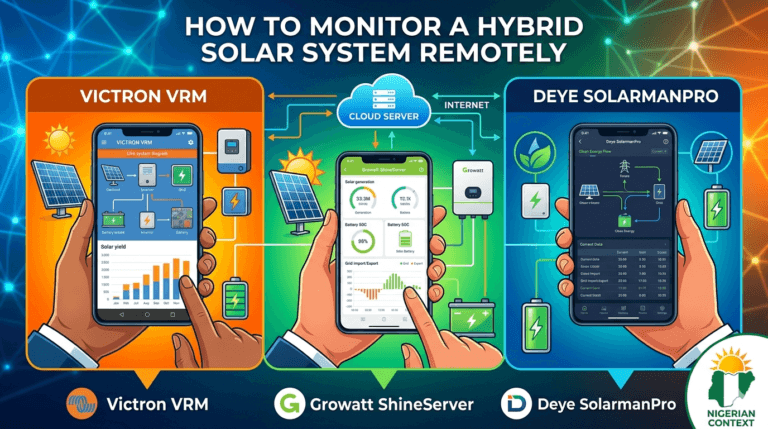
For Growatt and Deye systems, WiFi-based cloud monitoring (ShineServer and SolarmanPro respectively) is included at no extra hardware cost. For Victron systems, remote monitoring via VRM requires a Victron Cerbo GX or Venus GX unit (N180,000 to N280,000 additional). This is worth budgeting for premium Victron installations.
Battery replacement fund
A LiFePO4 battery correctly maintained at 80% DoD lasts 8 to 12 years. At year 8 to 12, plan to replace the battery bank. At current prices, a 10kWh replacement costs N1.65 million to N2.65 million. Battery prices globally have declined approximately 50% over the past five years. By year 10 of your installation, replacement cost may be significantly lower than today’s prices. But budget for it regardless.
For everything on extending battery lifespan and protecting this investment, read our guide on how to increase lithium battery lifespan and our article on the 80/20 rule for lithium batteries.
Frequently Asked Questions

How much does a hybrid solar system cost in Nigeria?
A complete hybrid solar system in Nigeria costs between N2.3 million and N12.3 million depending on system size, inverter brand, and battery capacity. A 3kVA entry system for a small home or apartment costs N2.3 million to N3.4 million. A 5kVA mid-range system for a 3-bedroom home costs N3.6 million to N5.7 million. A 10kVA premium system for a large home or business costs N7.9 million to N12.3 million.
What is the cheapest hybrid solar system in Nigeria?
A functional 3kVA hybrid system with a 5kWh LiFePO4 battery and 2.4kWp array starts at approximately N2.3 million for a properly specified system in Lagos. Quotes below N1.8 million for a stated 3kVA hybrid system with battery are missing components, using unbranded batteries, or have undersized cables and no surge protection. The cheap price will cost more in replacements within 3 years.
Why are some hybrid system quotes so much cheaper than others?
The most common reason is a smaller or lower-quality battery. The second reason is missing BOS components, particularly the DC surge protection device. The third is unbranded or counterfeit batteries. Always ask for the battery brand, model number, and capacity in kWh before comparing quotes.
How long before a hybrid system pays for itself in Nigeria?
At current petrol prices (N950 to N1,050 per litre), a 5kVA system replacing 10 hours of daily generator running pays for itself in 5 to 10 months. A 3kVA system pays for itself in 3 to 6 months. These are among the fastest payback periods for any energy investment anywhere in the world, driven entirely by Nigeria’s abnormally high generator fuel costs.
What is the price of a 5kVA hybrid solar system in Nigeria?
A complete 5kVA hybrid solar system with 10kWh LiFePO4 battery and 4kWp solar array costs N3.6 million to N5.7 million in Nigeria as of April 2026. The inverter alone (Deye 5kVA) costs N450,000 to N680,000. The battery is the largest single cost at N1.65 million to N2.65 million. The solar panels contribute N920,000 to N1.44 million.
Does the quoted price include installation?
It should. Always confirm. A professional installation quote includes site survey, physical wiring, commissioning, and parameter configuration. An installer who commissions without configuring battery type, discharge cut-off, and BMS communication has not finished the job. Read our article on why most solar battery systems fail before year 2 to understand exactly which commissioning steps matter.
How much does a 10kWh LiFePO4 battery cost in Nigeria?
A 48V 200Ah LiFePO4 battery (10kWh nominal) costs N1.65 million to N2.65 million in Nigeria as of April 2026 depending on brand. Felicity is at the lower end of this range. Pylontech and BYD sit toward the upper end. For budget-constrained installations, Felicity at 10kWh delivers adequate performance when correctly configured. For premium installations using Victron inverters, Pylontech’s CAN bus communication is plug-and-play and worth the premium.
Conclusion
The hybrid solar system price in Nigeria is driven primarily by one thing: the battery. Get that component right in capacity and brand, ensure the inverter is appropriately sized, size the array for wet season production, and install the full BOS including DC surge protection. That is a complete system. Everything else is detail.
The three system breakdowns in this article give you the benchmarks. Use them when evaluating any quote. If a quote comes in significantly below these ranges for the same stated specifications, the gap is in the battery, the BOS, or both.
Start your sizing process before you speak to any installer. Use our load audit guide to establish your daily energy demand, our LiFePO4 battery bank calculator to size the battery correctly, and our inverter sizing calculator to verify the inverter against your actual peak load.
For the complete engineering framework behind hybrid system design, read our complete hybrid solar system design guide.
A buyer who knows their numbers cannot be oversold.

I am Engr. Ubokobong Ekpenyong, a solar specialist and lithium battery systems engineer with over five years of hands-on experience designing, assembling, and commissioning off-grid solar and energy storage systems. My work focuses on lithium battery pack architecture, BMS configuration, and system reliability in off-grid and high-demand environments.