Complete off-grid solar system guide covering design, sizing, installation, troubleshooting, and cost analysis using real data from a Port Harcourt system.
This is a twenty-post engineering series on off-grid solar system design, installation, commissioning, and economics. Every post is built around a single worked system a 4,916Wh residential installation in coastal West Africa and every calculation in every post uses real numbers from that system. The methodology applies to any tropical off-grid installation. The numbers are Port Harcourt-specific and can be replaced with any site’s values.
The series is not designed to be read from beginning to end in a single session. It is designed to answer the specific question you have right now and route you to the adjacent posts that provide the context you need. This index tells you where to start based on your situation, lists every post in the series in order with a one-line description of what it covers, and describes the worked system that connects every post to every other one.
Find your situation in Section 1. Start with the link that matches your question. Follow the internal links from there.
Start Here Based on Your Situation
“I am considering solar does it actually make financial sense in Port Harcourt?”
The answer requires understanding what you are currently spending on your generator, not what your electricity bill says. Start with off-grid solar vs generator in Nigeria: why generator power costs over ₦5 million per year. It calculates the true annual cost of generator operation including fuel, maintenance, and replacement amortisation, computes the payback period against that baseline, and provides a 15-year total cost of ownership comparison. Most readers find the result significantly more favourable than they expected before reading it.
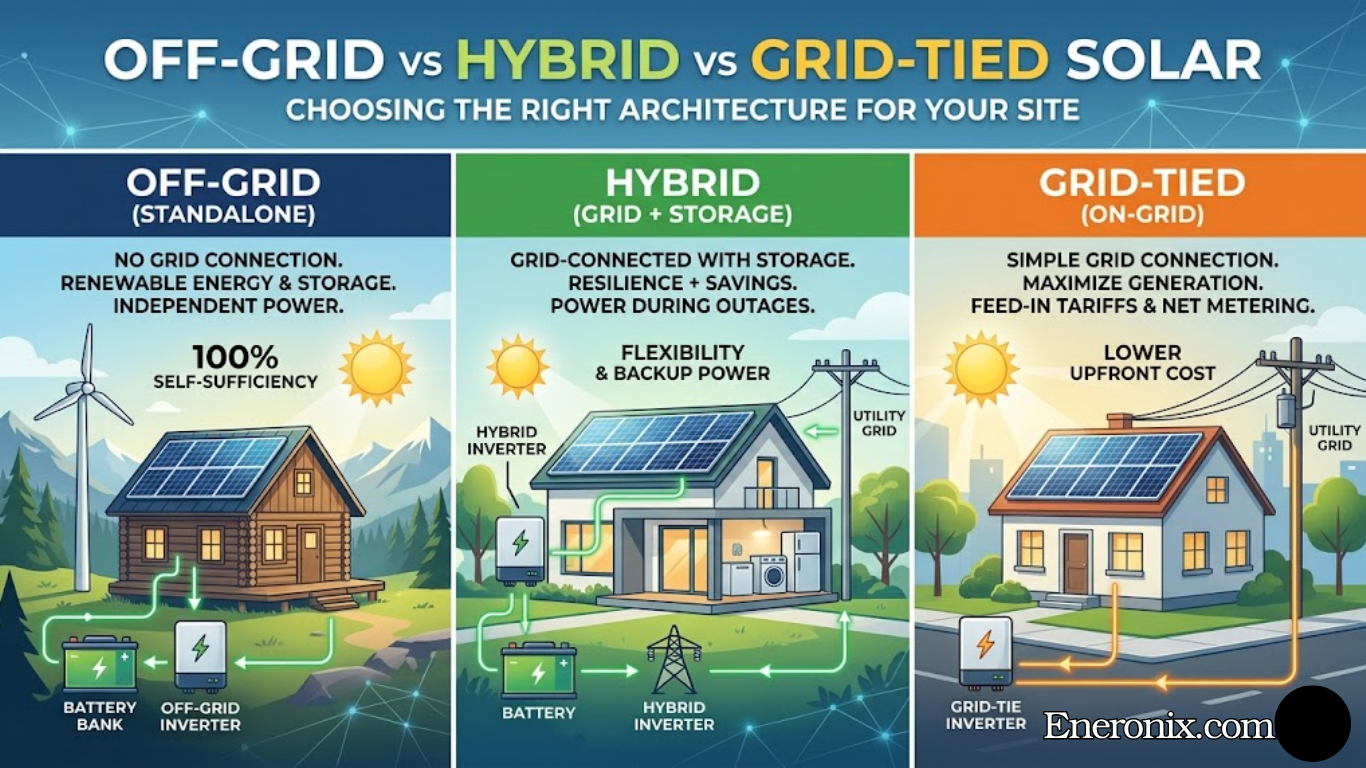
“I don’t know which type of solar system I need off-grid, hybrid, or grid-tied”
The answer depends on how many hours of grid supply your site actually receives, measured over 30 days not estimated. Start with off-grid vs hybrid vs grid-tied solar: which solar architecture is right for your site?. It provides a four-input site assessment framework that produces a deterministic architecture recommendation, a financial comparison between all three architectures for the same daily demand, and three worked scenarios covering the range of Port Harcourt grid conditions.
“I want to design a complete off-grid system from scratch”
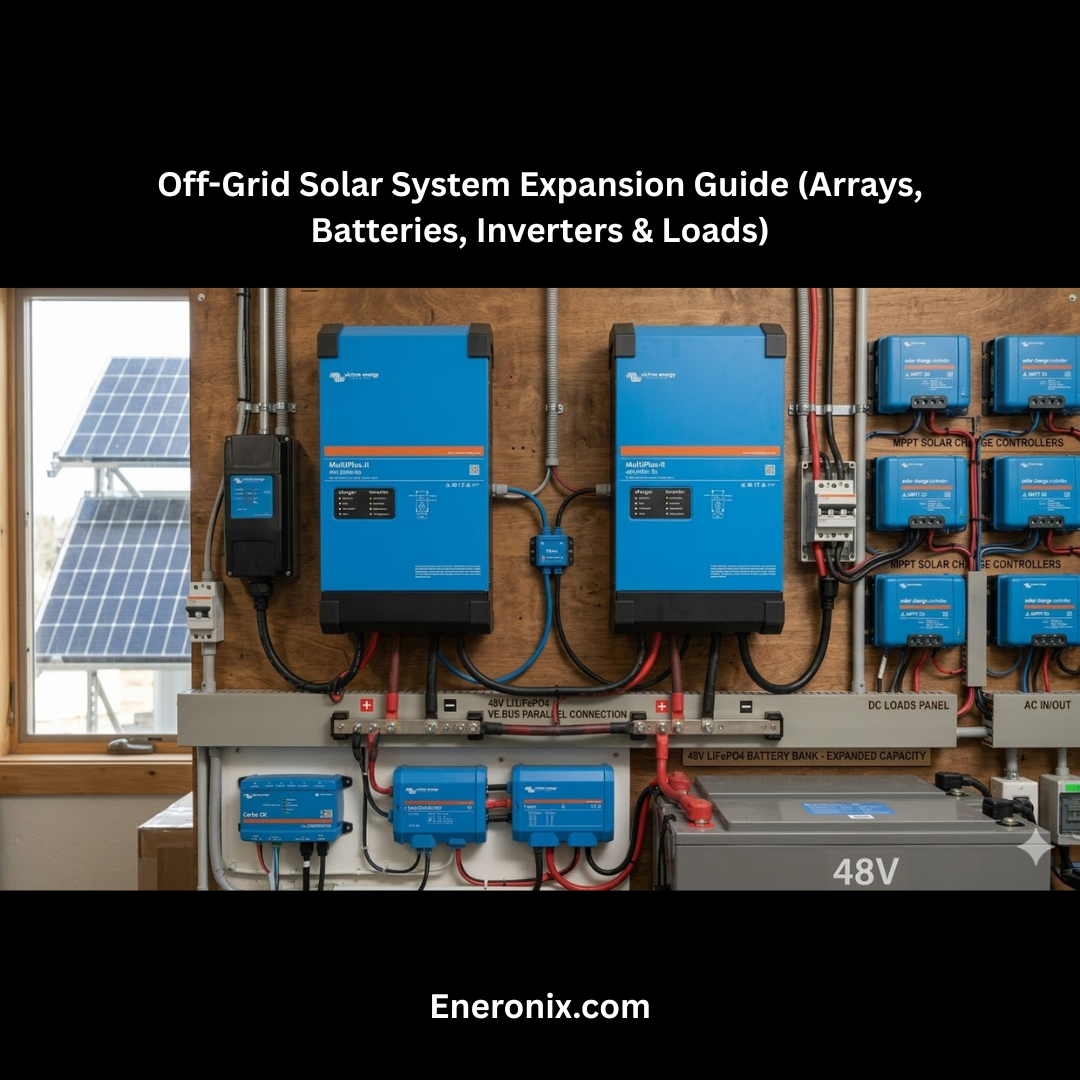
“I want to add more panels, batteries, or a new load to my existing system”
Start with off-grid solar system expansion without triggering failures: the complete constraint analysis. It identifies the five constraints every expansion must be checked against before any component is purchased, works through the constraint analysis for a complete expansion scenario, and shows which components require upgrade. The commissioning documentation from your original installation is the primary reference if you do not have it, the expansion guide explains how to proceed without it.
“I am an installer and I want to learn the correct methodology”
Series vs parallel vs series-parallel solar array wiring How series and parallel configurations affect string voltage, current, and MPPT compatibility, with the cold Voc and hot Vmp checks that determine whether a string configuration is safe for the selected controller.
Group 3: Charge Controllers
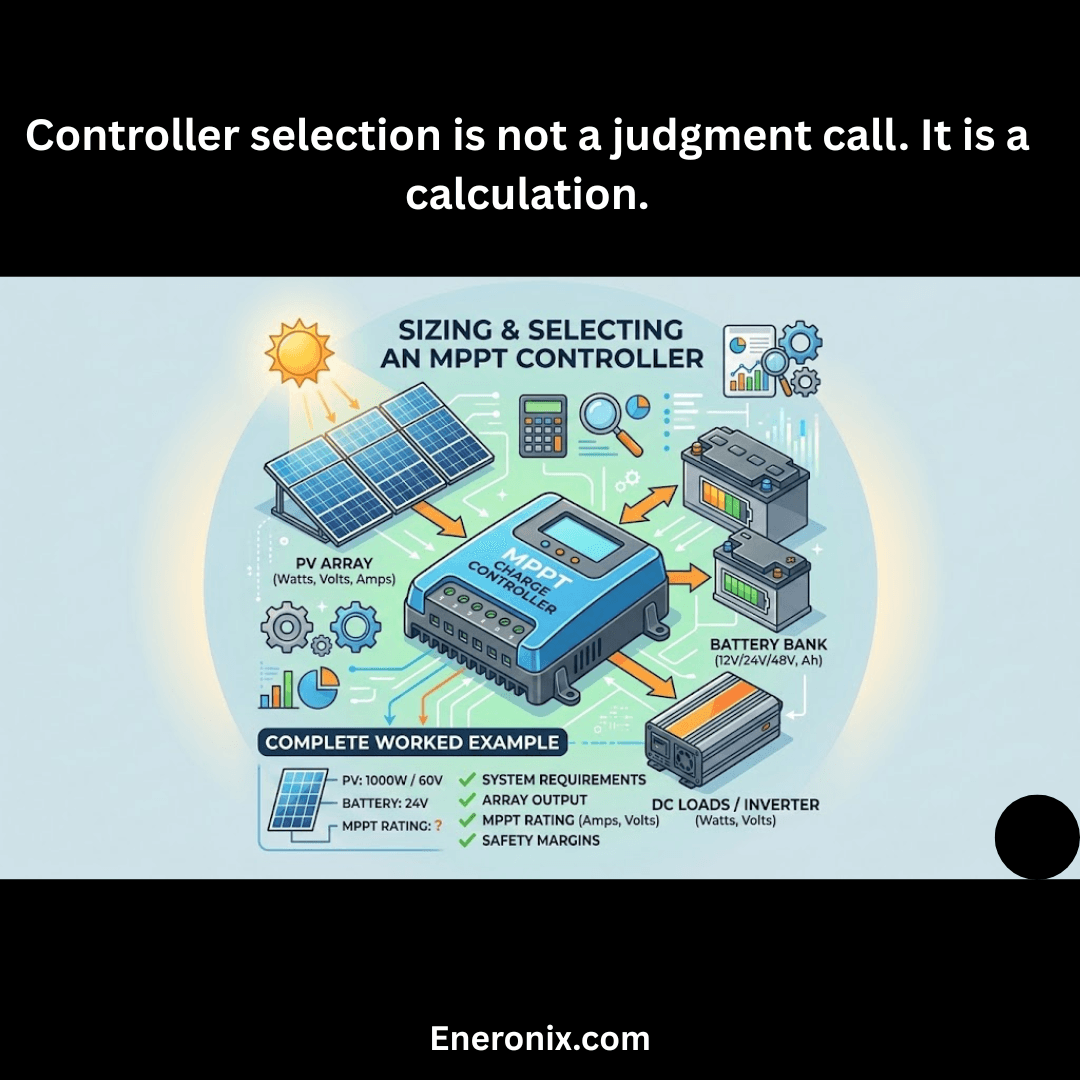
MPPT charge controller: how they work and how to select one How MPPT tracking works, how to size the controller’s output current for the battery bank, how thermal derating affects derated output, and how BMS communication changes the charge profile.
How to size an off-grid solar system for commercial buildings The three commercial load categories, motor load surge current identification, overnight standby load battery sizing, three-phase inverter architecture, and the complete specification for a ten-staff office building.
Top 10 costly off-grid solar mistakes and how to avoid them Ten recurring mistakes organised by design, installation, commissioning, and post-commissioning stage, each with a root cause, symptom, diagnostic test, and corrective action, plus a master troubleshooting reference table.
The complete off-grid system design checklist Ten sequential stages from load audit to documentation handover, each with numbered pass criteria, a verification method, and a sign-off row for field recording. Designed to be printed and carried to site.
Every post in this series uses the same worked system as its numerical context. The worked system is a residential off-grid installation sized for a daily energy demand of 4,916Wh in coastal West Africa at approximately 6 degrees north latitude. Its components are six 400W panels wired in a 3S2P configuration producing a 2,400W array, a Victron SmartSolar MPPT 150/60, a Victron Multiplus-II 48/3000/35-32, four Pylontech US3000C battery modules producing a 14.2kWh bank at 48V nominal, a Victron Cerbo GX as the communication hub, and a 5kVA petrol generator with auto-start at 30 percent state of charge.
The worked system is not a product recommendation. It is a pedagogical tool. Every abstract methodology in the series has a concrete numerical instance in this system the cold Voc calculation produces 125.5V, the MPPT output current produces 35.9A, the battery-to-inverter cable is 35mm², the daily DoD is 38.5 percent. A reader who is uncertain whether a calculation is correct can verify it against the worked system values. A reader designing a different system replaces the inputs different panel wattage, different battery capacity, different daily demand and the methodology produces the correct output for their system.
Conclusion
Every calculation in this series connects to at least two others. The load audit produces the daily energy demand that feeds the array sizing. The array sizing produces the string configuration that feeds the MPPT Voc and current checks. The MPPT output current feeds the battery-to-inverter cable sizing. The cable sizing feeds the fuse ratings. The battery bank sizing feeds the BMS communication check. Follow any internal link in any post and you will be routed to the adjacent methodology without needing to return to this index.
The series is complete. The methodology covers every stage of an off-grid solar project from the first measurement to the final handover document, and every stage is connected to every other stage by a chain of calculations that can be verified, checked, and corrected at any point.
Start wherever your question is. Everything you need to answer it is here.
I am Engr. Ubokobong Ekpenyong, a solar specialist and lithium battery systems engineer with over five years of hands-on experience designing, assembling, and commissioning off-grid solar and energy storage systems. My work focuses on lithium battery pack architecture, BMS configuration, and system reliability in off-grid and high-demand environments.
Contains information related to marketing campaigns of the user. These are shared with Google AdWords / Google Ads when the Google Ads and Google Analytics accounts are linked together.
90 days
__utma
ID used to identify users and sessions
2 years after last activity
__utmt
Used to monitor number of Google Analytics server requests
10 minutes
__utmb
Used to distinguish new sessions and visits. This cookie is set when the GA.js javascript library is loaded and there is no existing __utmb cookie. The cookie is updated every time data is sent to the Google Analytics server.
30 minutes after last activity
__utmc
Used only with old Urchin versions of Google Analytics and not with GA.js. Was used to distinguish between new sessions and visits at the end of a session.
End of session (browser)
__utmz
Contains information about the traffic source or campaign that directed user to the website. The cookie is set when the GA.js javascript is loaded and updated when data is sent to the Google Anaytics server
6 months after last activity
__utmv
Contains custom information set by the web developer via the _setCustomVar method in Google Analytics. This cookie is updated every time new data is sent to the Google Analytics server.
2 years after last activity
__utmx
Used to determine whether a user is included in an A / B or Multivariate test.
18 months
_ga
ID used to identify users
2 years
_gali
Used by Google Analytics to determine which links on a page are being clicked
30 seconds
_ga_
ID used to identify users
2 years
_gid
ID used to identify users for 24 hours after last activity
24 hours
_gat
Used to monitor number of Google Analytics server requests when using Google Tag Manager
1 minute
You can find more information in our Cookie Policy and .