
The Honest Answer Is Not One Problem
If you search “biggest lithium battery problems” you will get a different answer from almost every article you read. One says it is the cost. Another says it is thermal runaway. Another says it is degradation. They are all technically correct and all practically incomplete.
The reason there is no single answer is that lithium batteries do not usually fail from one catastrophic event. They fail from a combination of problems that compound each other quietly over months and years until the system is noticeably underperforming or completely dead.
What we are going to do in this post is different. We are going to rank the real problems in order of how often they actually affect lithium batteries in off-grid solar and inverter systems, the kind of systems running homes and businesses across Nigeria where NEPA is unreliable and the battery is not a backup, it is the primary power source.
The ranking matters because it tells you where to focus your attention. The problem that kills the most batteries in Nigerian solar systems is not the one that makes the news. It is not a fire. It is something quieter, slower, and almost entirely preventable once you understand it.
By the end of this post you will know exactly what each problem is, how to recognise it in your own system, and what to do about it before it costs you a battery replacement.
This post is part of the Eneronix lithium battery cluster. If you want the full foundation on how lithium batteries work before diving into the problems, start with the pillar: Lithium Battery Basics: Lifespan, Voltage, Charging & Real-World Performance Explained
Cell Imbalance
This is the problem that generates the most confused complaints from solar system owners in Nigeria. The system shuts down at 35%. Or it cuts off at 40% and will not restart until the panels charge it back up. Or the battery seems to drain much faster than it used to even though nothing in the house has changed.
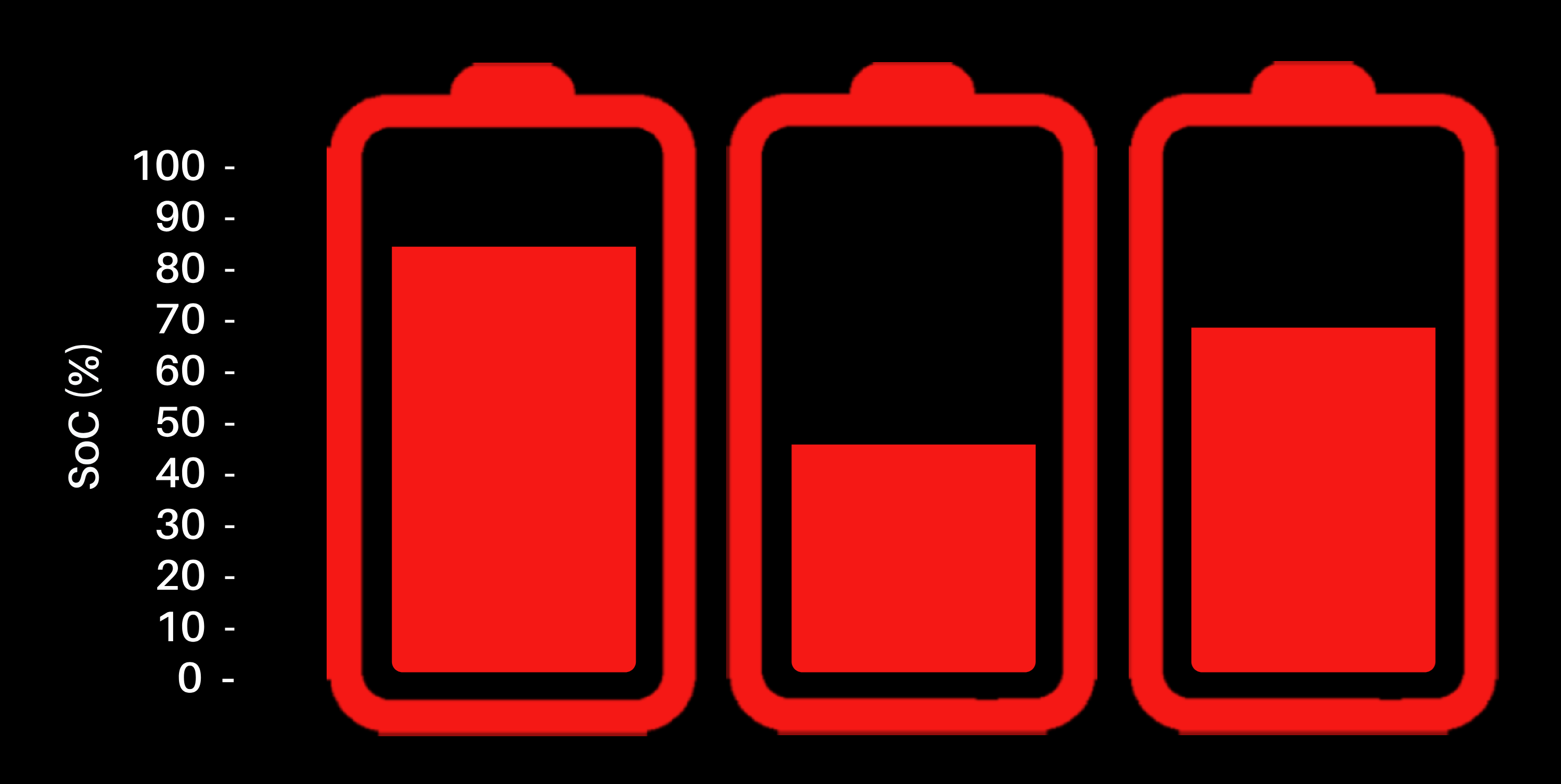
Cell imbalance is almost always behind these complaints.
Here is what is happening inside the battery. A 48V LiFePO4 battery pack is not one single unit of chemistry. It is 16 individual cells connected in series, each one storing its own portion of energy. When the battery is new, all 16 cells are closely matched. They charge together, discharge together, and hit their voltage limits at roughly the same time.
Over time, that changes. No two cells are identical at the manufacturing level. Tiny differences in internal resistance, capacity, and self-discharge rate mean that some cells age slightly faster than others. A cell that started at 100Ah might be at 94Ah after 500 cycles while its neighbour is still at 98Ah. That 4Ah gap does not sound like much. But in a 16-cell series pack, that weak cell is dragging the entire system.
Here is why. The BMS monitors every individual cell voltage, not just the total pack voltage. When the weakest cell hits its minimum safe voltage during discharge, the BMS shuts the entire pack down to protect it. It does not matter that the other 15 cells still have charge left. The pack goes to zero from the system’s perspective the moment that one weak cell hits its limit.
So what does this look like in real life? Your inverter display says 38% battery remaining. The system cuts off. You restart it and within an hour it cuts off again. You charge it back to 100% and the cycle repeats. The battery is not broken in the traditional sense. One cell is just significantly weaker than the others, and the BMS is doing exactly what it was designed to do.
The problem gets worse over time for two reasons. First, the capacity gap between cells widens with every cycle. The weak cell gets weaker faster because it is being stressed more deeply with each discharge. Second, without proper cell balancing, the BMS cannot redistribute charge between the cells to keep them aligned. Passive balancing, which most mid-range BMS units use, only works at the very top of the charge cycle when cells are near full. If the battery never reaches a proper full charge, balancing never happens, and the imbalance accumulates unchecked.
This is one of the reasons the occasional full charge matters so much. It is not just about topping up energy. It is the window during which the BMS can do its balancing work. A battery that only ever charges to 80% and never reaches 100% is a battery that is slowly drifting toward severe cell imbalance with no correction happening.
The practical warning signs of cell imbalance are specific. The system shuts off at a higher percentage than it used to. The battery percentage jumps around unexpectedly, dropping from 60% to 20% in a short period. Runtime has shortened noticeably even though your load has not changed. If you have a BMS app or a monitoring system like Victron’s Cerbo GX, you can see the individual cell voltages directly. A healthy pack has cells within about 20 to 30 millivolts of each other. A pack with developing imbalance will show one or two cells trailing significantly behind the others, sometimes by 100 millivolts or more under load.
What makes cell imbalance particularly frustrating is that it is largely preventable. The right BMS with adequate balancing current, occasional full charges, and a well-configured system will keep cells aligned for years. The wrong BMS, the one with a 20 milliamp balancing current that cannot keep up with real solar cycling, lets imbalance accumulate from year one.
For a deeper look at what cell imbalance looks like in practice and how it interacts with your inverter’s percentage display, Why Your Battery Dies Faster Than Expected covers this in detail from the user experience side.
Capacity Degradation
Cell imbalance is the problem you feel suddenly. Capacity degradation is the problem you feel gradually, and because it happens so slowly, most people do not connect the cause to the effect until the battery is already significantly compromised.
Here is what capacity degradation actually is. Every time a lithium battery completes a charge and discharge cycle, tiny physical and chemical changes happen inside the cells. The solid electrolyte interphase layer, which is a thin film that forms on the anode surface during the very first charge cycles, grows slightly thicker with each cycle. As it grows, it consumes a small amount of active lithium from inside the cell. That lithium is gone permanently. It is not recoverable through any charging technique or maintenance procedure. The cell’s ability to store energy has been permanently reduced by that tiny amount.
On its own, one cycle’s worth of SEI growth is completely insignificant. But over 500 cycles, over 1,000 cycles, over 2,000 cycles, it accumulates into a real and measurable capacity loss. A battery that could deliver 10kWh when it was new might deliver 8.5kWh after three years of daily cycling. The battery has not failed. It has aged. The difference is important because it changes how you manage the system.
What makes this particularly deceptive is that the display never tells you. Your inverter still shows 0% to 100%. It has no way of knowing that the 100% it is reporting now represents significantly less actual energy than the 100% it reported when the battery was new. The percentage is relative to the current maximum capacity, not the original one. So the battery that once took you comfortably through a 10-hour night might now struggle to make it to 5 AM, and everything on the display still looks normal until the system shuts down.
There are two types of degradation happening simultaneously and they compound each other. The first is cycle aging, capacity loss from repeated charge and discharge. The second is calendar aging, which happens regardless of how much or how little you use the battery. A lithium battery sitting in storage at full charge in a warm room is aging chemically even if you never connect a load to it. The electrolyte slowly decomposes. The SEI layer grows on its own. The rate is much slower than cycle aging but it is always happening in the background.
In a Nigerian solar system where the battery is cycling once every single day, both types of aging are active simultaneously. The daily cycling drives cycle aging. The heat in the equipment room drives calendar aging. They are not independent, the heat accelerates the cycle aging as well, which is why we will address temperature as its own problem in the next section.
The practical question is: how do you know how much capacity your battery has actually lost? There are two ways. The first is monitoring. If your system has a proper battery monitor or a platform like Victron’s VRM portal, you can track actual energy throughput over time. You will see that the energy delivered during a full discharge is gradually declining over months and years. That trend is your degradation curve. The second way is a capacity test, fully charging the battery and then discharging it under a known load while measuring the total energy delivered. Comparing that number to the original rated capacity gives you the current state of health.
For most household systems in Nigeria without advanced monitoring, the first sign of significant degradation is a noticeably shorter runtime. The battery that used to last until 6 AM now dies at 2 AM. The inverter cuts off earlier than it used to even though the load has not changed and the percentage display looks normal at bedtime. This is a battery that has lost meaningful capacity and is telling you through its behaviour even though it cannot tell you through its display.
What you can do about it is limited but not nothing. You cannot reverse degradation that has already occurred. What you can do is slow the rate of future degradation significantly. Keeping the daily depth of discharge low reduces the electrochemical stress per cycle. Keeping the battery from sitting at 100% charge for extended periods, especially in high ambient temperatures, reduces calendar aging. And sizing the battery bank correctly from the beginning, with enough capacity that the daily depth of discharge sits well below 80%, gives you a system where degradation is gradual enough that the battery reaches 8 to 10 years of service before its reduced capacity becomes a practical problem.
This is exactly why the battery bank sizing calculation matters beyond just whether it will last the night. A correctly sized bank running at 40% daily depth of discharge will deliver significantly more total lifetime energy than an undersized bank running at 80%. For a full explanation of how cycle life and depth of discharge interact in a real sizing calculation, Battery Bank Sizing for Off-Grid Systems: Capacity, BMS Selection, and Cycle Life covers the numbers in detail.
Heat
If cell imbalance is the problem you feel first and capacity degradation is the problem that creeps up quietly, heat is the problem that makes both of them worse. Faster. And in a country like Nigeria, it is not a seasonal concern. It is a year-round reality that most battery installations are not properly designed to handle.
Here is the core issue. Lithium batteries have a thermal comfort zone. For LiFePO4, that zone is roughly 15°C to 35°C. Inside that range, the chemistry behaves as the spec sheet describes. The SEI layer grows at a predictable rate. Cell imbalance develops slowly. Calendar aging is gradual. The manufacturer’s cycle life rating is achievable.
Above 35°C, every one of those processes accelerates. The SEI layer grows faster, consuming active lithium at a higher rate with each cycle. Cell imbalance worsens more quickly because cells that are already slightly different in internal resistance generate different amounts of heat under load, which causes them to age at different rates, which widens the imbalance further. Calendar aging shifts from a slow background process into something you can measure in months rather than years.
The number that matters most here comes from real installation data. Batteries operating in non-climate-controlled spaces, garages, enclosed service areas, unventilated battery rooms, show 12 to 18% capacity fade within the first year. Batteries in the same systems with proper climate control show roughly 2% capacity fade over the same period. Same battery models, same inverters, same load profiles. The only difference is temperature exposure. That is six to nine times faster degradation from heat alone.
In a Nigerian solar system, the battery room situation is often worse than a poorly ventilated garage in a temperate climate. A typical enclosed equipment room in Port Harcourt, Lagos, or Kano during the dry season can hit 38 to 42°C ambient temperature by midafternoon. The battery itself generates additional heat during charge and discharge from its own internal resistance losses. That self-heating adds approximately 5 to 10°C on top of the ambient temperature inside the enclosure. So a room that reads 40°C ambient could have batteries running at 48 to 50°C at the cell level during a high-rate afternoon charge from the solar panels.
At 45°C, the LiFePO4 BMS enforces a high temperature charge cutoff. Charging stops completely. Your solar panels are producing power and none of it is going into the battery because the cells are too hot. This is the exact failure pattern described in the battery bank sizing post: a system that works perfectly in the morning and shuts down every afternoon during the dry season, not because the battery is broken but because nobody ventilated the room.
But the BMS charge cutoff is actually the protective case. The more dangerous scenario is a battery that reaches 43 or 44°C repeatedly, just below the cutoff threshold, and keeps running. The BMS does not intervene. The system appears to be working normally. But the cells are sitting just below the emergency threshold for hours every day, accelerating SEI growth, widening cell imbalance, and consuming years of calendar life every month.
The combination of full charge state and high temperature is the most damaging condition a lithium battery can be in. A fully charged battery at 40°C is aging faster than a battery at 40°C at 50% state of charge. And a battery at 40°C charges and sits there at 100% for the rest of the day because there is no load until evening, which is exactly what happens in most residential solar systems during working hours when no one is home.
What does proper thermal management actually look like in practice? It does not require air conditioning for the battery room, though that is ideal. The minimum requirement is forced ventilation that keeps the enclosure ambient temperature below 35°C during the hottest part of the day. A wall-mounted exhaust fan connected to a thermostat that activates above 32°C, drawing in cooler air from a shaded vent, is enough to prevent the worst of the temperature-driven degradation in most installations. The battery should never be installed against a west-facing wall, in a roof space, or in any enclosed area without ventilation clearance on all sides.
For a detailed breakdown of exactly how temperature interacts with your BMS’s charge and discharge limits, and why hot batteries cause the BMS and inverter to conflict with each other in ways that make the problem worse, Temperature Effects on Battery Communication and Control in Solar Systems covers this from the engineering side in full.
Wrong Configuration
Everything we have covered so far, cell imbalance, capacity degradation, heat damage, happens to a battery over time. Wrong configuration starts damaging your battery from the very first charge cycle. And in Nigeria, it is almost certainly the most common cause of premature lithium battery failure, because the majority of lithium batteries in residential solar systems here are connected to inverters that were never properly configured for lithium chemistry.

Here is the specific scenario that plays out more often than most installers will admit. A customer upgrades from tubular batteries to a LiFePO4 lithium battery. The installer connects it to an existing inverter, or to a new inverter, and leaves the battery type setting on the default. The default on most inverters sold in Nigeria is lead-acid. The inverter is now charging a lithium battery using a lead-acid charge profile.
On the surface, the system appears to work. The battery charges. The loads run. The customer is happy for the first few months. What is actually happening underneath is that the lead-acid absorption voltage on most inverters is set to between 14.4V and 14.8V for a 12V nominal system, which scales to 57.6V to 59.2V on a 48V system. The correct absorption voltage for a 48V LiFePO4 battery is 57.6V at most. At 58V or 59V, the battery is being pushed above its maximum safe cell voltage on every single charge cycle.
That overcharge does not trigger an immediate alarm. The BMS may tolerate it for a while, especially if the cells are new and well-matched. What it does is accelerate electrolyte oxidation, force the SEI layer to grow faster than it should, and in some cases begin the early stages of lithium plating on the anode surface. The battery that should have lasted 3,000 cycles is now on a trajectory to last 1,200 because it is being slightly abused every single day without anyone knowing.
The float voltage problem is equally common. Tubular and lead-acid batteries require a float charge to maintain their state of charge during idle periods. Lithium batteries do not. A lithium battery held at float voltage for extended hours every day is experiencing unnecessary electrochemical stress. The correct behaviour for a lithium inverter setting is to stop charging entirely when the battery reaches its target voltage and only resume when it drops to the reconnect threshold. Many inverters set on lead-acid mode continue applying float indefinitely.
The low voltage cutoff is the third critical setting that gets misconfigured. A lead-acid cutoff is typically set at around 46V to 47V on a 48V system because lead-acid batteries can tolerate slightly deeper discharge. A LiFePO4 battery should cut off at 48V to 49V to protect the weaker cells from dropping below their minimum safe voltage before the BMS intervenes. An inverter with the cutoff set too low is allowing the battery to go deeper than it should on every discharge cycle, compounding the depth of discharge problem we discussed in the capacity degradation section.
What makes this problem particularly damaging in the Nigerian market is the sheer variety of cheap hybrid inverters being sold without proper lithium configuration support. Some of these inverters have a “lithium” setting that does nothing more than adjust the display label, the underlying charge algorithm remains unchanged. Others have lithium settings with voltage presets that are wrong for the specific battery chemistry installed. A buyer who assumes that selecting “LiFePO4” on the inverter menu means the battery is being charged correctly may be completely mistaken.
The settings you need to verify on any inverter connected to a LiFePO4 battery are the absorption voltage, which should match your battery manufacturer’s specification and sit between 57.6V and 58.4V for a 48V pack; the float voltage, which should either be disabled or set no higher than 54V; the low battery cutoff, which should be between 48V and 49V for a 48V pack; and the charge current limit, which should not exceed the battery manufacturer’s maximum recommended charge current. Every single one of these needs to be checked against your battery’s datasheet, not assumed from a menu label.
Getting configuration wrong is not a reflection of hardware quality. It is an installation error, and it is entirely fixable. But it needs to be fixed before the battery has been running on wrong settings for a year. The damage from a year of overcharge is permanent, even if you correct the settings afterwards.
For the full picture of how wrong inverter configuration sits alongside other common installation mistakes that quietly damage systems over time, Top 10 Costly Off-Grid Solar Mistakes and How to Avoid Them documents the configuration verification steps as part of the commissioning sequence every system should go through. And if you are selecting or replacing an inverter and want to understand exactly what voltage settings and battery profile options to look for, How to Select Off-Grid Inverter: Continuous Rating, Surge, Voltage Architecture, and BMS Communication covers the correct configuration parameters in detail.
A Poor BMS

Every problem we have covered in this post has a visible symptom at some point. Cell imbalance shows up as early shutdowns. Capacity degradation shows up as shortened runtime. Heat shows up as afternoon charge cutoffs. Wrong configuration can be caught by checking settings. A poor BMS is different. It fails you silently, over months and years, and by the time you can see the damage it has already done, the battery is too far gone to recover.
The BMS is the most important component in your lithium battery system. Not the cells. Not the inverter. The BMS. The cells are passive chemistry. The inverter just converts power. The BMS is the active intelligence that sits between those two things and decides whether the battery lives or dies on any given cycle. A good BMS extends a battery’s life. A poor one shortens it dramatically, sometimes by half.
The most common BMS failure point in Nigerian solar systems is inadequate balancing current. This is the specification that separates a BMS that can actually manage a high-discharge solar system from one that looks adequate on paper but cannot keep up in practice.
Balancing is the process by which the BMS redistributes or bleeds charge between cells to keep them aligned. A passive balancing BMS, the type found in the majority of budget lithium batteries sold in Nigeria, does this by dissipating energy from higher-voltage cells through resistors at the top of the charge cycle. The balancing current on most of these units is between 50 and 200 milliamps, with 100 milliamps being the most common.
Now consider what your system is actually doing. A 48V battery pack connected to a 3kW or 5kW inverter is discharging at 60 to 100 amps every evening for four to six hours. That is a discharge-to-balancing ratio of 600 to 1,000 to 1. For every single amp of imbalance that the BMS is capable of correcting, your system is creating 600 to 1,000 amps worth of new cycling stress. The math does not work. Cell imbalance accumulates faster than the BMS can correct it, every single day.
The consequence plays out over a predictable timeline. In the first six months the system works well because the cells are relatively matched from the factory. By month twelve runtime begins noticeably dropping. By month eighteen the weakest cell is shutting the entire pack down while the other fifteen cells still have 30 to 40 percent of their charge remaining. The pack has not failed in any dramatic sense. The BMS just could not keep the cells aligned under the conditions it was asked to manage.
Beyond balancing current, there are three other BMS characteristics that determine whether your battery survives its rated lifespan.
The first is temperature protection quality. A BMS without independent temperature sensors on multiple cells, not just one sensor on the board cannot detect localised hot spots. One cell running at 50°C while neighbouring cells read 35°C is a cell approaching thermal runaway. A single-sensor BMS misses this entirely. You will not know until the battery swells or fails.
The second is voltage cutoff accuracy. The protection thresholds on cheap BMS units are sometimes set wrong from the factory. A high voltage cutoff at 3.75V per cell instead of the correct 3.65V means the battery is being overcharged on every cycle without any alarm. A low voltage cutoff at 2.5V instead of 2.8V means cells are being taken below their safe minimum regularly. Neither of these deviations triggers any visible fault. They just shorten the battery’s life quietly.
The third is communication capability. A BMS that can only communicate with your inverter through a simple relay a binary on/off signal gives the charge sources no real information about what is happening inside the battery. The inverter charges according to its own programmed profile and only stops when the BMS forces a disconnect. A BMS that communicates CVL, CCL, and DCL dynamically via CAN bus allows the inverter and charge controller to adjust their behaviour in real time based on what the battery actually needs at that moment. The result is a system that rarely needs a hard BMS disconnect because the charge sources are already working in coordination with the battery rather than against it.
The uncomfortable reality is that many lithium batteries sold, particularly unbranded or low-cost units come with BMS units that fail on multiple of these criteria simultaneously. Low balancing current, single temperature sensor, incorrect voltage thresholds, no communication capability. The cells inside may actually be decent quality. The BMS is what kills them.
For a detailed technical breakdown of exactly why passive balancing BMS fails in real-world solar systems including the failure timeline, the voltage masking problem that hides developing imbalance, and the specific specifications to demand from any BMS Why Passive Balancing BMS Fails in High-Discharge Solar Battery Systems covers every aspect of this problem with real numbers and practical guidance.
How to Know If Your Lithium Battery Already Has a Problem
Most battery problems do not announce themselves. They build quietly for months before the symptoms become obvious enough to act on. By the time the average person realises something is wrong, the damage has already accumulated. The good news is that there are specific, observable warning signs that appear well before a battery reaches the point of no return. Knowing what to look for gives you time to act rather than react.
The first and most common warning sign is a system that shuts down at a higher state of charge than it used to. If your battery used to comfortably run loads until 5 AM and now cuts off at 1 AM even though your loads have not changed, that is a meaningful signal. The battery is either losing capacity from degradation, experiencing a weak cell that is triggering early BMS cutoffs, or both. Either way, something has changed inside the battery and it needs investigation, not a restart.
The second warning sign is a percentage display that jumps or behaves erratically. You might see the battery reading 60% and then drop to 25% within minutes under moderate load. Or the percentage might bounce up noticeably when you switch off an appliance. This is almost always voltage sag combined with a misconfigured or poorly calibrated inverter, but it can also indicate developing cell imbalance where the weakest cell is causing dramatic voltage drops under load that the inverter is misreading as a steep capacity decline.
The third warning sign is runtime that has shortened noticeably over months. This one requires you to pay attention over time rather than in a single moment. If you track how long your system lasts at roughly the same load profile, a gradual shortening of runtime by 15 to 20 percent over six months is a sign of real capacity degradation. A sudden drop of 30 to 40 percent is more likely cell imbalance. Both deserve attention but they call for different responses.
The fourth warning sign is a battery that takes noticeably longer to reach full charge than it used to, or one that never quite reaches 100% on a good solar day when it should easily be full by noon. This can indicate cells that have lost the ability to accept charge at their previous rate, which is a sign of advanced degradation or lithium plating from past cold or overcharge events.
The fifth warning sign is physical. A battery pack that is warm to the touch during rest, not just during a heavy discharge, is a battery with elevated internal resistance somewhere in the system. A battery that has any visible swelling on the casing needs to be taken offline immediately. Swelling means gas is building up inside a cell and the situation is progressing toward a serious safety event.
If you have a monitoring system like a Victron Cerbo GX, you have access to much more specific information. You can see individual cell voltages and check whether any cell is trailing significantly behind the others during discharge. You can check the temperature log for recurring high temperature events. You can review the alarm history for BMS protection trips that happened while you were asleep and that you never knew about. All of that information is there if you look for it, and it tells you exactly which problem you are dealing with and how advanced it is.
For most households running a standard inverter without advanced monitoring, the clearest and most accessible diagnostic tool is the resting voltage check. Switch off all loads, disconnect the charger, wait 30 minutes for the battery to settle, then measure the voltage with a multimeter. Compare that resting voltage against your battery’s state of charge chart. If the voltage says 70% but the battery is behaving like it has 30%, cell imbalance is the most likely explanation. If the voltage matches what you expect but runtime is short, capacity degradation is the more likely cause.
For a practical, step-by-step guide to diagnosing exactly why your inverter’s battery percentage is giving you wrong readings and what each type of wrong reading is actually telling you about your system, Inverter Battery Percentage Wrong? 5 Reasons and How to Fix It Fast walks through every scenario with specific fixes.
Conclusion
The biggest problem with lithium batteries is not one problem. It is six problems that interact with each other, and almost all of them are either preventable or manageable once you understand what is actually happening.
Cell imbalance develops slowly and silently but announces itself through early shutdowns. Capacity degradation shrinks the battery’s usable energy without changing a single number on the display. Heat accelerates both of those problems simultaneously and is entirely an installation and environment issue. Wrong configuration damages the battery from day one and is completely fixable with the right settings. A poor BMS allows all of the above to happen faster and with no protection. And the warning signs, when you know what to look for, give you time to intervene before the damage becomes irreversible.
The batteries that fail early in Nigeria are not usually bad batteries. They are good batteries that were installed in hot unventilated rooms, connected to inverters set to lead-acid profiles, paired with budget BMS units with 100mA balancing current, and left running for two years without anyone checking a single setting. That is not bad luck. That is an entirely preventable outcome.
The batteries that last 10 years are managed by people who understand what the system is doing and why. You now have that understanding. Use it.
For the complete foundation on how lithium batteries work, voltage, charging stages, lifespan, and real-world performance the pillar post covers everything in one place: Lithium Battery Basics: Lifespan, Voltage, Charging and Real-World Performance Explained
Have questions about your specific battery setup? Drop them in the comments below. We read every one.

I am Engr. Ubokobong Ekpenyong, a solar specialist and lithium battery systems engineer with over five years of hands-on experience designing, assembling, and commissioning off-grid solar and energy storage systems. My work focuses on lithium battery pack architecture, BMS configuration, and system reliability in off-grid and high-demand environments.