
Introduction
Commercial installation, 50 kWh battery system paired with a 15 kW hybrid inverter. Total investment: $35,000. The battery manufacturer promoted their proprietary protocol as “optimized integration” with “best performance and reliability.” Commissioning went perfectly. Communication established immediately, all parameters displayed correctly, CVL and CCL values looked appropriate. Customer signed off, installer moved to the next job.
Month four, the customer mentioned occasional error messages. “Battery communication fault” appeared maybe twice a week, cleared itself after a minute or two. Nothing seemed broken. Charging worked, discharging worked, runtime matched expectations. The installer checked remotely: firmware versions matched compatibility matrix, physical connections looked tight, no obvious problems. Both manufacturers’ support teams said their devices were functioning correctly.
Month five, errors became daily. Month six, communication failed completely. System became unusable, stuck in fault mode. The customer needed resolution immediately, this wasn’t backup power, it was their primary energy source for a remote facility.
Diagnosis attempt revealed the core problem with proprietary protocols. No third-party tools could decode the CAN traffic. The installer bought a $200 CAN analyzer that worked perfectly on other installations using Pylontech protocol. Connected to this system, it showed hex data that meant nothing without the manufacturer’s decode key. Cannot see what the BMS is actually transmitting. Cannot verify if the inverter is interpreting correctly. Cannot prove which device is wrong.
Both manufacturers requested logs. Weeks of back-and-forth emails. BMS manufacturer: “Our logs show successful transmission.” Inverter manufacturer: “We’re not receiving valid data.” Finger-pointing deadlock with no way to determine ground truth.
Resolution options: replace the entire battery ($15,000), replace the inverter ($8,000), or return everything and start over. Customer chose battery replacement, blamed the installer for “picking incompatible equipment.” Same installation with open Pylontech protocol would have cost $200 for a CAN analyzer plus zero dollars for a manufacturer firmware fix once the actual problem was identified.
The difference isn’t technical capability. It’s diagnostic capability when things go wrong.
Defining Open vs Proprietary Protocols
The industry uses “open” and “proprietary” loosely, creating confusion about what these terms actually mean in practice. Understanding the real distinctions matters because they determine what happens when problems occur.
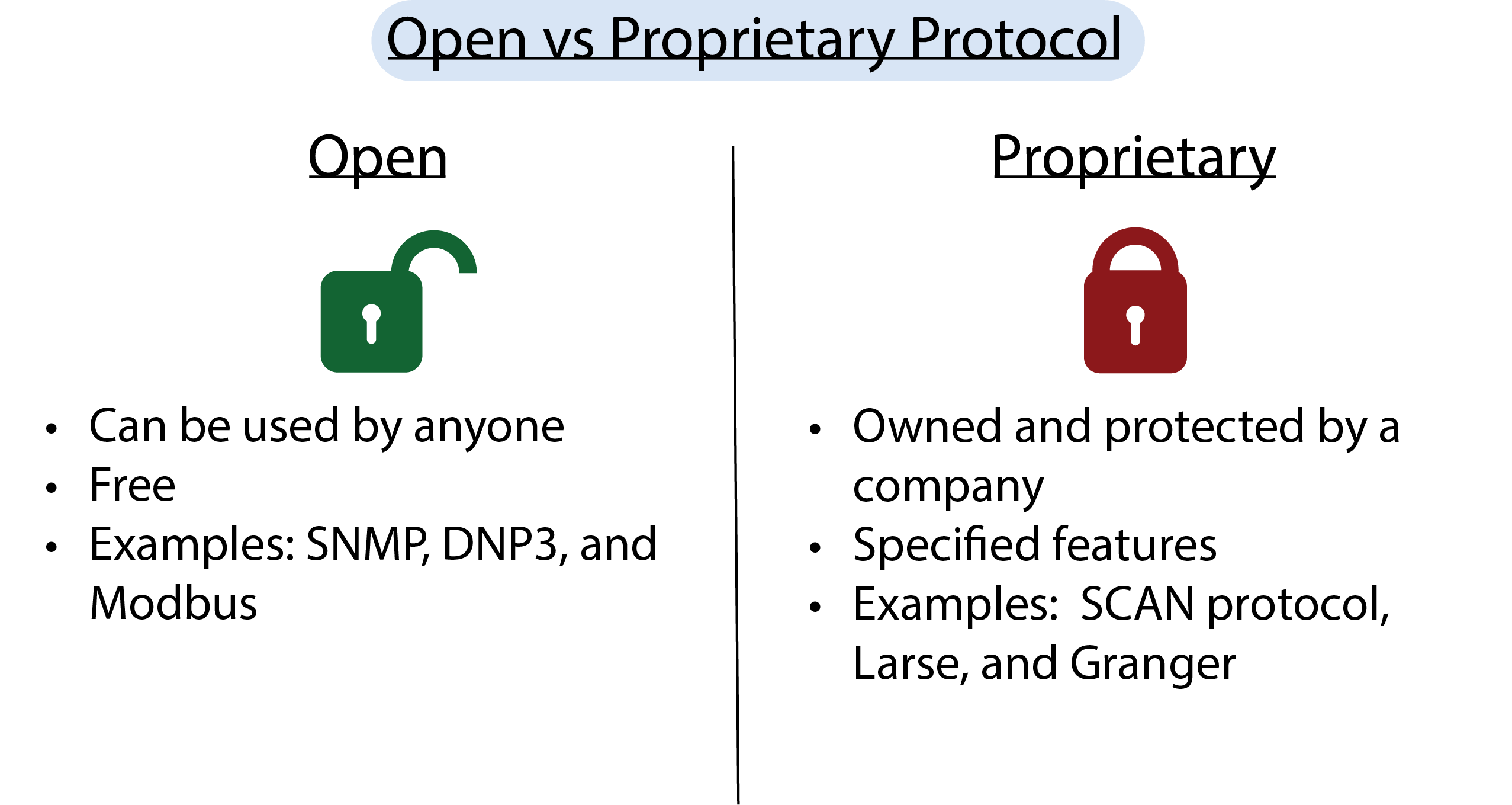
Open protocol doesn’t necessarily mean open source code or free licensing. In practice, it means the message structure is known. Either the manufacturer published documentation, or enough people reverse-engineered it that community knowledge exists. Multiple manufacturers implement compatible versions. Third-party diagnostic tools can decode the traffic. When I connect a CAN analyzer, I can see CVL equals 56.0V in message 0x351 and verify the inverter is interpreting it correctly.
Pylontech CAN became “open” through adoption, not formal standardization. Pylontech published their protocol years ago. Hundreds of battery manufacturers cloned it to gain compatibility with inverters that supported Pylontech. Now community forums document every message ID, every byte position, every scaling factor. That’s open enough. SunSpec Modbus represents truly open: formal specification, published standards, certification process. Both work for diagnostics.
Proprietary means the message structure is undocumented outside the manufacturer. Only they have the decode key. Often encrypted or obfuscated specifically to prevent third-party analysis. Designed for specific product pairings where the manufacturer controls both ends. Tesla Powerwall uses proprietary protocol because Tesla makes both the battery and the gateway. They optimize the integration and don’t want third parties interfering.
Why manufacturers choose proprietary: vendor lock-in creates recurring revenue, intellectual property protection for unique features, competitive differentiation in crowded markets, and control over the customer relationship for support and upgrades.
The spectrum matters more than the binary classification. Fully open protocols have published specifications anyone can implement. Semi-proprietary protocols get documented for approved partners only but community reverse-engineering fills the gaps. Fully proprietary protocols use encryption and legal threats against reverse engineering attempts, making independent diagnosis impossible.
The critical question isn’t whether something is labeled open or proprietary. It’s whether you can independently verify what’s being transmitted when communication fails.
The Diagnostic Dead-End: Field Failure Timeline
Week one looks perfect. Bench testing with short cables shows flawless communication. Installation proceeds smoothly. On-site commissioning establishes communication within seconds. All functions work: charging, discharging, SOC display updates correctly, CVL and CCL values appear reasonable. The installer photographs the successful commissioning screens, closes the job, sends the invoice. Both manufacturer and installer assume success because everything tests correctly.
Month one to three, intermittent issues begin appearing. Communication drops once or twice per week. System recovers automatically after 30 to 60 seconds. The customer mentions it but isn’t alarmed yet, thinks maybe this is normal behavior. Installer checks remotely: termination measures 60Ω correctly, cable quality looks good, firmware versions match the compatibility matrix. Both manufacturers insist their device functions properly. No way to verify what’s actually being transmitted because the protocol is proprietary.
Month four to six, problems escalate. Communication loss becomes daily. Recovery takes progressively longer, sometimes requiring manual reset. Customer patience erodes with each incident. Diagnosis attempts exhaust the obvious physical layer checks. Connections re-torqued, configuration verified against documentation, DIP switches confirmed correct. The communication link reports errors but gives no insight into why.
Manufacturer responses follow predictable patterns. BMS manufacturer reviews logs: “Transmission successful on our end.” Inverter manufacturer reviews their logs: “Not receiving valid protocol data.” Neither provides actual protocol decoding. Both claim the other device is at fault. Installer stuck in the middle with no independent verification capability.
Month six to twelve forces resolution. The customer demands action; system paid for but unreliable. Options presented: replace BMS for $8,000 to $15,000, replace inverter for $5,000 to $10,000, or accept degraded performance. No diagnostic path exists to prove which device is actually wrong. Community has no knowledge base for this proprietary protocol. Manufacturer support reaches deadlock.
Actual resolution: installer replaces the less expensive component hoping it fixes the problem. Total cost $12,000 to $18,000 including labor. Reputation damage from customer telling others the installer sold defective equipment. No proof ever established of who was actually at fault.
Total Cost of Ownership Analysis
Upfront costs favor proprietary systems slightly. Integrated proprietary solutions often cost less initially because the manufacturer optimizes for production volume and simplified compatibility testing. One vendor quote, one compatibility claim, straightforward purchasing. Example: 50 kWh proprietary system costs $30,000. Equivalent open protocol system using mix-and-match components costs $32,000 after researching compatibility and verifying protocol implementation details. Initial difference: $2,000 premium for open protocol, roughly 6.7% higher.
The ten-year operational cost comparison reveals the hidden expenses. Proprietary systems carry probability-weighted risks: incompatibility discovered post-installation costs $10,000 to $20,000 for replacement, occurring in approximately 10% of installations. Expected cost: $1,000 to $2,000. Manufacturer exits market requiring full system replacement at $15,000 to $30,000, probability roughly 5% over ten years. Expected cost: $750 to $1,500. Firmware updates breaking compatibility costs $5,000 to $10,000 to resolve, happens in 15% of systems. Expected cost: $750 to $1,500. Diagnostic and support costs for communication issues add $500 to $2,000 over system lifetime. Total expected risk cost: $3,000 to $7,000.
Open protocol systems have lower risk exposure. Incompatibility discovered costs $200 to $500 for diagnostics plus $0 to $1,000 for fixes since multiple compatible alternatives exist. Manufacturer exit means replacing just the BMS for $2,000 to $5,000, not the entire system. Firmware issues get resolved through community workarounds or alternative firmware. Diagnostic capability costs $200 for analyzer enabling self-service troubleshooting. Total expected risk cost: $500 to $1,500.
Ten-year total cost of ownership: proprietary equals $30,000 initial plus $3,000 to $7,000 risk equals $33,000 to $37,000. Open protocol equals $32,000 initial plus $500 to $1,500 risk equals $32,500 to $33,500. Open protocol saves $500 to $4,500 over system lifetime despite higher upfront cost.
The stranded asset problem amplifies these numbers when manufacturers exit. Proprietary systems become unsupportable orphans with no firmware updates, no replacement parts, no expansion options. Forced replacement at year five or seven instead of the expected ten to fifteen year lifespan.
When Proprietary Actually Makes Sense
Proprietary isn’t universally bad. Context determines whether the lock-in risk is acceptable or catastrophic. Some situations justify accepting proprietary protocols despite the diagnostic limitations.
Proven manufacturer with established track record makes proprietary acceptable when specific criteria are met. The manufacturer needs ten-plus years in the market demonstrating they survive industry consolidation cycles. Responsive support verified through installer testimonials, not marketing claims. Multiple successful installations you can personally verify, ideally hundreds or thousands in similar applications. Financial stability matters: public companies with visible financials or established private companies with clear business models outlast startups burning venture capital. Clear documented upgrade and expansion paths showing the manufacturer plans to support the product long-term.
Tesla Powerwall represents proprietary done correctly. Completely proprietary protocol working only with Tesla gateway, but Tesla’s scale, financial stability, and established support infrastructure justify the lock-in. LG RESU with specific tested inverter pairings works because the combinations are documented and support exists. Sonnen systems use vertical integration where proprietary makes sense since one manufacturer stands behind the entire system. You’re buying the complete system, not components.
Small residential systems under 10 kWh have different risk tolerance. Total investment runs $8,000 to $12,000. Replacement cost remains manageable if something fails. Customer expectations differ for backup power versus critical infrastructure. Diagnostic time cost can exceed hardware cost, making replacement more economical than hours of troubleshooting. Proprietary becomes acceptable if price is significantly lower, greater than 15% savings versus open protocol alternatives. Warranty must cover five-plus years minimum. The installer should have ten-plus successful installations of the identical combination.
Some applications lack open protocol options entirely. Specific high-voltage architectures, integrated all-in-one inverter-battery products, or niche applications in mobile, marine, or industrial settings may offer only proprietary solutions. Risk mitigation becomes critical: negotiate extended seven-to-ten-year warranties, require protocol documentation in escrow released if the manufacturer exits, plan replacement budget at seven years instead of ten to fifteen, purchase spare BMS units as insurance against discontinuation.
When Proprietary Is Unacceptable Risk
Large commercial and industrial installations above 20 kWh cannot tolerate proprietary protocol risks. Capital at stake ranges from $50,000 to $500,000 or more. Replacement cost becomes catastrophic rather than manageable. Downtime carries actual cost through lost production or demand charge penalties. Expected lifespan runs 15 to 20 years, requiring the manufacturer to survive that entire period. Regulatory and warranty requirements often mandate multiple qualified service providers, impossible with single-vendor proprietary systems.
Open protocols become mandatory for these applications. Diagnostic capability is non-negotiable because weeks waiting for manufacturer support costs thousands in downtime. Multiple service provider options prevent dependency on single manufacturer responsiveness. Component replacement flexibility matters at year twelve when the original BMS fails and alternatives are needed. Expansion capability without manufacturer cooperation enables capacity additions as needs grow.
Remote or difficult access installations create similar requirements. Off-grid mountain cabins requiring four-hour drives, rooftop installations needing crane access for service, island installations requiring boat or plane transport, international installations facing shipping and import delays. These locations cannot afford multiple site visits working through diagnostic dead-ends. Remote diagnosis requires tools the installer owns, not manufacturer proprietary software. Parts must be sourceable globally from multiple vendors. Local technicians need service capability without waiting for manufacturer specialists to travel.
Mission-critical applications where downtime is unacceptable require open protocols regardless of cost. Medical facilities with life support systems, data centers with uptime SLAs, emergency services for fire, police, or hospitals, telecommunications infrastructure supporting essential communications. These applications require multiple vetted service providers independent of manufacturer availability. Spare parts inventory on-site eliminates RMA delays. In-house or third-party diagnostic capability enables immediate troubleshooting. Redundancy options using different manufacturers prevent single points of failure.
Proprietary protocols create single points of failure in both supply chain and support infrastructure. When the manufacturer is your only option and they’re unresponsive, unavailable, or out of business, mission-critical systems become liabilities instead of assets. The risk is unacceptable regardless of initial cost savings.
The Exit Strategy Question
Expansion scenarios reveal proprietary lock-in consequences. Customer wants to add capacity at year five. Proprietary system forces buying from the same manufacturer if they still exist and still make compatible products. If the manufacturer discontinued that product line, no expansion is possible without replacing everything. If the manufacturer exited the market, full system replacement is required just to add capacity. If new firmware versions prove incompatible with old hardware, again full replacement. No price negotiation leverage exists because you’re a captive customer. They know switching costs are prohibitive.
Open protocol systems allow buying from any compatible manufacturer. Price shopping between manufacturer A, B, and C creates market competition. Mixing brands works if protocol implementations are truly compatible, verified through testing. Upgrade paths remain available regardless of original manufacturer status. Market pricing power stays with the buyer instead of the vendor.
Component failure scenarios at year eight demonstrate similar problems. BMS fails in proprietary system requiring sourcing from the original manufacturer. If they exited the market, no replacement exists. If the part was discontinued, entire battery replacement becomes necessary costing $10,000 to $30,000. If new BMS firmware is incompatible with old inverter, full battery replacement again. You’re replacing a $500 component with a $20,000 system because no alternatives exist.
Open protocol component failure costs $500 to $2,000 for BMS replacement only. Multiple vendors offer compatible options. Community knowledge identifies which specific models work. Upgrading to newer BMS with better features becomes possible. The cell pack itself remains usable for its full fifteen year lifespan instead of being scrapped when the BMS fails.
Manufacturer support degradation happens frequently through acquisitions. Original company had responsive support, knowledgeable field technicians, reasonable response times. Acquiring company cuts support staff, focuses resources on new product lines, degrades legacy product support to email-only with two-week response times. Field technician knowledge disappears through turnover.
Proprietary systems become completely dependent on degraded support with no alternatives. Third-party service providers cannot help without protocol access. Troubleshooting blocks on lack of diagnostic tools. Users must accept poor service or face replacement costs.
Open protocol systems enable third-party service providers to support installations. Community knowledge compensates for poor manufacturer support. Switching to different manufacturers for future components remains possible. Independence from manufacturer support quality protects long-term serviceability.
Real Field Examples: Success and Failure
Proprietary failure case study shows typical progression. 100 kWh commercial installation, $80,000 total cost. Manufacturer B proprietary protocol marketed as optimized integration. Year one operated perfectly, communication flawless, customer satisfied. Year two, the manufacturer got acquired by larger company seeking market consolidation. Year three, support quality declined noticeably as the acquiring company prioritized their own product lines. Firmware updates stopped for the legacy product. Year four, communication issues began appearing. Support became unhelpful, treating it as low-priority legacy system. Year five, BMS hardware failed from component aging. Replacement part discontinued, no longer manufactured.
Resolution options: full battery replacement at $60,000, inverter replacement plus new battery at $70,000, or system decommission representing $80,000 total loss. Customer chose option one, angry about five-year lifespan when expecting fifteen years. Installer reputation damaged significantly, losing future business from that customer and their referral network.
Open protocol success case study shows the contrast. 75 kWh commercial installation, $75,000 total cost using Pylontech protocol. Year one perfect operation. Year three, the battery manufacturer went bankrupt and exited the market completely. Year six, BMS failed from hardware issues unrelated to the bankruptcy. Resolution process: spent two hours researching compatible BMS alternatives through community forums and technical documentation. Found three compatible options ranging from $800 to $2,000. Purchased mid-range replacement for $1,500, installed in one day with $500 labor. Total cost: $2,000 versus the $60,000 full replacement the proprietary system required.
System back online in three days total including parts shipping. Customer satisfied with serviceability and continued operation. Installer reputation enhanced through demonstrating smart protocol choice and problem-solving capability.
Diagnostic value comparison uses identical symptom cases. Case A with proprietary protocol: communication drops daily, eight hours installer troubleshooting physical layer and configuration, twelve hours with manufacturer support analyzing logs and remote diagnostics, forty hours over three weeks due to manufacturer response delays. Resolution: “Replace battery” at $18,000 cost. Never determined actual root cause. Total cost: $18,000 plus sixty hours labor.
Case B with open protocol: identical communication drops, two hours physical troubleshooting, one hour with $200 CAN analyzer showing BMS sending corrupted 0x356 messages, thirty minutes forum research identifying known firmware bug with available update. Firmware update: free download. Resolution in four hours total. Cost: $200 tool investment plus four hours labor. Difference: $17,800 savings plus fifty-six hours recovered time.
Making the Decision
Risk factors scoring provides systematic decision methodology. Assign points based on installation characteristics, then total the score to determine appropriate protocol choice.
High risk factors favor open protocol. Large system above 20 kWh adds three points because replacement cost becomes catastrophic. Remote or difficult access locations add two points since multiple diagnostic trips are prohibitively expensive. Mission-critical applications add three points where downtime creates unacceptable consequences. New or unproven manufacturer adds two points due to higher exit probability. Long expected lifespan above fifteen years adds two points requiring manufacturer survival over extended period. Expansion likely within system lifetime adds one point since proprietary limits future options.
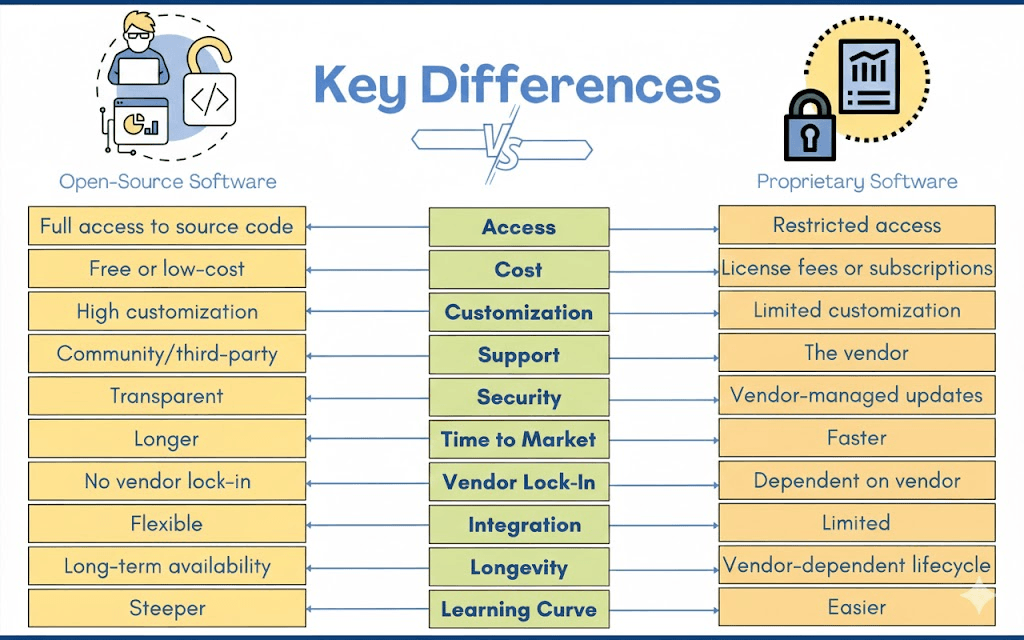
Low risk factors make proprietary acceptable. Small system below 10 kWh subtracts two points because replacement cost remains manageable. Accessible location subtracts one point allowing easy service access. Non-critical backup-only application subtracts one point where occasional downtime is tolerable. Established manufacturer with ten-plus year track record subtracts two points demonstrating survival capability. Short time horizon of five to ten years subtracts one point reducing manufacturer longevity requirements. No expansion planned subtracts one point eliminating compatibility concerns.
Score interpretation guides protocol selection. Plus five or higher strongly recommends open protocol, risk too high for proprietary. Zero to plus four suggests open protocol preferred but proprietary acceptable with mitigation strategies. Minus one to minus five indicates proprietary acceptable if significantly cheaper. Minus six or lower makes cost the primary factor since risks are minimal.
Mitigation strategies when choosing proprietary despite risk include extended warranty of seven to ten years minimum versus standard five years. Purchase spare BMS as insurance against product discontinuation. Negotiate escrow agreement requiring protocol documentation release if manufacturer exits market. Verify multiple successful installations, ideally ten-plus in similar applications. Confirm financial stability through public financials or credit rating research. Obtain support SLA in writing specifying response and resolution times. Document clear expansion path with manufacturer commitment.
Questions to ask manufacturers claiming proprietary advantages: Why is your protocol proprietary, seeking valid technical reasons versus vendor lock-in admission. What happens if your company exits the market, looking for escrow or open documentation commitments. How many installations of this specific combination exist and where, requiring verifiable references. What is your support response time SLA in writing, not verbal promises. What is your parts availability commitment timeframe. Can I verify installations with reference customers through direct contact.
Conclusion
Protocol choice fundamentally allocates risk between you and the manufacturer rather than being a technical performance decision. Proprietary protocols offer lower upfront cost in many cases and shift integration responsibility to the manufacturer when everything works correctly. But you own the entire risk when things fail. You become a captive customer with no alternatives, betting on manufacturer survival and support quality over the system’s fifteen to twenty year expected lifespan.
Open protocols sometimes cost more initially and require verification work during integration. But risk becomes shared across multiple vendors and community support infrastructure. Market competition provides alternatives when problems occur. You maintain independence from any single manufacturer’s business decisions or support quality.
The decision framework depends on system size, application criticality, access difficulty, expected lifespan, and your risk tolerance both financial and operational. No universal answer exists. Tesla Powerwall works well as proprietary residential backup because Tesla’s scale, track record, and support infrastructure justify the lock-in. Generic no-name proprietary battery represents terrible choice for commercial installation because risk far exceeds any cost savings.
Answer these questions honestly: Can I afford complete system replacement in five years if this fails? Can I diagnose problems independently if manufacturer support is poor or unavailable? Are alternatives available if this manufacturer exits or stops supporting this product? Is the cost savings worth the risk I’m taking on?
For large commercial systems, remote installations, mission-critical applications, or any installation where the answers reveal unacceptable consequences, open protocols are mandatory regardless of initial cost premium. For small accessible residential backup systems with established manufacturers and short time horizons, proprietary becomes acceptable if cost savings exceed fifteen percent.
The critical insight: diagnostic capability matters more than theoretical performance specifications. When communication fails in the field, can you independently verify what’s being transmitted and identify which device is wrong? With proprietary protocols, the answer is no. That limitation converts technical problems into financial losses and reputation damage. For complete context on protocol implementation, communication troubleshooting, and system reliability, see the main guide on inverter battery communication protocols.

Hi, i am Engr. Ubokobong a solar specialist and lithium battery systems engineer, with over five years of practical experience designing, assembling, and analyzing lithium battery packs for solar and energy storage applications, and installation. His interests center on cell architecture, BMS behavior, system reliability, of lithium batteries in off-grid and high-demand environments.