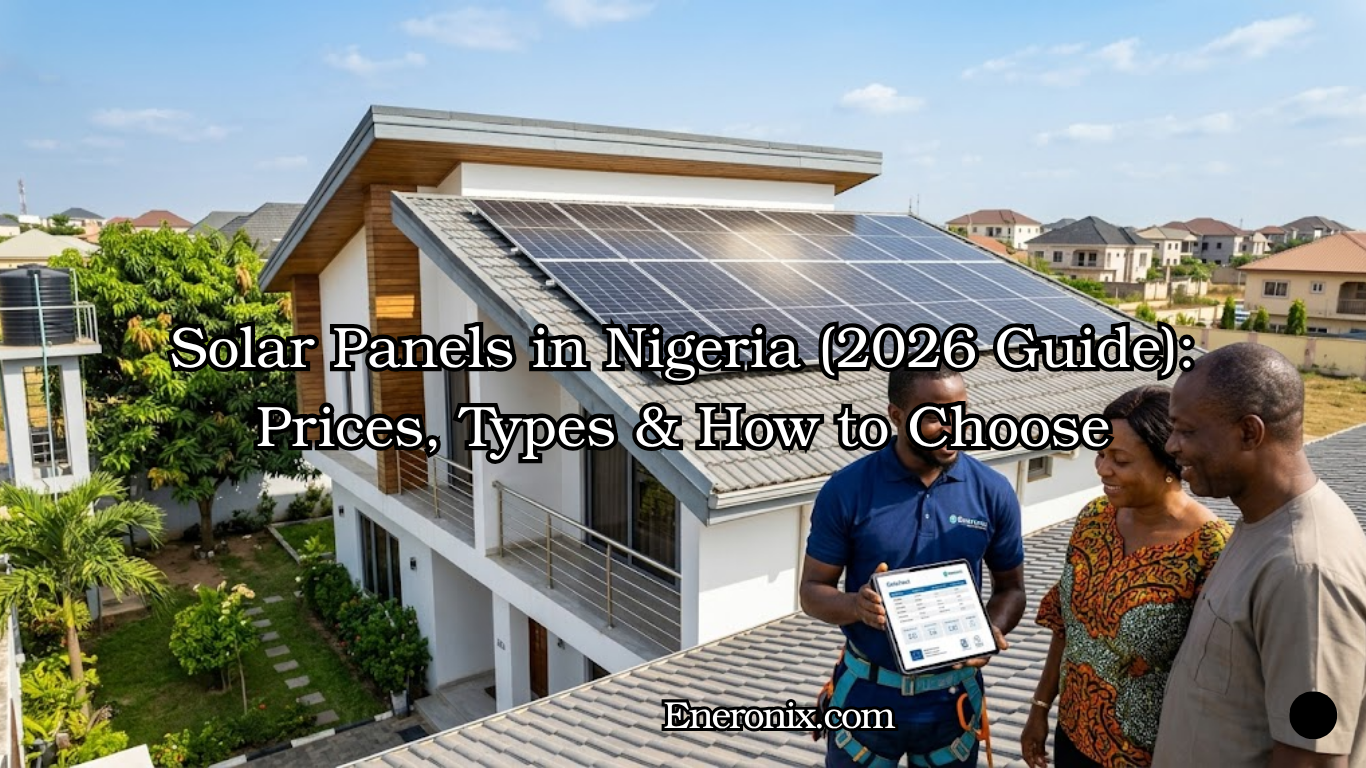

If you are thinking about going solar and buying solar panels in Nigeria, the first question most people ask is: which solar panel should I buy?
It sounds simple. But walk into any solar shop in Lagos, Abuja, or Port Harcourt and you will find dozens of options different brands, different wattages, different prices and very little explanation of what actually matters.
This guide fixes that. Whether you are buying your first solar panel or upgrading an existing system, this article will show you exactly what to look for, what to avoid, and how to make the right decision for your home or business.
What Is a Solar Panel and How Does It Work?
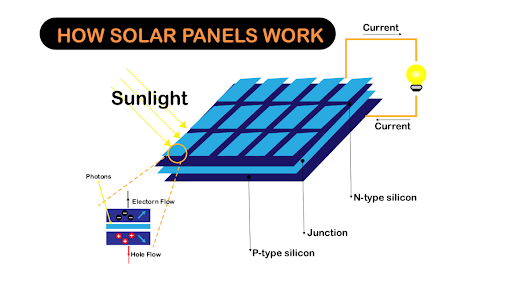
A solar panel is a device that converts sunlight into electricity. It is made up of smaller units called solar cells. Each cell contains silicon a material that releases electrons when light hits it. That movement of electrons is what creates electrical current.
Most solar panels produce direct current (DC) electricity. Your inverter then converts that DC into alternating current (AC) the kind that powers your appliances.
One important thing to understand: solar panels do not store electricity. They only generate it while the sun is shining. That is why you need a battery bank to store the energy for use at night or on cloudy days.
Types of Solar Panels Available in Nigeria
There are three main types of solar panels you will encounter in Nigeria. Each has different efficiency, cost, and performance characteristics.
1. Monocrystalline Solar Panels
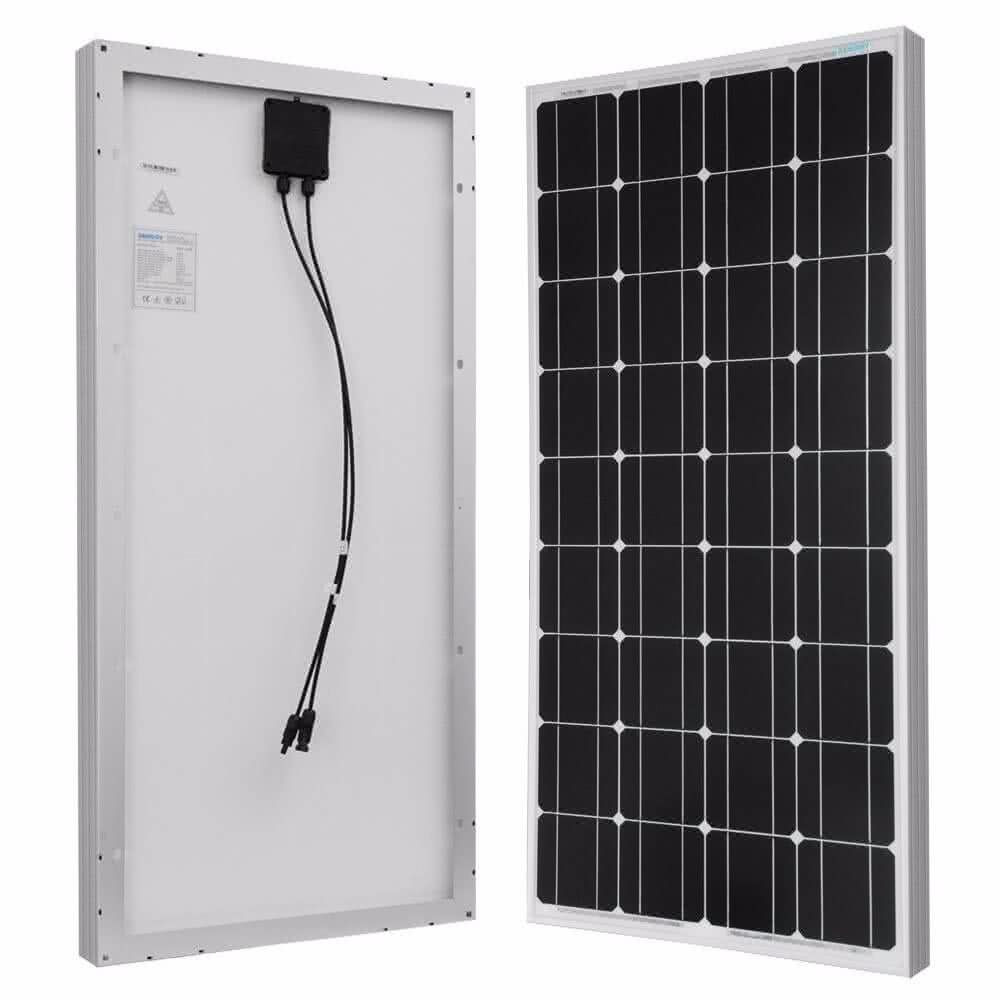
Monocrystalline panels are made from a single continuous crystal of silicon. You can identify them by their uniform dark black or dark blue colour and rounded cell corners.
What makes them good for Nigeria:
- Higher efficiency typically 20–23%
- Better performance in high temperatures due to a lower temperature coefficient
- Perform better in low-light conditions (harmattan haze, early morning, late afternoon)
- Longer lifespan most come with a 25-year performance warranty
The downside: They cost more per watt than polycrystalline panels.
Verdict for Nigeria: Monocrystalline is the right choice for most Nigerian buyers. Nigeria's heat actually hurts panel output and mono panels handle heat better. The extra upfront cost pays for itself in more electricity over time.
2. Polycrystalline Solar Panels
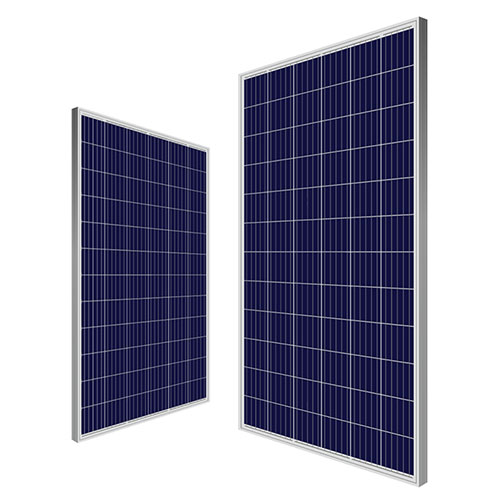
Polycrystalline panels are made by melting multiple silicon fragments together. They have a distinctive speckled blue colour.
Characteristics:
- Efficiency of 15–17%
- More sensitive to heat output drops faster as temperature rises
- Lower cost per watt than monocrystalline
- Slightly shorter lifespan
Verdict for Nigeria: Polycrystalline panels made sense when they were significantly cheaper. Today, the price gap between mono and poly has narrowed considerably. Unless you are working with a very tight budget, monocrystalline is the better investment.
3. Thin-Film Solar Panels
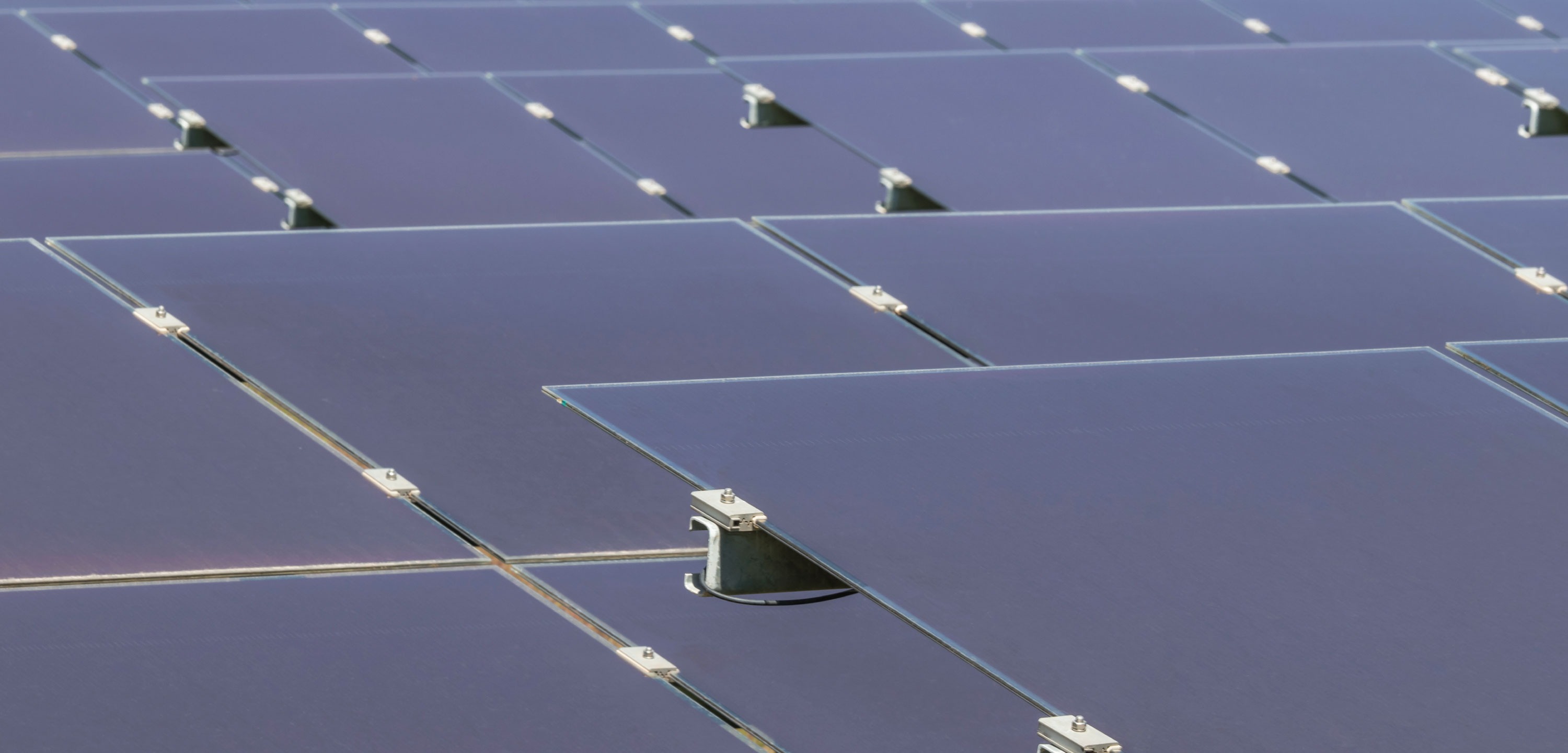
Thin-film panels are flexible, lightweight, and made by depositing photovoltaic material onto a surface. They are the least common type in the Nigerian residential market.
Characteristics:
- Lowest efficiency typically 10–13%
- More flexible can be installed on curved surfaces
- Perform better under diffuse light conditions
- Degrade faster than crystalline panels
Verdict for Nigeria: Thin-film panels are not the right choice for most Nigerian homes and businesses. Their low efficiency means you need significantly more roof space to generate the same power. They are mostly used in large commercial or industrial applications.
How to Read a Solar Panel Specification Sheet

Every solar panel comes with a datasheet. Before you buy, you need to understand what the numbers mean.
1. Watt-Peak (Wp)
This is the rated output of the panel under Standard Test Conditions (STC) 25°C cell temperature, 1,000 W/m² irradiance, and a specific air mass. In other words, it is a laboratory number.
In Nigeria’s real-world conditions where roof temperatures can reach 60–70°C and irradiance varies by season and location your panel will almost never produce its rated watt-peak output. A 400Wp panel might realistically produce 280–340W in Nigerian conditions.
2. Open Circuit Voltage (Voc)
This is the maximum voltage the panel produces when no load is connected. It is critical for sizing your MPPT charge controller. Your controller’s maximum input voltage must be higher than the Voc of your string.
3. Short Circuit Current (Isc)
This is the maximum current the panel produces when its terminals are shorted. Used in cable sizing and fuse selection.
4. Maximum Power Voltage (Vmp) and Maximum Power Current (Imp)
These are the voltage and current at which the panel produces its rated watt-peak output. Your MPPT charge controller operates the panel at or near Vmp to extract maximum power.
5. Temperature Coefficient of Power (Pmax)
This tells you how much power the panel loses for every 1°C rise above 25°C. A typical value is -0.35% to -0.45% per °C.
In Abuja, where roof temperatures can exceed 70°C in March and April, a panel with a -0.40%/°C coefficient could lose up to 18% of its rated output from heat alone. This is why monocrystalline panels which typically have better (lower) temperature coefficients are better suited for Nigerian conditions.
How Many Solar Panels Do You Need?

This is the question most people get wrong usually because they guess instead of calculate.
The correct approach starts with your daily energy consumption in watt-hours (Wh), and works backwards to determine how much solar generation you need.
Step 1: Add up your daily load
List every appliance you want to power, its wattage, and how many hours per day you use it.
| Appliance | Wattage | Hours/day | Daily Wh |
| Ceiling fans × 3 | 75W each = 225W | 12 hrs | 2,700 Wh |
| LED lights × 8 | 10W each = 80W | 6 hrs | 480 Wh |
| Refrigerator | 150W | 24 hrs | 3,600 Wh |
| TV (32″) | 60W | 6 hrs | 360 Wh |
| Phone charging × 4 | 20W | 3 hrs | 60 Wh |
| Total | 7,200 Wh/day |
Step 2: Account for system losses
Real solar systems have losses inverter inefficiency, cable losses, battery charge/discharge losses. A realistic overall system efficiency is about 75–80%. Divide your load by 0.75 to get the solar generation you actually need.
7,200 Wh ÷ 0.75 = 9,600 Wh of solar generation needed
Step 3: Determine your peak sun hours
Nigeria’s peak sun hours vary by location:
| City | Peak Sun Hours (avg) |
| Kano | 6.0 – 6.5 hrs |
| Abuja | 5.5 – 6.0 hrs |
| Lagos | 4.5 – 5.0 hrs |
| Port Harcourt | 4.0 – 4.5 hrs |
Step 4: Calculate the number of panels
Using Lagos (5.0 peak sun hours) and 400Wp panels with a realistic output of 320W (accounting for temperature derating):
9,600 Wh ÷ (320W × 5.0 hrs) = 9,600 ÷ 1,600 = 6 panels
A 3-bedroom flat in Lagos with the load profile above would typically need 6 × 400Wp monocrystalline panels depending on the load.For a complete system breakdown, use our off-grid solar sizing calculator for Nigeria in the Eneronix Resources & Tools section
Solar Panel Prices in Nigeria (2026)
Solar panel prices in Nigeria fluctuate based on the dollar-to-naira exchange rate, port clearing costs, and brand tier. The figures below are realistic guide ranges as of early 2026 not fixed prices.
Price Per Watt by Panel Type
| Panel Type | Price Range (₦/Wp) |
| Budget Chinese (no-name/tier-3) | ₦350 – ₦500/Wp |
| Mid-range Chinese (tier-2, known brand) | ₦500 – ₦700/Wp |
| Tier-1 brands (Jinko, Longi, Canadian Solar) | ₦700 – ₦950/Wp |
What This Means in Naira for Common Panel Sizes
| Panel Size | Budget | Mid-range | Tier-1 |
| 200Wp | ₦70,000 – ₦100,000 | ₦100,000 – ₦140,000 | ₦140,000 – ₦190,000 |
| 400Wp | ₦140,000 – ₦200,000 | ₦200,000 – ₦280,000 | ₦280,000 – ₦380,000 |
| 550Wp | ₦192,500 – ₦275,000 | ₦275,000 – ₦385,000 | ₦385,000 – ₦522,500 |
Want an Exact Answer for Your Own System?
The example above shows the method but your actual system will be different.
Your:
- Appliance usage
- Location (Lagos vs Abuja vs Kano)
- Battery type
- Backup requirements
…all change the final number.
Instead of guessing, use the
Eneronix Off-Grid Solar Sizing Calculator
It allows you to:
- Input your exact appliances and usage
- Account for real system losses
- Set your location’s peak sun hours
- Choose battery type and backup days
And it will calculate:
- The exact number of panels you need
- Battery bank size
- Inverter rating
- MPPT controller specification
All in one step.
Use it before you buy anything this is where most people get it wrong.
Should You Buy Budget or Tier-1?
This is a common question. Here is an honest answer:
Budget panels are a risk, not a saving. A no-name 400W panel might actually deliver 320–340W at best and degrade faster. A tier-1 400W panel delivers closer to its rated output and will still be producing meaningful power in 20 years. When you factor in the cost of your battery and inverter which can run ₦800,000 to ₦2,000,000+ cutting corners on the panel that charges them is a false economy.
That said, mid-range Chinese brands with real track records (brands like Jinko, Longi, BYD, and Canadian Solar all Chinese-manufactured are actually tier-1) can be excellent value. The key is to buy from a brand that publishes real datasheets, has verifiable certifications (IEC 61215, IEC 61730), and has a physical warranty support channel in Nigeria.
Best Tilt Angle and Orientation for Nigerian Rooftops
Getting your panel angle right can add 10–15% to your annual output for free.
Orientation: In Nigeria, solar panels should face south (towards the equator). This maximises exposure to the sun’s path throughout the year.
Tilt angle: A simple rule of thumb is to tilt your panels at an angle close to your latitude.
| City | Latitude | Recommended Tilt |
| Lagos | 6°N | 5° – 10° |
| Port Harcourt | 4.8°N | 5° – 8° |
| Abuja | 9°N | 8° – 12° |
| Kano | 12°N | 10° – 15° |
For flat roofs, a minimum tilt of 5° is recommended even in southern cities partly for output, and partly to allow rainwater to clean dust off the panel surface.
How Shading Affects Solar Panel Output
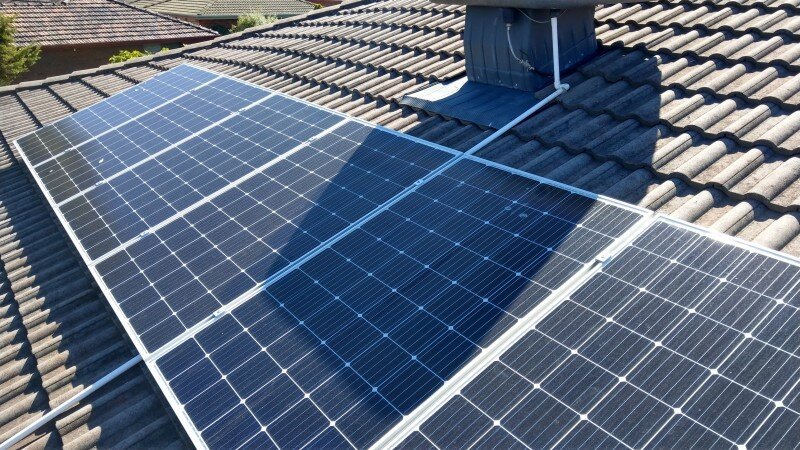
Shade is a silent killer of solar performance and in Nigerian cities, it is everywhere: water tanks, satellite dishes, neighbouring buildings, trees.
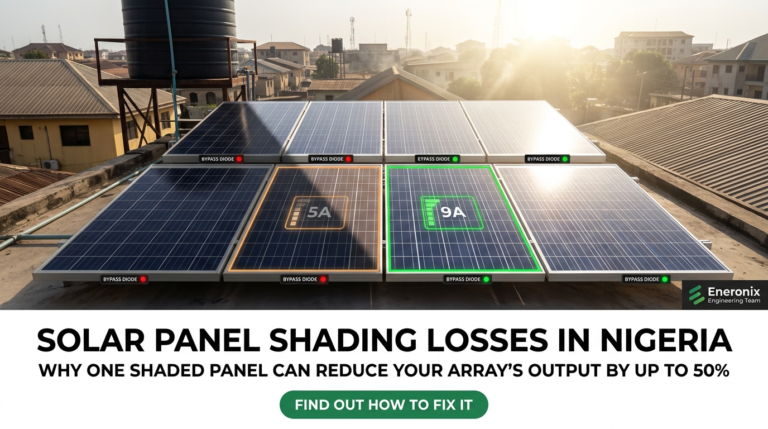
Here is what most people do not know: shading a single cell in a solar panel can reduce the output of the entire string of panels connected to it. This is because panels in a series string behave like a chain one weak link pulls down the whole chain.
A bypass diode inside the panel limits this damage to one section, but even with bypass diodes, partial shading on one panel in a 6-panel string can cut string output by 30–50%.
What you can do:
- Mount panels where they receive unobstructed sun from 9am to 3pm at minimum
- Avoid placing panels directly behind water tanks or parapet walls
- If shading is unavoidable, consider a microinverter or DC optimiser setup
Maintaining Your Solar Panels in Nigeria
Solar panels are low-maintenance but they are not zero-maintenance.
1. Cleaning
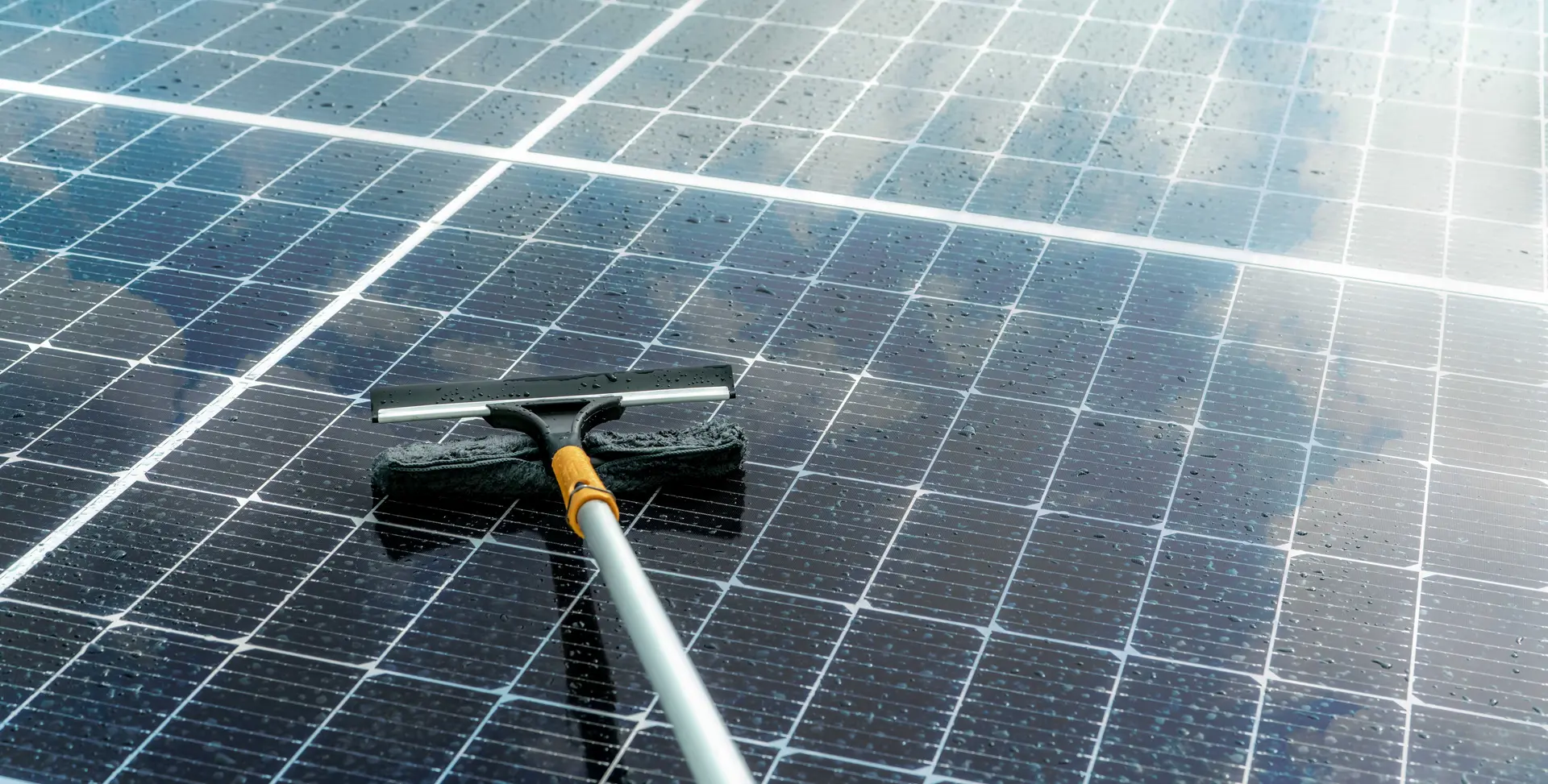
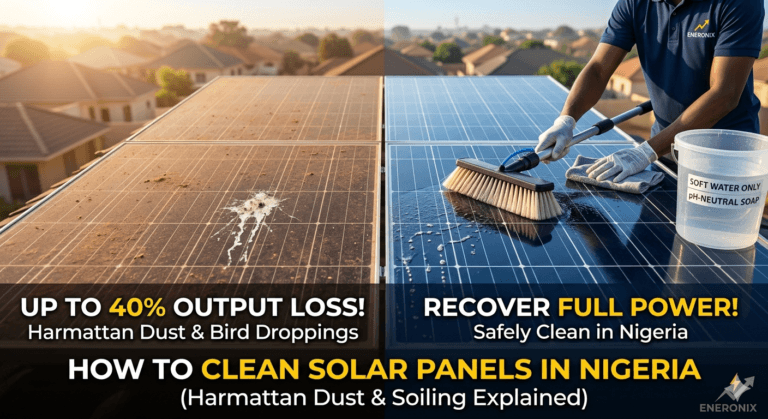
Dust is the biggest performance thief. In northern Nigeria and during the harmattan season (November–February), dust accumulation can reduce output by 15–25% within weeks.
How often to clean:
- Lagos/Port Harcourt: Every 4–6 weeks
- Abuja: Every 3–4 weeks
- Kano and northern cities: Every 2–3 weeks during harmattan
How to clean safely:
- Use clean water and a soft cloth or sponge
- Clean early in the morning when panels are cool cleaning hot panels with cold water can cause thermal shock and micro-cracks
- Never use abrasive materials, detergent, or high-pressure water jets
- Do not walk on panels
2. Inspection
Every 6 months, visually inspect your panels for:
- Cracks or chips in the glass
- Discolouration (yellowing or browning of cells indicates degradation)
- Loose or corroded connections at the junction box
- Frame corrosion
Degradation
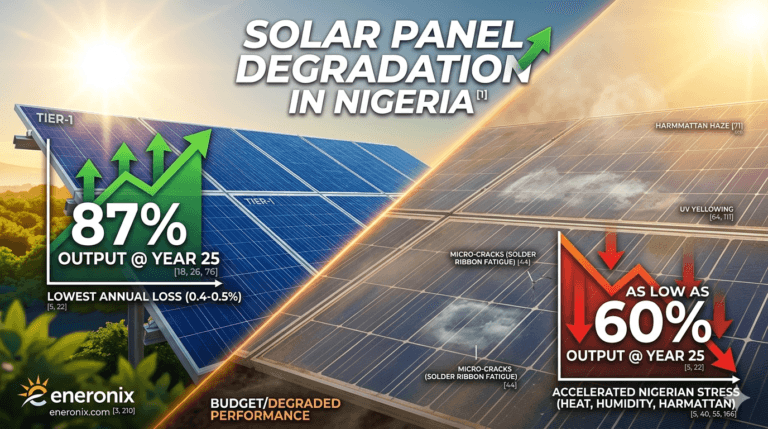
All solar panels degrade over time. A quality tier-1 panel degrades at about 0.5% per year meaning a 400Wp panel that starts at 400W will produce about 380W after 10 years and about 360W after 20 years. Most manufacturers guarantee at least 80% of rated output after 25 years.
Budget panels can degrade at 1–2% per year, meaning they could be producing just 60–80% of rated output within 10 years.
Common Mistakes to Avoid When Buying Solar Panels in Nigeria
1. Buying based on price alone. The cheapest panel is rarely the best value. Focus on price per watt and manufacturer credibility, not panel sticker price.
2. Not checking certifications. Every panel sold in Nigeria should have IEC 61215 (performance) and IEC 61730 (safety) certification. If a supplier cannot show you the datasheet and certification, walk away.
3. Oversizing the panel count without sizing the rest of the system. Your MPPT charge controller and battery bank must be sized to handle the solar array you install. Adding more panels without upgrading your charge controller causes clipping wasted power.
4. Ignoring shading. Many installers skip a proper shading analysis. Ask your installer to assess shading across your roof before panel placement is finalised.
5. Buying from roadside vendors without receipts or warranties. If a panel has no verifiable serial number and no warranty card, you have no recourse when it fails.
Frequently Asked Questions
1. Which solar panel is best in Nigeria?
For most Nigerian conditions, monocrystalline solar panels are the best option.
They perform better in:
- High temperatures (common across Nigeria)
- Low-light conditions (harmattan, cloudy days)
- Limited roof space
While they cost more upfront, they produce more energy over time, making them a better long-term investment than polycrystalline panels.
2. How many solar panels do I need for my house in Nigeria?
It depends on your daily energy consumption.
A typical small home using about 7,000–10,000Wh per day will need:
- Around 5 to 8 panels of 400Wp each
However, proper sizing must consider:
- System losses (usually 20–25%)
- Location (Lagos vs Abuja vs Kano)
- Peak sun hours
The most accurate way is to calculate your total daily load and size your system from there.
3. Why doesn’t my 400W solar panel produce 400W in Nigeria?
Because 400W is measured under Standard Test Conditions (STC) not real-world conditions.
In Nigeria:
- High temperatures reduce panel efficiency
- Dust and haze reduce sunlight intensity
- Installation angle and shading affect output
In practice, a 400W panel typically produces 280W to 340W under normal conditions.
4. How much do solar panels cost in Nigeria in 2026?
Prices vary depending on quality and brand.
Typical price ranges:
- Budget panels: ₦350 – ₦500 per watt
- Mid-range panels: ₦500 – ₦700 per watt
- Tier-1 panels: ₦700 – ₦950 per watt
For example:
- A 400W panel can cost between ₦140,000 and ₦380,000
Prices fluctuate based on exchange rates and import costs.
5. How long do solar panels last in Nigeria?
Quality solar panels typically last 20 to 25 years or more.
However:
- Output gradually decreases over time (about 0.5% per year for good panels)
- Harsh conditions (heat, dust) can accelerate degradation if not maintained
After 25 years, most panels still produce around 75–85% of their original output.
6. Do solar panels work during rainy season in Nigeria?
Yes, but with reduced output.
Solar panels generate electricity from light, not heat, so they still work on cloudy days. However:
- Output can drop by 30–70% depending on cloud cover
- Battery storage becomes critical during this period
7. Do I need batteries with my solar panels?
Yes if you want power at night or during outages.
Solar panels only generate electricity when the sun is shining.
Without batteries:
- You cannot store energy
- Your system will not work during grid outages (in most setups)
8. How often should I clean my solar panels in Nigeria?
Cleaning frequency depends on your location:
- Lagos / Port Harcourt: every 4–6 weeks
- Abuja: every 3–4 weeks
- Northern Nigeria: every 2–3 weeks (especially during harmattan)
Dust buildup can reduce output by 15–25%, so regular cleaning is important.
9. Can shading really affect my solar panel output?
Yes significantly.
Even partial shading:
- Can reduce output of an entire panel string
- May cause 30–50% power loss in severe cases
Common sources of shading in Nigeria:
- Water tanks
- Trees
- Nearby buildings
Proper panel placement is critical.
10. Is it better to buy cheap or expensive solar panels?
Cheap panels are usually a false economy.
While they cost less upfront:
- They often produce less power than advertised
- They degrade faster
- They may lack real warranty support
A reliable mid-range or tier-1 panel typically delivers better long-term value.
11. What certifications should I look for when buying solar panels?
At minimum, the panel should have:
- IEC 61215 (performance standard)
- IEC 61730 (safety standard)
If a supplier cannot provide a datasheet with these certifications, it is a red flag.
12. Can I add more solar panels later?
Yes, but only if your system is designed for expansion.
You must consider:
- MPPT charge controller capacity
- Battery bank size
- Inverter limits
Adding panels without upgrading the rest of the system can lead to power clipping and wasted energy.

I am Engr. Ubokobong Ekpenyong, a solar specialist and lithium battery systems engineer with over five years of hands-on experience designing, assembling, and commissioning off-grid solar and energy storage systems. My work focuses on lithium battery pack architecture, BMS configuration, and system reliability in off-grid and high-demand environments.